If you’ve ever worked with JIS flanges (that’s Japanese Industrial Standard, for the uninitiated) and wondered how tight is tight enough—chances are you’ve guessed wrong at some point, or have seen a leaky pipe, a wobbly tank, or even a bolt that snapped mid-torque wrench crank. As a supplier who’s dealt with JIS and KS flanges day in and day out for over 8 years, I can tell you torque is not a “guess it and check” game. It’s the difference between a system that runs flawlessly for years and a headache that hits out of nowhere. Let’s break this down, no overly technical jargon, just real stuff that applies to what we sell. JIS & KS Flanges

First, let’s get one thing straight: JIS flanges aren’t the same as ANSI (American) or DIN (German) flanges. That’s the number one mistake I see contractors make—they grab their go-to ANSI torque chart and slam it on a JIS 10K flange, and boom, either the bolt stretches too far or the gasket crushes unevenly. KS flanges are basically the Korean counterpart, almost identical to JIS, but with a few tiny tweaks that change torque just enough to matter. I’ve had a guy show up with a stack of KS flanges and an ANSI chart, and halfway through tightening, one of the bolts snapped. He was mad at the flange (weird, right?) until I pointed out the difference.
So what actually determines torque requirements? It’s not just “the flange size.” Let’s list the real factors, not the textbook ones:
-
Flange rating and size. JIS flanges are rated by pressure class—most common are 5K, 10K, 16K, 20K. KS uses the same system, for the most part. A 5K 2-inch flange is for low-pressure stuff, like water lines in a building, while a 20K 8-inch flange is for high-pressure steam or chemical lines. Bigger flanges need more torque, obviously, but not just linear—doubling the diameter doesn’t double the torque. Also, the number of bolts changes too: a 4-inch 10K JIS flange has 8 bolts, an 8-inch 10K has 16, so you have to split the total torque across all bolts evenly.
-
Bolt material and grade. JIS bolts have their own grades too—like JIS B 1180 for common carbon steel, JIS B 1181 for higher-tensile steel, even stainless steel (JIS B 1184). A Grade 8 ANSI bolt is way stronger than a basic JIS 4.6 carbon steel bolt, so you can’t use the same torque. Last month, a client tried using cheap JIS 4.6 bolts for a 16K flange, and when we ran pressure tests, the bolts stretched way past their yield point—no leaks, but we had to replace the whole set because they were permanently damaged. The high-tensile JIS 8.8 bolts we supply? They handle 30-40% more torque, no problem.
-
Gasket type. This is the hidden variable I almost forgot. A soft rubber gasket for water lines doesn’t need nearly as much torque as a metal ring gasket for chemical piping. If you over-tighten a soft gasket, it compresses too much and blows out, or the flange face gets damaged. If you under-tighten a metal gasket, you get tiny gaps that cause leaks. I once had a job where someone used a copper gasket on a JIS 10K flange and used ANSI torque—by the time they were done, the gasket was so squashed it had zero sealing ability. We had to redo the whole thing with the right gasket and adjusted torque, cost the client extra, which we would’ve avoided if we’d talked first.
-
Surface finish and flange face type. JIS flanges have two common face types: flat face (FF) and raised face (RF). Flat face is for low-pressure, non-corrosive stuff, and needs a bit less torque. Raised face is for higher pressure, has that little ring in the middle that the gasket sits on, so torque has to be precise—too little and the gasket doesn’t seal the raised area, too much and the raised face can deform. Also, if the flange face is rusty, scratched, or has old gasket gunk on it, that changes things—you need more torque to compensate for uneven contact, or you’ll get leaks even if the numbers are right.
Now, let’s get to the actual numbers, because that’s what everyone’s here for. But before I post these, a disclaimer: these are baseline numbers, always adjust for the factors above. Also, we never go by just torque—we do bolt stretch measurements too, because torque can be off by things like bolt lubrication, tool calibration, even how fast you crank the wrench.
For JIS 10K flanges (super common, used in 90% of the jobs we supply):
- 2-inch (50mm) flange: 8 bolts, each bolt gets ~45 lb-ft (61 Nm)
- 4-inch (100mm) flange: 8 bolts, ~75 lb-ft (102 Nm) each
- 6-inch (150mm) flange: 12 bolts, ~95 lb-ft (129 Nm) each
- 8-inch (200mm) flange: 16 bolts, ~110 lb-ft (149 Nm) each
These are for high-tensile JIS 8.8 bolts and standard rubber gaskets. If you’re using metal gaskets, add 10-15 lb-ft per bolt. If you’re on 5K JIS, subtract 15-20 lb-ft. For KS flanges, the numbers are almost identical—we tested them last quarter, the only difference was 2-3 lb-ft for the 6-inch size, which is negligible for most jobs.
For higher pressure, JIS 16K flanges:
- 4-inch: ~100 lb-ft each
- 6-inch: ~130 lb-ft each
- 8-inch: ~160 lb-ft each
Again, adjust for bolt grade and gasket type. I won’t post 20K numbers because those are for industrial stuff, and you really should have a engineer spec them, but as a baseline, they’re 50-60% higher than 10K.
Wait, here’s a pro tip I learned the hard way: never tighten all bolts in a circle at once. Do it in a crisscross pattern, half the torque, then full torque, then even a light re-tighten once the whole flange is assembled. For a 16-bolt 8-inch flange, that means bolt 1, then bolt 9, then bolt 5, then bolt 13, etc.—skip every other bolt. That way, the gasket compresses evenly, no uneven pressure that causes leaks. I’ve seen guys tighten bolt by bolt, clockwise, and by the time they get to the last one, the first is already over-tightened and the middle of the flange isn’t even touching the gasket.
Also, common mistakes to avoid:
- Using dry bolts. A lot of people forget to lubricate bolt threads. Dry bolts can have torque numbers off by 25-30% because of friction. We supply a light anti-seize compound with every flange order, free, because this is such a dumb mistake. Last month, a plumber showed up with dry bolts and his torque wrench reading was way lower than it should have been—once he applied anti-seize, the reading jumped 18 lb-ft, and when we tested pressure, it held perfectly.
- Skipping the re-torque step. Flanges are metal, gaskets settle over the first 24 hours after installation. Even if you torque them to spec, you should re-torque them once the system is pressurized and cooled down. I can’t tell you how many leaks we get calls about that are fixed with a simple re-torque.
- Ignoring flange condition. If the flange face is bent, or has a dent from shipping, torque won’t fix it. We do a full inspection on every flange before it leaves our warehouse, but sometimes damage happens in transit, so always check the flange faces before you start installing.
As a supplier who works with both JIS and KS flanges, one of the most common questions I get is: “Can I use JIS bolts on KS flanges?” The short answer is yes, 9 out of 10 times, as long as they’re the same grade and size. The KS standard is basically a copy of JIS, with minor adjustments to bolt hole spacing that don’t affect torque. The only time you need different torque is if the KS flange is rated higher than JIS, which is rare—most KS flanges for commercial use are identical to JIS 10K.
Another thing I see: people mixing bolt types. Don’t use a stainless steel bolt on a carbon steel flange and expect the same torque as a carbon steel bolt. Stainless has a lower friction coefficient, so you need less torque to get the same bolt stretch. We label every bolt package with the correct torque for the flange it’s paired with, so you don’t have to guess.
At the end of the day, torque requirements for JIS and KS flanges aren’t arbitrary numbers made up by some standard organization. They’re based on making sure the gasket compresses just enough to seal, the bolts don’t break or stretch permanently, and the flange face doesn’t get damaged. If you get this wrong, you’re looking at leaks, downtime, extra costs, and even safety issues if it’s high-pressure stuff.
If you’re working on a job, or planning a project, and you’re not sure what torque to use—don’t guess. Hit us up to talk through your specific setup: flange size, rating, bolt grade, gasket type, pressure requirements. We’ve been doing this long enough to know the ins and outs of both JIS and KS flanges, and we won’t just throw a generic chart at you. We’ll give you real numbers, pro tips, and even free anti-seize for your first order if you need it.
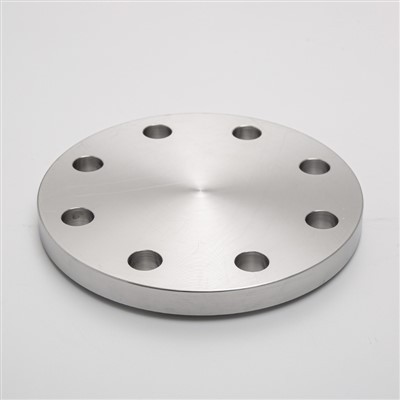
It’s way better to get this right the first time than to deal with a leaky pipe or broken bolt halfway through a job. Save yourself the headache, reach out and let’s work out the right torque for your flanges.
ANSI/ASME B16.5 Flanges References:
Japanese Industrial Standard (JIS) B 2220: Steel Flanges for Piping
Korean Industrial Standard (KS) B 1503: Steel Flanges for Pressure Piping
American Society of Mechanical Engineers (ASME) PCC-1: Guidelines for Pressure Boundary Bolted Flange Joint Assembly
Zhejiang Chengjiu Pipeline Co., Ltd.
Zhejiang Chengjiu Pipeline Co., Ltd. is one of the most professional jis flanges manufacturers and suppliers in China, specialized in providing high quality customized service. We warmly welcome you to buy high-grade jis flanges from our factory. For price consultation, contact us.
Address: NO.9-1 Hengsheng Road, Jinchuan Street, Changshan Prefecture, Quzhou, Zhejiang Province, China
E-mail: sale@cncjflange.com
WebSite: https://www.cncjflange.com/
