If you’ve ever used red double-sided tape to hang a favorite photo frame, mount a waterproof shelf in a bathroom, or even secure a car accessory to a smooth surface, you’ve probably found yourself asking one simple question: How long does this stuff actually take to hold properly? As a supplier of red double-sided tape, I get this question almost every day—from DIYers working on weekend projects, from contractors sourcing reliable bonding solutions for small jobs, and from brand owners testing adhesive materials for product packaging. It’s not a trivial question, either; too little cure time can lead to a fallen frame or a damaged product, while waiting too long can delay a project or waste time. The truth is, there’s no one-size-fits-all answer, but understanding the science behind how red double-sided tape works, and the variables that affect its cure time, will help you get it right every time. Red Double Sided Tape
First, let’s break down what “set” means when we talk about adhesive tape. For red double-sided tape, “set” refers to two key stages: the initial grab (the moment it sticks enough to hold the weight of a light object) and the full cure (when the adhesive reaches its maximum bond strength, durable enough for heavy loads, extreme temperatures, and long-term use). A lot of people mix these two up, and that’s where mistakes happen. For example, if you hang a 5-pound mirror on a wall 10 minutes after applying the tape, it might stay up for a day—but eventually, it will pull away because the adhesive hasn’t fully cured.
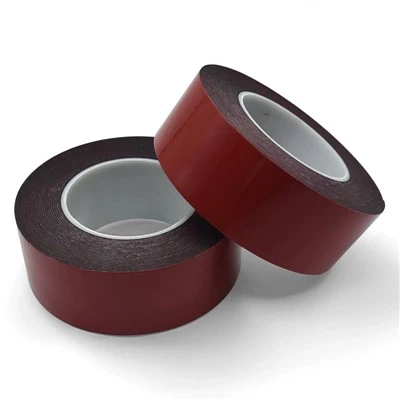
So, how does red double-sided tape cure? Unlike liquid glues, which seep into surfaces and harden through chemical reactions, most red double-sided tapes we supply are pressure-sensitive adhesives (PSA). That means the adhesive is a thin, sticky polymer layer on both sides of a plastic or fabric core (the red liner you peel off before applying), and it bonds when you apply pressure to squeeze out air bubbles and make the adhesive molecules come into close contact with the surface. The cure time here is about how long it takes the adhesive to fully conform to the surface and form those strong molecular bonds.
Let’s start with the initial grab, which is what gives you the immediate stick you need for small, light jobs. For most of our standard red double-sided tape products, initial grab is almost instant when you apply firm, even pressure—usually 15 to 30 seconds of pressing with a roller or your hand will make it stick enough to hold a 2-pound object, like a small photo frame or a set of keys. But that initial grab is just a temporary hold; it’s strong enough to prevent the tape from sliding right away, but not enough for long-term use or heavier items. I’ve seen customers make this mistake dozens of times: they peel the red liner, press the tape to a wall, hang a 10-pound shelf right away, and then call us upset because it fell off a week later. That’s because they skipped the full cure time.
Now, the full cure time is where things get more complicated, and where variables make a big difference. The base cure time for our standard acrylic-based red double-sided tape (the most common type we supply for general use) is 24 hours. That means for the first full day after application, the adhesive is still working to build strength, and you should avoid putting heavy loads on it, exposing it to extreme temperatures, or moving the object it’s attached to. But wait—this base time isn’t set in stone. Factors like surface type, temperature, humidity, and the weight of the item being bonded can all speed up or slow down the cure process.
Let’s talk about surface type first, because it’s one of the biggest factors that people overlook. Red double-sided tape works best on smooth, clean, dry surfaces. If you apply it to a porous surface like unfinished wood, rough concrete, or a painted wall that’s still flaking, the adhesive has to fill in gaps between the tape and the surface, which takes longer. For example, if you mount tape to a smooth, flat glass window, the adhesive will conform almost perfectly, so it might reach 90% of its full strength in just 12 hours. But if you mount it to a rough, unpainted wood surface, it could take up to 48 hours to reach that same strength, because the adhesive has to seep into small pores to form a strong bond.
Temperature and humidity are another pair of key variables. Adhesive polymers work better at moderate temperatures—between 60°F and 80°F (15°C and 27°C) is the sweet spot for our red double-sided tape. When the temperature is colder, below 50°F (10°C), the adhesive becomes stiffer, so it takes longer to conform to the surface and build bonds. I once had a customer in Minnesota who was trying to mount a decorative metal sign to his garage door in January, when it was 20°F (-7°C) outside. He waited 24 hours, the sign fell off, and he called us confused. We explained that the cold made the adhesive cure time almost double, so he needed to wait 48 hours. He tried again, and the sign stayed put through the rest of the winter. On the flip side, high temperatures (above 90°F or 32°C) can make the adhesive too soft, which might make it slip before it cures, but once it does, it can reach full strength faster—though we still don’t recommend applying it in extreme heat, because it’s harder to get a good initial bond. Humidity matters too: high humidity (above 70%) can prevent the adhesive from drying properly, slowing cure time, while very low humidity (below 30%) can make surfaces static, which can make the tape stick unevenly.
The weight of the item being bonded also affects cure time. If you’re using red double-sided tape to mount a 1-pound lightweight object, it might reach full strength in 18 hours, because there’s not much stress pulling on the bond. But if you’re bonding a 20-pound object, you need to give the adhesive more time to build enough strength to hold that weight. For heavy-duty jobs, like mounting a cabinet shelf or a large mirror, we always recommend waiting 72 hours before putting the full weight on the tape—just to be safe. I tell customers all the time: if you’re not sure when you can load it, err on the side of waiting longer. It’s better to wait an extra day than to have a damaged item or a repair job.
Not all red double-sided tape is the same, either. We supply different grades for different uses, and their cure times vary. For example, our general-purpose red double-sided tape is 24 hours, as I mentioned, but our heavy-duty industrial grade, designed for bonding metal to metal or plastic to glass, has a base cure time of 48 hours. That’s because it uses a thicker acrylic adhesive layer that needs more time to form strong bonds. We also have a low-temperature grade, designed for use in freezers or cold storage, which cures at room temperature in 12 hours and can hold its bond in temperatures as low as -40°F (-40°C). For customers who work in refrigeration or outdoor cold climates, that’s a game-changer—no more waiting 48 hours in freezing conditions.
A lot of people also ask if they can speed up the cure time. The short answer is, to a degree. Applying firm, even pressure when you first mount the tape helps eliminate air bubbles, which can block adhesive molecules from bonding, so that can shave a few hours off the cure time. Some people use a heat gun on low setting to warm the adhesive after application—this softens the polymer, making it conform to the surface faster, which can cut cure time by 6 to 12 hours. But you have to be careful here: too much heat can melt the adhesive, or damage the surface you’re bonding. I always recommend testing a small, hidden area first if you’re going to use heat.
Now, let’s cover some common myths I hear as a supplier. One myth is that red double-sided tape cures immediately. No, that’s just the initial grab—you still need to give it time. Another myth is that it’s done curing after 24 hours, no matter what. I’ve had customers with rough surfaces or cold temperatures call saying their tape took 48 hours to hold, and they’re convinced the product is bad, when it’s just the variables. The last common myth is that once it’s cured, it’s permanent. No, red double-sided tape can be removed (with some effort) if it’s not exposed to extreme heat, but it will lose strength over time if exposed to constant sun or temperature swings. That’s important to know if you’re using it for temporary projects.
As someone who’s worked with red double-sided tape for years, I’ve learned that the best way to avoid mistakes is to plan ahead. First, make sure you’re using the right type of tape for your job. If it’s a small, indoor photo frame, general-purpose is fine. If it’s a heavy outdoor sign or a bathroom shelf, go with heavy-duty. Then, prepare the surface: clean it with rubbing alcohol to remove grease, dust, or soap residue, and let it dry completely before applying the tape. Apply firm, even pressure—use a credit card or a roller to smooth out the tape and push out all air bubbles. Then, follow the cure time guidelines: 24 hours for light indoor jobs, 48 for medium, 72 for heavy. If you’re working in extreme temperatures, add another 24 hours just to be safe.
At the end of the day, red double-sided tape is one of the most versatile bonding materials out there, but it’s not magic. Its cure time depends on how you use it, where you use it, and what you’re using it for. If you’re unsure about the right type of tape or the correct cure time for your specific project, don’t hesitate to reach out for guidance. We’re always here to help customers select the right product and get the best results. Whether you’re a DIYer working on a home project, a contractor sourcing materials for a job site, or a brand owner needing adhesive solutions for packaging, we have the red double-sided tape that fits your needs. For more details on product grades, application tips, or to discuss your specific bonding requirements, feel free to connect with us to talk through your project needs.
Self Adhesive Aluminium Tape References:
- "Pressure-Sensitive Adhesive Technology: Fundamentals and Applications" by A. J. Kinloch, John Wiley & Sons, 1987.
- Adhesive and Sealant Council, "Guide to Selecting and Using Pressure-Sensitive Tapes for General Bonding", 2022.
- ASTM International, "Standard Test Method for Peel Adhesion of Pressure-Sensitive Tapes", D3330/D3330M-21, 2021.
- "Industrial Adhesives Handbook" by Donald S. Lasserre, McGraw-Hill, 2011.
Deqing Hongxin New Material Technology Co., Ltd.
As one of the most professional red double sided tape manufacturers and suppliers in China, we also support customized service. Please feel free to wholesale high quality red double sided tape in stock here from our factory. Welcome to contact us for quotation.
Address: No.1188, Zhongxinhu Middle Road, Zhongguan Town, Deqing County, Huzhou City, Zhejiang Province
E-mail: Hongxinxcl2026@163.com
WebSite: https://www.hxnewmat.com/
