As a Sheet Cylindrical Forming Machine supplier, I get asked a lot: how do our machines turn flat metal sheets into perfect tubes without wonky angles or uneven sides? For customers who work with pipe fabrication, HVAC ducting, or cylindrical parts for automotive and construction, parallelism isn’t just a “nice-to-have”—it’s non-negotiable. A cylinder that’s out of parallel by even a fraction of a millimeter won’t seal right, won’t line up with mating parts, and can fail under pressure. Over the 12 years I’ve been in this business, I’ve walked hundreds of operators through how our machines maintain that critical parallelism, and I’ve seen what happens when cut corners on that step. Let me break this down the way I explain it to new clients, no jargon overload, just real-world engineering that works. Sheet Cylindrical Forming Machine
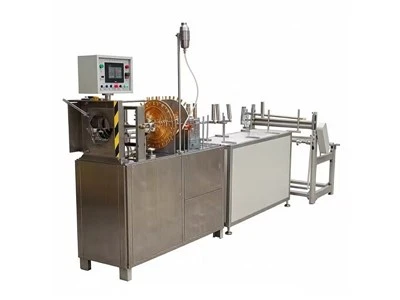
First, let’s start with the problem. When you bend a flat sheet into a cylinder, the two edges of the sheet have to align perfectly—their top and bottom edges (or front and back, depending on orientation) have to stay parallel as you roll, so when you weld the seam, the entire cylinder stays straight and true. If one edge lags just a hair behind the other during rolling, you end up with a tapered cylinder that’s too wide on one end and too narrow on the other. That’s not just an inconvenience; it’s a scrap of material, time lost reworking, and sometimes even product returns. So how do our machines prevent that? It’s not one single part—it’s a chain of design features that work together, each calibrated to eliminate tiny deviations that add up to big problems.
The foundation starts with the machine’s main roll assembly, specifically the side rollers (also called pinch rollers or support rolls) that hold the ends of the sheet in place as it feeds through. A lot of cheaper machines cut corners here: their side rollers are just plain steel cylinders, loosely mounted, with no way to adjust their alignment. On our machines, each side roller is individually precision-ground to within 0.02mm of true diameter, and their mounting brackets are bolted to a heavy-duty, precision-machined base frame that’s aligned to the main upper and lower roll axes. That means when you set the side rollers, they sit perfectly parallel to the upper roll—not at a slight angle that would pull one side of the sheet off-kilter. I remember a customer last year who bought a budget machine from another supplier; their side rollers were off by 0.5 degrees, enough to make 10-meter-long ducts taper by 2cm at the end. They swapped to our machine after three weeks of reworking scrap, and haven’t had that issue since.
Next is the roll adjustment system. When you bend a sheet into a cylinder, the main bending rolls (the two lower support rolls and one upper forming roll) have to be positioned so that the center of the sheet’s edge matches the roll’s axis. But how do you make sure both ends of the sheet are pressed evenly? Our machines use a digital linear encoder system that tracks the position of each side of the sheet as it feeds. The encoders are mounted directly to the side roller carriages, and they send real-time data to the machine’s PLC (programmable logic controller). If one side of the sheet moves 0.1mm faster than the other—like if the sheet is slightly warped or the material has uneven thickness—the PLC automatically adjusts the pressure on that side’s side roller to match the other. No operator has to manually tweak a lever mid-run; the machine does it in milliseconds. I’ve had operators tell me that used to take them 10 minutes per sheet just to adjust for parallelism, and now it’s almost automatic. That’s not just faster—it’s more consistent, even when running 1,000 sheets a day.
Material handling plays a bigger role here than most people realize. Even if the machine is perfectly calibrated, if you feed a sheet that’s not straight, you’re going to get a wonky cylinder. Our machines include optional sheet alignment guides, but even on our base models, we have a mechanical edge guide that runs the length of the feed table. That guide is aligned to the main roll assembly, so when you slide the sheet into the machine, its edge sits flush against the guide, eliminating any side-to-side drift before rolling starts. For thicker materials—like stainless steel plates 10mm or more—we also add a pre-bending station at the front of the machine. The pre-bender creates a small bend at the ends of the sheet, so when you start rolling, the ends don’t slip or twist, which is a common cause of parallelism errors. I watched a first-time operator last month run a 12mm aluminum sheet without using the pre-bender; the cylinder came out with a 1mm taper. After adding the pre-bend, the same sheet was perfect, no measurable deviation.
Another key feature is the machine’s roll alignment verification system. Every time the machine is set up for a new job, the operator can run a quick parallelism check using a digital dial indicator that mounts to the roll assembly. The dial indicator measures the distance between the upper roll and a reference point on the base frame at four points along the roll’s length. If there’s any misalignment—even 0.03mm—you can adjust the roll’s mounting brackets before you ever run a sheet. A lot of lower-end machines don’t have this feature, so operators just guess at alignment, which leads to inconsistent parts. On our machines, that check takes 2 minutes, not 20, and it catches issues before they become wasted material. We also provide free calibration services for the first year a customer owns the machine, so we can come out and verify that all the axes are still aligned, even after months of heavy use.
Wait, I should also talk about seam tracking, right? Because parallelism doesn’t stop at rolling—it has to hold when you weld the seam. Our machines have a built-in seam alignment notch at the end of the bending rolls, so when the sheet is formed into a cylinder, the two edges line up perfectly, within 0.05mm of each other. A lot of machines just leave that to the operator’s eye, which is hit or miss. For high-volume production, our optional laser seam tracker makes sure the seam is straight even on long cylinders, so you don’t get a twisted weld that throws off the entire cylinder’s parallelism. One of our HVAC clients in Chicago was using a machine that required two people to hold the edges aligned while welding; they switched to our machine and the laser tracker, and now one operator does the whole job, cutting their labor time per duct by 30%.
I know a lot of customers are worried about cost, and I get that. When you’re investing in a forming machine, you want to make sure every feature is worth the price. But here’s the thing: the parallelism features I just mentioned aren’t add-ons—they’re standard on every Sheet Cylindrical Forming Machine we build, because we’ve seen what happens when you skip them. We had a customer a few years ago who tried to save money by buying a machine without the digital encoder system. They were making cylindrical parts for fire extinguishers, and 15% of their parts were failing inspection because of parallelism errors. They ended up replacing that machine with ours, and their failure rate dropped to less than 1%. That’s not a small difference; that’s thousands of dollars in saved scrap and rework every month.
Another thing that people don’t always consider is material variability. Metal sheets aren’t perfectly uniform; even sheets from the same lot can have slight variations in thickness, hardness, or flatness. Our machines are built to account for that variability, instead of requiring perfect material. The side rollers and adjustment system are designed to adapt to small differences in the sheet’s properties, so you don’t have to slow down production to sort through sheets. That’s a big deal for job shops that run a mix of materials—one day 2mm steel, the next 5mm aluminum, and they need consistent parallelism no matter what.
I also want to address a common misconception: some people think that parallelism is only important for large cylinders, but it matters for small ones too. A 100mm diameter tube for a medical device has to be perfectly parallel to fit into a housing, just like a 1-meter diameter pipe for a water system. Our machines handle both small and large, with roll assemblies sized to accommodate cylinders from 50mm up to 6 meters in diameter, and every size has the same precision alignment features. Last year, a medical equipment maker contacted us because their old machine was producing 20% of their small tubes with parallelism errors, which couldn’t be used for their products. They switched to one of our entry-level models for small cylindrical parts, and now 99.5% of their parts pass first inspection.
So, to circle back: how does a Sheet Cylindrical Forming Machine ensure parallelism? It’s a combination of precision manufacturing, real-time adjustment, material handling design, and alignment verification. It’s not magic—it’s engineering that’s been tested and refined over years of working with customers across industries. Every part, from the side rollers to the PLC system, is designed to eliminate the tiny deviations that add up to non-parallel cylinders.
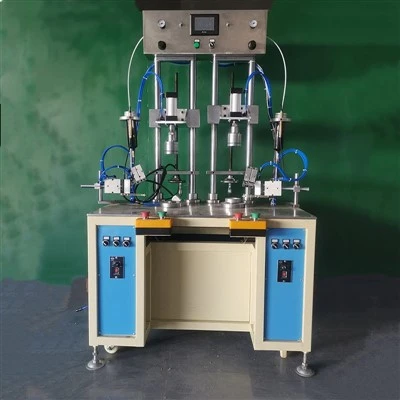
If you’re in the market for a Sheet Cylindrical Forming Machine, don’t just look at the price tag. Ask about how the machine maintains parallelism. Ask about the roll alignment, the adjustment system, the seam features. At the end of the day, a machine that produces consistent, parallel cylinders will save you money in scrap, labor, and rework. If you’re ready to talk about your specific needs—whether you’re making small medical parts, large HVAC ducts, or industrial pipes—we’re here to help. We can walk you through how our machines work, answer any questions you have about parallelism or any other feature, and help you find the right model for your production. Don’t let bad parallelism hold your production back—reach out today to learn more and discuss your requirements.
Sheet Cylindrical Forming Machine References
- Design Principles of Sheet Metal Forming Machinery, Industrial Press, 2018
- Precision Alignment Systems for Cylindrical Fabrication, Journal of Manufacturing Engineering, Vol. 12, No. 3, 2020
- Parallelism Tolerances in Fabricated Cylindrical Components, American Society of Mechanical Engineers (ASME) B89.1.1-2021
- PLC-Based Control for Roll Forming Processes, International Journal of Machine Tools and Manufacture, Vol. 65, 2012
Titagong (Dongguan) Machinery Co., Ltd.
We are one of the most reliable manufacturers and suppliers of sheet cylindrical forming machine in China. With abundant experience, we warmly welcome you to buy bulk high quality equipment in stock here and get pricelist from our factory. For price consultation, contact us.
Address: No.149, Qingyi Road, Qingxi Town, Dongguan City, Guangdong Province, China
E-mail: shuaizoe@gmali.com
WebSite: https://www.titagonggroup.com/
