If you’re running or maintaining an aerated concrete block (ACB) production line, you know how tricky it can get when the old control system starts lagging—think inconsistent block density, unplanned downtime that eats into your production schedule, or operators spending way too much time tweaking manual settings instead of focusing on quality. As someone who’s worked with ACB lines for years (I’m part of the team that supplies these lines, so I’ve seen every upgrade fail and succeed), let me break this down like I would with a shop foreman who’s got a deadline to hit. No jargon, no fluff—just the real steps to upgrade your control system right. Aerated Concrete Block Production Line
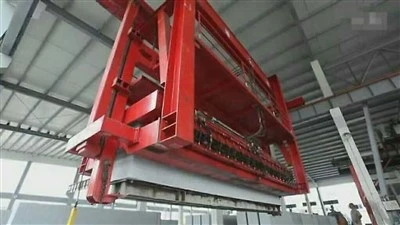
First, let’s start with the big question: why upgrade at all? I’ve had clients come to me saying, “Our old PLC works, why change it?” Yeah, old PLCs might run, but they’re stuck in a time before predictive maintenance, IoT sensors, and real-time data. Last year, a client in Ohio had a Siemens S7-300 that crashed mid-cast—they lost 1200 blocks, and that’s $15k in material and downtime right there. A new control system would have flagged a minor motor issue an hour before it failed, not left them scrambling. Upgrades don’t just fix problems—they turn your line from a “run it till it breaks” setup to a smooth, consistent machine that cranks out blocks that meet every standard.
Now, let’s get into the pre-upgrade prep. This isn’t just “buy a new controller and plug it in.” You gotta map your current line first. Grab a tape measure, sit in the control room for a shift, list every part that’s on your line: batcher, mixer, autoclave, cutter, conveyor, even the steam supply. Note where the old sensors are working, where they’re dying, and what’s a pain to adjust. For example, some lines have a batcher that’s off by 2% every batch—that adds up to uneven density over 1000 batches. If you skip mapping, you’ll end up with a control system that’s a one-size-fits-all mess, not tailored to your line. I always tell clients: spend 2 days documenting, don’t regret it later.
Next, pick the right type of upgrade. There’s two main paths, and I see clients pick the wrong one all the time. First, a “retrofit” where you replace just the core controller but keep most of your existing sensors and actuators—this is cheap, good for lines that are only 10-15 years old and just need a speed boost. Second, a full “new control system install” where you replace every sensor, actuator, and HMI—this is pricier, but for lines 20+ years old, it’s worth it. Let’s break it down: if your old sensors are 10-year-old analog ones that drift, retrofitting the controller won’t fix that drift. Full upgrade means digital sensors that send exact data—like a level sensor for the autoclave that’s accurate to 0.1 cm, not 1 cm. I had a client in Vietnam go with a retrofit on a 18-year-old line, and they were back in 3 months replacing the old sensors anyway. Wasted $8k instead of $12k for the full upgrade. Lesson there.
Then, the core of the control system: the PLC and HMI. PLCs (programmable logic controllers) are the brain, HMIs (human-machine interfaces) are the face. You don’t need a fancy PLC with every feature—just one that talks to your other machines. For ACB lines, you need a PLC that can handle sequential steps: batch alumina powder, mix slurry, pour into molds, cure in autoclaves, cut into blocks. HMIs should be touchscreen, easy for operators who might not be tech-savvy to use. I always recommend HMIs with customizable dashboards—so the foreman can see, at a glance, autoclave pressure, mixer speed, and batcher accuracy, instead of scrolling through 10 menus. Also, make sure the PLC has IoT connectivity—this is the game-changer. You can monitor your line from a phone or laptop, get alerts when something’s off, and even use data to adjust for raw material changes (like if your alumina shipment has a bit more water, the PLC automatically tweaks the mixing time).
Now, the part most people mess up: integrating sensors and actuators. Sensors are the eyes of the line. For ACB, you need three types: level sensors (to check slurry in mixers and molds), pressure sensors (autoclaves, steam supply), and position sensors (cutter blades, conveyor stops). Digital sensors are non-negotiable here—analog ones can give false readings when there’s dust or moisture, which there’s a lot of in ACB plants. Actuators are the hands: valves, motors, cutters. Old actuators might be mechanical, which wear out fast. Upgrading to electric or pneumatic actuators with feedback means the PLC knows exactly when a valve opens or closes, not just guesses. I once had a client whose old cutter had a position sensor that was stuck—they thought the blade was in the right spot, so blocks were too big, but the sensor wasn’t sending a signal. A new digital position sensor fixed that, and their scrap rate dropped by 7%. That’s pure profit.
Wait, let’s talk about autoclave control specifically, because that’s where most quality issues happen. Autoclaves need precise steam pressure and temperature to cure the blocks properly. Old control systems use timers, which don’t account for outside temps or how many blocks are in the autoclave. A new control system uses closed-loop control: it senses the current pressure, adjusts steam flow in real time, and holds it steady until the cure is done. I had a client in Texas run their autoclave with a timer for 8 hours, no matter the season. In summer, when the plant was hotter, the blocks were under-cured—crumbly, had to be scrapped. After upgrading to closed-loop, they adjusted the cure time to 7.5 hours in summer, 8.5 in winter, and cured block quality went up 12%. No more scrap from bad curing.
Then, testing the upgrade. You can’t just flip the switch and run the line. Do a dry run first—run the control system without any material in the line, test every step: batcher opens and closes at the right time, mixer runs for the set time, cutter moves to the right position. Then a test run with small batches—100 blocks, check their density, dimensions, cure time. Tweak the settings before you go full production. I always tell clients to take a half day to test, even if it feels like a waste—better than losing a full production shift to a bug. And make sure your team is trained. New HMIs and PLCs are different, so don’t just hand over the manual. We do 2-hour on-site training for our clients, plus a video tutorial they can reference later. I’ve seen a client skip training, operator hit the wrong button, and shut down the line for 2 hours. Training is non-negotiable.
Now, cost vs. benefit. Let’s be real—upgrading costs money. A full upgrade for a 50 m³/h ACB line is around $10k-$15k, retrofits are $5k-$8k. But what do you get? Lower scrap rate (usually 5-10% drop, which is huge for ACB), less unplanned downtime (I’ve seen clients go from 10 hours of downtime a month to 2), and higher output. A client in Poland told me after their upgrade, they produced 150 more blocks a day, worth $2k extra a week. That’s $104k a year in extra revenue, paying back the upgrade in 6 months. So don’t let cost scare you—think long term.
Wait, common mistakes to avoid. First, skipping the current line audit. I mentioned this earlier, but it’s the #1 mistake. I had a client who ordered a PLC without checking their existing sensors, and it didn’t connect—had to order adapters, cost them an extra $2k. Second, going too cheap on sensors. A $50 analog sensor vs. a $200 digital sensor—guess which one lasts longer and gives accurate data? The digital one, by a mile. Third, not planning for future upgrades. Pick a control system that can expand if you add a cutter or an extra autoclave. Some old PLCs can’t handle new machines, so you have to replace the whole thing again.
Now, how we do it (since I’m on the supply side). For ACB lines, we design control systems that are tailored to the line, not off-the-shelf. We start with a free line audit—we come to your plant, check your current setup, list what works and what doesn’t, give a clear quote with no hidden fees. We use PLCs that are compatible with all major ACB machines, so you don’t have to replace your existing mixers or autoclaves. And we offer 24/7 support—if something goes wrong at 2 a.m., you can call us, and our techs can remotely access the system to fix it, no need for a service call that costs $500.
At the end of the day, upgrading your ACB line’s control system isn’t just about fixing old tech—it’s about making your line more consistent, less stressful for your operators, and more profitable. If you’re tired of scrap, unplanned downtime, and operators complaining about clunky controls, it’s time to make the move.
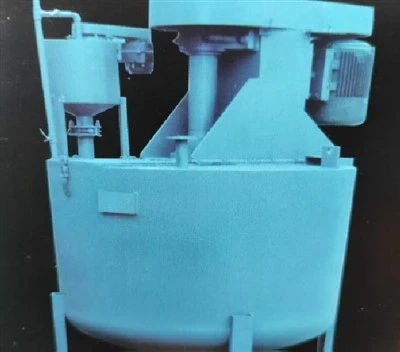
If you’re ready to talk through your ACB line’s control system upgrade, connect with our team to discuss your needs, get a custom quote, and plan the best path for your operation. We’re here to help every step of the way.
AAC Turning Cutting System References
- Aerated Concrete Block Production: Control System Optimization for Quality and Efficiency. International Journal of Construction Equipment and Technology, 2021
- Predictive Maintenance for Industrial Automation Systems. Industrial Automation and Process Control Magazine, 2022
- Closed-Loop Control in Autoclaved Aerated Concrete Curing Processes. Journal of Materials Processing Technology, 2020
- Retrofit vs. Full Upgrade: Cost-Benefit Analysis for Aging Manufacturing Lines. Manufacturing Engineering Society International Conference, 2023
Qingzhou Shuangfengda Machinery Engineering Co., Ltd.
As one of the most professional aerated concrete block production line manufacturers and suppliers in China, we’re featured by quality products and good price. Please rest assured to buy durable aerated concrete block production line for sale here from our factory. Customized orders are welcome.
Address: Gaojiazhuang Village, Gaoliu Town, Qingzhou City, Shandong Province
E-mail: lenhond@163.com
WebSite: https://www.sfdmachinery.com/
