If you’ve ever walked through a job shop, tool and die facility, or aerospace component manufacturing floor, you’ve probably spotted a wire EDM machine tucked into a corner, humming quietly while it carves intricate shapes that would be impossible to make with a traditional milling tool. As someone who’s supplied EDM equipment to shops of all sizes for over 12 years, I still get questions from new operators and small business owners who aren’t quite sure what makes wire EDM tick—especially since it doesn’t cut with a spinning blade, drill bit, or any physical tool that touches the workpiece. Today, I’m breaking down the working principle of wire EDM, in plain, practical terms, so you’ll understand exactly how this technology works, and why it’s such a game-changer for precision manufacturing. EDM Machine

First, let’s clear up a common misconception: EDM stands for Electrical Discharge Machining, and “wire” refers to the thin, consumable metal wire that does all the heavy lifting. Unlike conventional cutting processes that apply force to material, wire EDM relies on controlled electrical sparks to erode material away from the workpiece. That sparks part is the core of the whole system, so let’s dive into how those sparks work.
At the heart of every wire EDM machine is a power supply that generates short, high-voltage electrical pulses—think 100 to 200 volts, but only lasting a few millionths of a second. The wire is one electrode, connected to the negative terminal of the power supply, and the workpiece (usually a conductive material like steel, aluminum, titanium, or carbide) is the other electrode, connected to the positive terminal. Before any sparks can fly, there’s a gap—called the spark gap—between the wire and the workpiece, usually just 0.001 to 0.01 millimeters wide. That gap is filled with a dielectric fluid, almost always deionized water or sometimes mineral oil, which serves two critical purposes: it insulates the gap so electricity doesn’t arc randomly, and it flushes away the tiny eroded metal particles (called debris) that would otherwise clog the gap and cause bad cuts.
When the power supply sends a pulse, the voltage across the spark gap gets high enough to break down the dielectric fluid, creating a tiny, superheated plasma channel between the wire and the workpiece. That plasma can reach temperatures of up to 10,000 degrees Celsius—hotter than the surface of the sun. At that heat, a tiny portion of the workpiece (and a tiny bit of the wire) melts, and even vaporizes instantly. The dielectric fluid’s flow then flushes that molten and vaporized material away, so it doesn’t redeposit on the workpiece and ruin the finish. Each pulse removes a microscopically small amount of material—less than a micrometer per pulse—and thousands of these pulses happen every second. Over time, this controlled erosion carves out the exact shape programmed into the machine, no physical tool contact required.
Now, there are two main types of wire EDM machines, and their working principles are nearly identical, but the setup differs a bit depending on the application. The first is called “submerged wire EDM,” where the entire workpiece and wire path are fully immersed in dielectric fluid. This is the most common type for general precision work, and it’s great for reducing burrs and getting a smooth surface finish because the fluid flushes debris more evenly. The second type is “wet wire EDM,” often used for very thick workpieces or high-speed cutting, where the dielectric is applied as a continuous stream rather than a full bath. Then there’s also “slow-speed” and “high-speed” wire EDM, which refers to how often the wire is replaced. Slow-speed (or classical) wire EDM uses a single, unused spool of wire that’s fed through the machine once, so it never wears out or gets contaminated—this is the type we supply for tool and die work, where finish accuracy is everything. High-speed wire EDM uses a continuously moving spool of wire, often recycled or cheaper brass, which cuts faster but produces a slightly rougher finish, good for jobs that don’t need sub-micrometer precision.
One of the biggest advantages of wire EDM, which ties directly back to its working principle, is that there’s no mechanical force applied to the workpiece. That means even delicate, thin parts—like aerospace turbine blades, medical implant components, or tiny gears for watches—can be cut without bending or warping, a problem that plagues traditional machining when dealing with thin or brittle materials. It also works on any conductive material, regardless of hardness, so you can cut hardened steel, titanium, or carbide just as easily as soft aluminum, which is impossible with most milling tools that dull when cutting hard materials. That’s a huge reason why wire EDM is the go-to for making injection molds, die sets, and complex parts for automotive and medical industries.
But a wire EDM machine isn’t just the power supply, wire, and dielectric fluid—it has a whole system that controls every part of the process to get consistent, accurate cuts. The wire itself is usually a thin brass wire, sometimes coated with zinc for better spark stability, ranging from 0.05 millimeters to 0.3 millimeters in diameter. The machine has wire guides—usually made of diamond or sapphire, because they’re hard and resist wear—that hold the wire perfectly aligned as it moves through the cutting path. These guides are adjusted with incredible precision, often to within a few micrometers, to make sure the wire doesn’t vibrate as it cuts; even a tiny vibration would create a rough, inaccurate cut.
The machine also uses a CNC (Computer Numerical Control) system that reads a CAD or CAM file and translates it into precise movements for the wire and the workpiece. For 2D cuts, the workpiece stays on a fixed table, and the wire moves along the programmed X and Y axes. For 3D cuts, some wire EDM machines have a tilting head that lets the wire move along the Z axis and rotate, cutting complex shapes like tapered holes or curved parts. The CNC system also adjusts the pulse timing, voltage, and dielectric flow in real time based on feedback from sensors that monitor the spark gap. If the gap gets too small, debris is building up, so the machine automatically reduces the voltage to prevent short circuits. If the gap is too large, it increases the voltage to maintain stable sparks. That real-time adjustment is what prevents errors and ensures the cut stays accurate, even over long runs.
I’ve seen this technology solve problems that traditional machining can’t, and I want to share a quick example to make it real. A customer of mine last year, a small medical device manufacturer, needed to make 10,000 tiny titanium gears for insulin pumps. Each gear was just 8 millimeters in diameter, with teeth only 0.2 millimeters wide. Their old CNC mill was taking 2 hours per gear, and the thin teeth kept breaking off during cutting, leading to a 30% scrap rate. We replaced their mill with a slow-speed wire EDM machine, and now each gear cuts in 15 minutes, with a scrap rate of less than 1%. No bending, no broken teeth, and the surface finish is smooth enough that the gears don’t need any additional polishing. That’s the power of wire EDM’s principle—using sparks instead of force to cut delicate, hard materials with unheard-of precision.
Now, let’s address a common question: why don’t all shops use wire EDM for every part? The answer comes down to material conductivity, part size, and cost. Wire EDM only works on conductive materials, so you can’t cut plastic, glass, or ceramic with it, which limits its applications. It’s also slower than traditional machining for large, simple parts—if you need a 10-centimeter steel block with a few holes, a mill will cut that in minutes, while wire EDM would take hours. And since the wire is a consumable, the cost adds up for high-volume, simple jobs. But for precision, complex, or delicate parts, it’s irreplaceable.
If you’re a manufacturing manager, toolmaker, or engineer working on a project that requires tight tolerances, intricate shapes, or hard-to-cut materials, wire EDM is almost certainly worth exploring. As a supplier, I work with teams to match them to the right wire EDM machine for their specific needs—whether they’re a small shop making custom molds or a large aerospace facility producing turbine components. We don’t just sell equipment; we provide training and support to make sure your team gets the most out of the technology, because we’ve seen firsthand how it can streamline production and reduce scrap for our customers.
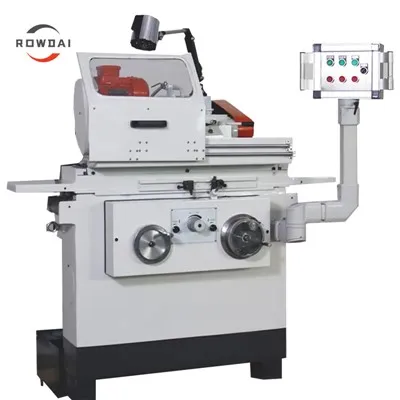
Compound Grinding Machine If you’re ready to learn more about how wire EDM can improve your manufacturing process, or if you have questions about which machine is right for your project, we encourage you to reach out for a no-obligation consultation. Whether you’re cutting titanium medical parts, hardened steel dies, or precision gears, we have the solutions to meet your requirements.
References
- Jameson, E. C. (2001). Electrical Discharge Machining. Society of Manufacturing Engineers.
- Krupp, A. (2018). Advanced Wire EDM Technology for Precision Manufacturing. Journal of Manufacturing Processes.
- Miller, S. (2020). Fundamentals of Die and Mold Making: Wire EDM Applications. Industrial Press.
- Tötterman, A. (2019). Dielectric Fluid Performance in Wire EDM: Effects on Surface Finish and Material Removal Rate. Precision Engineering Journal.
Henan Rowdai Machinery Equipment Co., Ltd.
As one of the most professional edm machine manufacturers in China, we’re featured by quality products and good price. Please rest assured to buy high-grade edm machine for sale here from our factory. If you have any enquiry about cooperation, please feel free to email us.
Address: Building 9, E-Commerce Industrial Park, High-Tech Zone, Zhengzhou, Henan, China
E-mail: rowdai@rowdai.com
WebSite: https://www.rowdai.com/
