If you’ve ever asked me, “How much does a plastic drying machine actually weigh?” I don’t just give you a number off the top of my head. As someone who’s built and shipped this equipment for 12 years, I know that weight isn’t just a random stat—it’s a clue to how it’s built, what it can handle, and whether it’ll hold up when you’re running a 24/7 production line. Let me break this down like I would for a new customer walking into my workshop, no confusing jargon, no empty stats. Plastic Drying Equipment
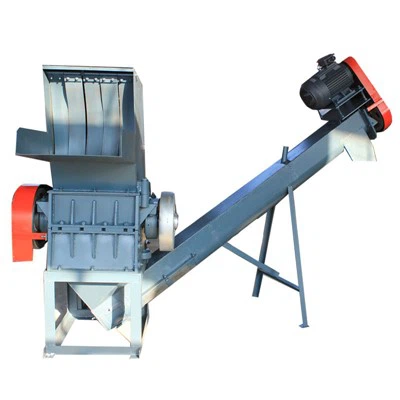
First, let’s get one thing straight: there’s no single “weight” for plastic drying equipment. It’s not like a washing machine that comes in one size. The weight depends entirely on what the machine is designed to do, what materials it uses, and even how it’s packaged for shipping. I’ve seen units that tip the scale at 150 pounds and others that hit 5,000 pounds, and both are completely normal for different use cases. Let’s start with the smallest machines, the ones our team builds for small injection molders or small extrusion runs. These are usually the compact dehumidifying dryers, the kind that sit right next to a single molding machine for smaller parts, like toy components or electronic connectors.
A compact desiccant dryer—say, a unit with a 25-pound desiccant bed and a hopper that holds 50 pounds of plastic resin—usually weighs between 150 and 250 pounds. Wait, let’s be specific: the desiccant alone is a big part of that weight. Desiccant is the material that pulls moisture out of plastic, and it’s a porous, heavy mineral (most commonly activated alumina or molecular sieve) that does the heavy lifting for drying. If a compact machine uses a larger desiccant bed, like 50 pounds instead of 25, that adds 25 pounds right there, so the weight jumps up. Then there’s the hopper, which is usually stainless steel—stainless is strong, but it adds weight compared to plastic hoppers, and we use it because it doesn’t leach chemicals into food-grade plastics. The heating element and the small blower motor add a bit more, maybe 10 to 20 pounds total. Even the control panel, the digital screen that lets you set your drying temperature, adds a few pounds.
I remember a customer last year who wanted a compact dryer for his small business making custom phone cases. He asked why ours was 220 pounds, while a competitor’s was listed at 160 pounds. I told him: ours has a 50-pound desiccant bed, a stainless steel hopper, and a industrial-grade blower that can pull 100 cubic feet of air per minute (CFM), while the competitor’s used a 25-pound desiccant bed, a thinner steel hopper, and a smaller blower. The lighter unit might have been fine for his first run, but when he decided to scale up, he’d have to replace it in six months. Weight matters here because it’s a quick way to tell if the machine has the parts to last, not just sit in a corner.
Now move up to mid-sized machines, the ones for medium production lines—think molders making automotive parts, like bumper components or interior trim, or extrusion lines making pipes or sheets for construction. These are the workhorses, and their weight reflects that. A mid-sized dehumidifying dryer, with a hopper holding 500 to 1,000 pounds of resin, usually weighs between 1,500 and 3,000 pounds. Let’s break that down. First, the desiccant bed here is way bigger—usually 200 to 500 pounds of activated alumina. That’s a huge chunk of weight, and it’s why these machines are built with heavy-duty frames so they don’t tip over. The hopper is still stainless steel, but it’s a lot larger—5 to 10 feet tall, with reinforced walls to hold that much hot plastic resin. Then there’s the heating system: mid-sized dryers need 10 to 50 kilowatts of heat (we use stainless steel heating elements, not the cheaper nickel-chrome ones that burn out fast), which add another 100 to 200 pounds. The blower motor is industrial, usually 5 to 20 horsepower, and those motors are heavy—each one alone is 150 to 300 pounds. Even the desiccant regeneration system, which heats the desiccant to dry it out after it pulls moisture, adds weight: that’s a separate chamber, another heating element, and a small blower, all bolted to the main frame.
Last year we shipped a mid-sized unit to a customer in Michigan who runs a line making automotive door panels. He called us two days after it arrived, panicking because his forklift couldn’t lift it—he thought we’d sent the wrong machine. When we asked, he said the spec sheet said “2,100 pounds,” and when he weighed the pallet it was 2,450 pounds. I explained that the spec sheet number is usually the machine itself, and the pallet, packaging, and even a test run of desiccant we ship with it adds 10 to 15% of the total weight. We’ve had customers get confused about that, so now we always specify: “Dryer weight (without resin) is 2,100 lbs, total shipped weight is ~2,500 lbs.” That avoids the “wait, this is heavier than the quote” call.
Then there are the big machines, the heavyweights for large-scale production—think Fortune 500 companies running 24/7 lines, making things like water bottles, industrial packaging, or large automotive parts. These are the units that fill hoppers with 5,000 to 20,000 pounds of resin, and they’re built like small buildings. Their weight ranges from 3,500 pounds all the way up to 5,000 pounds. Let’s be clear: these aren’t small units, they’re fixed to the floor sometimes, because moving a 5,000-pound dryer requires a crane, not just a forklift. The desiccant bed here is massive—1,000 to 2,500 pounds, because large production lines need constant drying, so the desiccant has to be durable enough to handle months of use without needing replacement. The hopper is sometimes insulated too, because we don’t want heat escaping and wasting energy, and insulation adds another 50 to 100 pounds. The heating system is way bigger: 100 to 500 kilowatts, which means large heating elements and heavy wiring. Even the frame is heavy-gauge steel, not the 10-gauge we use for mid-sized machines, but 12-gauge, which adds strength and weight.
I worked on a custom unit for a food packaging company in Ohio two years ago. They needed a dryer that could handle 20,000 pounds of PET resin per day, and they had a specific requirement: it had to be mounted on a mezzanine above their extrusion line, so we had to calculate the exact weight for the structural engineers. We built the dryer, and when we tested it in our workshop, it came out to 4,820 pounds, which was 20 pounds over their initial estimate. We had to swap out some of the smaller valves for lighter stainless steel valves, and adjust the desiccant bed size by 10% to shave the extra weight. That’s the thing about large machines—weight isn’t just a number, it’s a critical part of the design, especially when you’re working with existing facility layouts.
Now, you might be thinking: why does weight even matter? Can’t I just get the lightest machine to save on shipping? Let me tell you, that’s a mistake I see customers make all the time. Weight is a direct indicator of build quality. A light compact dryer (100 pounds instead of 150) probably uses thin steel, a small desiccant bed, and a low-quality blower. That means it’ll dry your plastic inconsistently, break down every six months, and cost you more in downtime and repairs than a slightly heavier unit that lasts five years. I’ve had customers come to us after buying a light, cheap dryer online, and tell me they had to replace it in a year because it couldn’t keep up with their production. One customer in Texas last year said his $1,200 dryer lasted 8 months, then spent $3,000 on repairs, and then bought our unit for $4,500, which has been running 18 months without a single issue. Our unit is 50 pounds heavier, but that extra weight is worth every penny.
Another thing: weight affects installation. If you’re putting a dryer on the second floor of a production facility, you need to know the floor capacity. If a mid-sized dryer is 2,200 pounds, you need to make sure the floor can handle that, plus the weight of the resin in the hopper (which adds another 1,000 pounds). If you don’t check that, you could have structural issues, which is a huge safety hazard. We always include weight specs in our installation guides, and we offer to work with your structural engineer to make sure everything fits.
Wait, let’s also talk about the difference between air dryers and desiccant dryers, because that’s a big part of weight too. A lot of people don’t realize there are two main types of plastic drying equipment: air dryers (also called hot air dryers) and desiccant dryers. Air dryers work by blowing hot air over the resin to pull moisture, and they’re usually lighter, because they don’t have a desiccant bed. A compact air dryer for small parts is usually between 50 and 150 pounds, while a mid-sized air dryer is 1,000 to 2,000 pounds. But here’s the catch: air dryers don’t dry high-moisture plastics like PET, nylon, or PBT, which are common in automotive and food packaging. For those, you need a desiccant dryer, which is heavier because of the desiccant bed, as we talked about. I always tell customers: if you’re working with PET, don’t waste money on a light air dryer—it won’t do the job, and you’ll have bad parts coming off your line.
Let me also address something else: shipping weight. A lot of suppliers list “machine weight” without packaging, but when you’re buying equipment, you have to account for the pallet, the crating, and sometimes extra parts. For example, a compact dryer might have a machine weight of 200 pounds, but when it’s crated for shipping, it’s 250 to 275 pounds, because the crate is heavy, and we include extra hoses, filters, and a spare heating element. For large units, shipping weight can be 10 to 15% more than the machine weight, because we use heavy wooden crates to protect the equipment during transport. We always disclose both weights on our product sheets, so there are no surprises when your delivery arrives.
I’ve also had customers ask if they can modify the weight of a dryer. For example, they want a lighter unit because they’re moving it around their facility a lot. We do build portable dryers, usually compact units on wheels, which are 15 to 20 pounds lighter than the fixed units, because we use lighter frames and smaller, yet still durable, parts. But even the portable models are built to last—we don’t skimp on the desiccant or the blower. If a customer needs a fixed unit, we can’t make it lighter without sacrificing quality, and I’ll tell them that straight up. I’d rather lose a sale than have a customer regret buying a machine that breaks down.
Here’s a real example from our workshop. Last month, we built three identical mid-sized desiccant dryers for three different molders. All three had the same hopper size, same desiccant bed, same blower. Unit 1 was 2,280 pounds, Unit 2 was 2,310 pounds, Unit 3 was 2,295 pounds. The small difference in weight was from minor variations in the steel framing—nothing to worry about, all within our quality control specs. When the customers called, they all asked why the weight was slightly different, and we explained that it’s normal for steel fabrication, and none of it affects performance. That’s the kind of transparency we give every customer, no matter how big or small their order is.
So, to sum up: the weight of plastic drying equipment varies based on the type (air vs. desiccant), size (hopper capacity), desiccant volume, build materials, and whether it’s portable or fixed. Compact units range from 150 to 250 pounds, mid-sized workhorses are 1,500 to 3,000 pounds, and large heavy-duty units go from 3,500 to 5,000 pounds. But more importantly, weight is a proxy for quality—heavier units with higher-quality parts will save you money in the long run by reducing downtime and bad parts.
If you’re looking for a plastic drying machine, don’t just look for the lightest option, or the cheapest. Ask about the weight, what parts make up that weight, and what it means for your production. We’ve been helping molders and extrusion companies pick the right dryer for 12 years, and we can walk you through every spec, including weight, to make sure you get a machine that fits your needs, not just your budget.
Ready to talk about your production line, and find the perfect plastic drying equipment for your facility? Reach out to our team to discuss your requirements, get a detailed spec sheet, and ask any questions you have about weight, build quality, or performance. We’re here to help, no sales pressure, just honest advice for your business.
Plastic Crushing Equipment References
- Plastic Technology. (2021). "Dehumidifying Dryers: Selection and Operation". Plastics Machinery & Manufacturing.
- Rosato, D. V., & Rosato, D. V. (2012). Plastic Product Material and Process Selection Handbook. William Andrew.
- Association of Rotational Molders International. (2019). "Guidelines for Drying Engineering Resins". ARM International Standards.
Laizhou Yuening Machinery Co., Ltd.
As one of the most reliable plastic drying equipment manufacturers in China, we warmly welcome you to buy cheap plastic drying equipment made in China here from our factory. All customized machines are with high quality and low price. For pricelist, contact us now.
Address: Yuanjia Village, Luwang, Shahe Town, Laizhou City, Yantai City, Shandong Province
E-mail: yueningjixie@163.com
WebSite: https://www.ynplasticmachinery.com/
