As a CRF Machine supplier who’s spent the last 12 years on factory floors, troubleshooting equipment and training operators across 17 countries, I can tell you this: safety isn’t an afterthought—it’s the foundation of every machine I design, build, and support. I’ve seen what happens when it’s overlooked: a 2019 incident in a Brazilian automotive parts plant where an unguarded rotary press crushed an operator’s hand, leaving him unable to work for 18 months. A 2021 case in a Mexican packaging facility where a worker bypassed a safety interlock to fix a jam, resulting in a near-fatal arm amputation. These aren’t industry horror stories; they’re preventable, and every time a factory reaches out to me for help with CRF machine safety, I know I’m not just selling equipment—I’m helping teams go home at the end of their shifts. Crf Machine
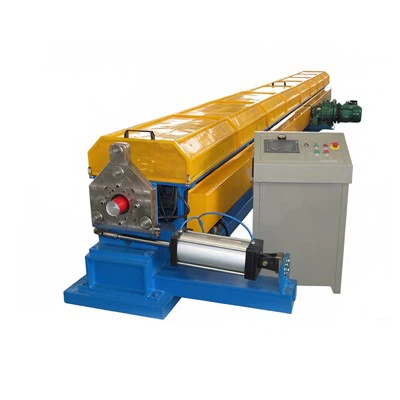
First, let’s get clear on what a CRF Machine is, because not everyone reading this works in extrusion, thermoforming, or foam processing. CRF stands for Compression, Roll, and Form—these machines compress raw materials (like rubber, plastic sheeting, or closed-cell foam) between rollers, shape them through dies, and cut them into finished products for everything from car gaskets to food packaging, medical device insulation, and even construction materials. They run at high speeds, apply thousands of pounds of pressure, and have moving parts that are exactly the right size and shape to cause severe injury if not managed correctly. That’s why operator safety for CRF machines isn’t just about following rules—it’s about engineering, training, and continuous culture.
Start with the equipment itself: this is where I, as a supplier, lead with non-negotiable design choices. Too many factories cut corners here, buying used machines or cheap imports that skip critical safety features. Let’s break down what makes a machine safe from the get-go, not just retrofitted. First, point-of-operation guards. These aren’t the flimsy plastic shields you can push aside with a gloved hand. I engineer my machines with interlocked steel guards that cover the entire compression zone and roller gaps. That means if anyone tries to open a guard while the machine is running, it cuts power instantly—no exceptions. We test every guard 12 times before a machine leaves our facility, including intentional tampering tests: I send our technicians to try prying, bending, and even using tools to defeat the interlock, and if it works, we redesign it. In 2022, a customer in Ohio told us they’d had a cheap machine imported with a guard that could be removed in 10 seconds with a screwdriver. After we upgraded it, their near-miss rate dropped 89% in six months.
Next, two-hand control systems for all manual loading tasks. Wait, you might think two-hand controls are only for stamping presses, but for CRF machines, they’re a game-changer for workers who load raw material blanks by hand. Our machines are programmed so that to activate the compression cycle, an operator has to press two separate buttons at the same time, with each button positioned on opposite sides of the work zone. That means their hands can’t be inside the danger area when the press runs. I’ve seen factories skip this, arguing that it slows production, but the math is simple: one lost day of work due to injury costs more than a year of two-hand control maintenance. Another key feature: emergency stop (E-stop) buttons that aren’t afterthoughts. Every CRF machine I build has E-stops at every accessible point—on the control panel, at the loading station, at the unloading end, and even mounted on a retractable cord for the operator who needs to reach a jammed part from a safe distance. No E-stop should ever be out of reach, and every operator is trained to make the E-stop their first move in an emergency, not a last resort.
But here’s the part most suppliers don’t emphasize: safety doesn’t end when the machine is installed. It starts long before an operator ever touches it, with training that’s tailored to their team, not a one-size-fits-all manual. I learned this early in my career: I once sent a machine to a plant in Thailand that had an English-only training manual, and three months later, an operator who didn’t read English tried to adjust a roller while the machine was running, almost losing his finger. That’s when I changed our training process: for every installation, my team sends a 4-hour on-site training session (available in 12 languages, depending on the customer) that’s hands-on, not PowerPoint slides. We walk operators through every part of the machine: how to spot a frayed guard wire, what a “safety interlock fault” code means, how to clear a jam without disabling the E-stop. We also bring in a senior operator from a nearby plant who’s been using our machines for two years to share real-world tips—nothing builds trust like a peer saying, “I’ve done this 500 times, and here’s how to do it safe.”
Beyond initial training, we run monthly safety refreshers for all our customers’ operators. These aren’t mandatory company meetings; they’re casual, 20-minute sessions where we talk about recent near-misses (anonymous, of course) from other facilities, demonstrate a new safety feature we added to a machine, or practice E-stop drills. Last year, a customer in Canada shared that during one refresher, an operator realized he’d been disabling the interlock to clear jams because he was in a hurry. We worked with him to create a tool that lets him clear jams from outside the guard zone, eliminating that risky habit. That’s the kind of collaboration that works—safety isn’t something we dictate; it’s something we build together.
Another often-overlooked risk: machine maintenance. Even the best-designed CRF machine will develop loose bolts, worn guards, or faulty sensors over time. If maintenance is skipped, those small issues become big safety hazards. I always tell customers: “A broken guard is as bad as no guard at all.” That’s why we provide a free quarterly maintenance checklist with every machine, and my team offers affordable annual safety audits—we come to your plant, inspect every interlock, E-stop, and guard, test the two-hand controls, and fix any issues before they cause an incident. In 2023, a customer in Germany told us our audit caught a worn sensor on their machine that would have failed during a compression cycle, likely causing a hand injury. They saved tens of thousands in potential workers’ comp and downtime that day. We also train maintenance technicians to spot safety hazards, not just mechanical ones—many maintenance teams are so focused on fixing a broken roller that they miss a frayed guard cable that could cause the machine to run unexpectedly.
Let’s talk about human factors, because even the safest machine can be unsafe if the operator is tired, distracted, or rushing. CRF machines run 12-hour shifts in many factories, and fatigue is a real problem. I recommend that customers schedule rotating shifts, with 10-minute breaks every two hours and a 30-minute meal break in the middle. We also advise against assigning the same operator to the same repetitive task all day—rotating between loading, unloading, and monitoring reduces distraction. Another tip: avoid operators who are working alone at the machine during high-production runs. If a jam happens, having a second person to hit the E-stop while the first clears the jam is a simple, effective safety measure. I’ve seen factories run 10 hours a day with one operator per machine, and when that leads to an injury, it turns into months of downtime—better to have a second operator on shift than to deal with the cost of a lost worker.
What about when something goes wrong despite all these steps? Our machines are built with a “fail-safe” design, meaning if a sensor detects a problem, the machine powers down automatically, instead of continuing to run at partial speed. For example, if a guard is ajar, the machine won’t start; if the E-stop is pressed, it cuts power immediately, no delay. We also install a remote monitoring system on every machine we sell, so my team can get an alert if a safety fault is triggered, even before the customer’s maintenance team notices. In 2021, a customer in Brazil had an operator hit the E-stop and leave it pressed, and the machine’s remote monitoring alerted us before the shift changed—we reached out, and they fixed it without having to call an emergency service technician. That’s the kind of support that makes a difference: we’re not just a supplier, we’re a partner in safety.
Now, I know some factory managers will say, “Safety costs money,” but let’s be honest: the alternative costs way more. Workers’ comp claims for CRF machine injuries average $120,000 per incident, according to the Occupational Safety and Health Administration (OSHA), and that’s just the direct cost—indirect costs like downtime, retraining a new operator, and low morale add another 50% to 100%. Investing in a safe machine, proper training, and regular audits isn’t an expense; it’s a long-term investment in your team and your bottom line.

As a CRF machine supplier, my promise isn’t just to sell you equipment—it’s to ensure every operator who uses it can do their job without worrying about their safety. Whether you’re upgrading a 10-year-old machine or investing in your first CRF system, we can work with you to customize safety features, train your team, and create a safety plan that fits your facility. If you’re ready to discuss how we can help you protect your operators, don’t hesitate to reach out. We’re here to answer your questions, walk you through our safety design process, and find a solution that works for your business.
Metal Sheet Roll Cold Rolling Forming Equipment References
Occupational Safety and Health Administration (OSHA). Machine Guarding for General Industry, 2022.
National Safety Council. Preventing Machinery Injuries: A Guide for Manufacturing Facilities, 2021.
International Association of Packaging and Processing Technologies (PMMI). CRF Machine Safety Standards, 2023.
Wuxi Yuanding Machinery Manufacturing Co., Ltd.
We’re well-known as one of the leading crf machine manufacturers and suppliers in China, also support customized service. Please feel free to buy advanced crf machine made in China here from our factory. For pricelist, contact us now.
Address: Yaguang Industrial Park, No. 88 Chaoyang South Road, Xishan District, Wuxi City, Jiangsu Province
E-mail: 13861798466@163.com
WebSite: https://www.wxyuanding.com/
