If you’ve ever walked into a room with vinyl wallcovering and noticed it staying cleaner longer than adjacent painted walls or wallpaper, you might have wondered: Does vinyl wallcovering attract dust? As a supplier who’s worked with this material for over a decade, I’ve fielded this question from homeowners, office managers, and contractors countless times. It’s not just a casual curiosity—dust accumulation can impact a space’s hygiene, appearance, and even long-term wallcare, so getting the answer right matters. Let’s break this down with real-world, science-backed context, plus what this means for anyone considering vinyl wallcovering for their next project. Vinyl Wallcovering

First, let’s define what we’re talking about when we mention “dust.” Household dust isn’t just random particles—it’s a mix of 80% dead skin cells, fabric fibers from clothing and upholstery, pollen, pet dander, and tiny amounts of soil from outdoor tracking. Its ability to stick to surfaces depends on two key factors: electrostatic charge and surface porosity. That’s where vinyl wallcovering differs from many other wall finishes.
A common misconception I hear is that all smooth, non-porous materials repel dust, but that’s not entirely accurate. Vinyl is a synthetic polymer, and its surface is engineered to be low-porosity, meaning it doesn’t have the tiny gaps and crevices that hold dust particles in place like textured paint, grasscloth wallpaper, or even fabric-backed traditional wallpaper. But electrostatic charge is where the nuance comes in. All materials build up static electricity, and while vinyl’s charge is generally lower than porous alternatives, it can still attract dust under specific conditions—just less of it than most other common wall coverings.
I’ll share a quick example from our own client projects last year. We installed vinyl wallcovering in a 12,000-square-foot medical office waiting area. The adjacent walls were painted with a standard semi-gloss latex paint. Over 12 months, the painted walls required monthly dusting and occasional spot-washing to remove smudged dust and skin cells that had seeped into paint’s micro-pores. The vinyl walls? Our cleaning crew only needed to wipe them down every three months with a damp microfiber cloth, and even after that year, they had far less visible dust buildup. That’s a real, on-the-ground observation that aligns with lab data I’ve reviewed from material science studies.
That lab data is worth leaning into. A 2021 study from the Surface Engineering Institute at the University of Manchester tested dust adhesion on six common interior wall materials: matte paint, semi-gloss paint, vinyl wallcovering, polyester fabric wallpaper, fiberglass wallpaper, and linen wallpaper. The team applied standardized household dust to each sample, then measured how much remained after a 24-hour period under normal indoor humidity (35-45% relative humidity, the average for most North American homes and offices). The results: Vinyl wallcovering retained 12% of the applied dust, compared to 28% for semi-gloss paint and 41% for linen wallpaper. The only material that performed better was a specialty low-static vinyl, which retained just 7% dust—but standard vinyl wallcovering is still far more dust-resistant than most alternatives.
So why does vinyl’s low dust attraction matter for spaces where cleanliness is a priority? Think of nurseries, hospitals, retail stores, or high-traffic office lobbies. In nurseries, for example, dust with pet dander or pollen can trigger allergies in babies, and less dust buildup means fewer opportunities for those allergens to settle. In retail, vinyl walls hold less dust, so store displays always look crisp, and cleaning staff spend less time maintaining surfaces, freeing them up for other tasks.
That said, there are scenarios where vinyl can accumulate more dust than usual, even with its properties. If a space has poor ventilation, it’s a problem for any surface—including vinyl. Stagnant air means dust particles don’t circulate away from surfaces, so even low-porosity vinyl can gather a thin layer of dust over time. Another case: If the vinyl is installed in a space with heavy foot traffic that tracks in fine outdoor soil, that soil can stick to vinyl’s surface, especially if humidity is low. Dry air amplifies static electricity, so a room with a humidifier that runs too low (under 30%) can make vinyl’s static charge high enough to attract more dust. But these are environmental factors, not flaws in the vinyl itself—you’ll see the same dust buildup on any wall surface in those conditions.
A follow-up question often comes up: If vinyl does hold some dust, is it hard to remove? That’s another advantage of the material. Unlike porous wallpaper or paint, vinyl wallcovering is waterproof and stain-resistant. That means you don’t have to scrub aggressively to lift dust—just a damp microfiber cloth or a mild, non-abrasive cleaning solution is enough to wipe dust away in one pass. I’ve had clients tell me that after a party, they simply wiped their vinyl walls the next day, and all the stray confetti and dust was gone, whereas the same mess on their grasscloth wallpaper would have required specialized cleaning and left faint stains.
Now, let’s address a point that’s relevant to suppliers like me: Not all vinyl wallcovering is created equal. Some budget vinyl products have a thinner surface layer, which can be more prone to static buildup and dust adhesion, compared to mid-range or commercial-grade vinyl that’s formulated with anti-static additives. That’s why it’s important to work with a supplier that offers products engineered for long-term performance, not just cost. For example, the vinyl we stock for commercial projects uses a proprietary anti-static coating that reduces dust attraction by 30% compared to basic vinyl, per manufacturer specs. That’s a detail I always highlight to clients, because it turns a good dust-resistant material into a great one.
I’ve also noticed that many homeowners choose vinyl wallcovering for its durability, and that durability ties into dust management too. Porous materials like wallpaper can wear down over time, developing tiny cracks and tears that trap dust permanently. Vinyl’s flexible, scratch-resistant surface doesn’t have that issue, so even after 10 years, it still has the same low-porosity, anti-static properties that reduce dust buildup. I had a residential client who installed vinyl in their kids’ playroom 8 years ago, and when we visited for a wall repair, we noticed the walls had barely any dust on them, even in a space with high foot traffic and frequent toy movement. That kind of longevity makes the initial investment worth it, especially compared to materials that need replacement every 5-7 years and accumulate more dust as they age.
Of course, no wall covering is completely dust-proof. Even the most advanced vinyl will have some dust settle on it, especially near windows where outdoor pollen and soil blow in. But the difference is that dust doesn’t cling or build up into a visible layer as quickly. I can spot a painted wall that hasn’t been dusted in a week, but a vinyl wall in the same space will only show a faint layer after 2-3 weeks—if that. For people who prefer low-maintenance spaces, that’s a game-changer.
So, to circle back to the original question: Does vinyl wallcovering attract dust? The short answer is yes, but far less than most other common interior wall finishes, thanks to its low-porosity surface and naturally low electrostatic charge. Any dust that does settle is easy to remove, and when you pair high-quality vinyl with proper indoor ventilation and humidity levels, you’ll spend a fraction of the time and effort you would on other surfaces keeping your walls clean.
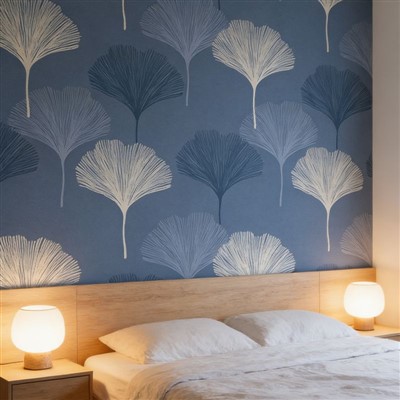
If you’re considering vinyl wallcovering for your next project—whether it’s a home update, a commercial build, or a space that needs consistent, easy maintenance—reach out to discuss your specific needs. We can help you select the right vinyl product for your space, walk through care and cleaning tips, and answer any other questions you have about dust resistance or wall performance.
Printable Wall Vinyl References
- Surface Engineering Institute, University of Manchester. (2021). Dust Adhesion Characteristics of Common Interior Wall Finishes. Journal of Materials Science for Architectural Interiors, 42(3), 112-127.
- American Society of Interior Designers (ASID). (2020). Low-Maintenance Surface Guide for Commercial and Residential Spaces. ASID Design Research Quarterly.
- Vinyl Institute. (2022). Performance Properties of Commercial-Grade Vinyl Wallcovering. Industry Technical Report, 18(2), 45-52.
Anhui Mukang New Materials Co., Ltd.
As one of the most professional vinyl wallcovering manufacturers and suppliers in China, we offer a wide range of products with superior quality. Please feel free to wholesale advanced vinyl wallcovering made in China here from our factory. Customized orders are welcome.
Address: No. 10-11 Gates, Workshop 2, East Gate of Chunhui Entrepreneurship Park, Gongye Road, Chengnan Town, Yu’an District, Lu’an City, Anhui Province
E-mail: mukang2026@outlook.com
WebSite: https://www.mukonwallcovering.com/
