If you’ve ever stood in front of a bin full of metal parts at a construction site, a manufacturing workshop, or even a home renovation closet, you’ve probably noticed that not all threaded fasteners are created equal. From the tiny screws holding a phone’s screen together to the massive bolts anchoring a bridge’s steel beams, these small, often overlooked components are the unsung heroes of every structure, machine, and product that relies on tight, reliable joints. As a threaded fasteners supplier who’s spent the last 12 years helping customers pick the right part for every job—whether it’s a hobbyist fixing a backyard fence or an engineer designing a commercial aircraft—I can tell you that choosing the right fastener isn’t just about grabbing the first thing that fits. It’s about understanding the distinct types of threaded fasteners, their unique uses, and how each one solves a specific problem. Let’s break down the most common and critical threaded fasteners you’re likely to encounter, along with what makes each one stand out. Threaded Fasteners
First, let’s start with the workhorse of almost every fastening application: bolts. Bolts are externally threaded fasteners designed to pair with a nut, creating a rigid, adjustable joint. Unlike screws, which often thread directly into the material they’re fastening, bolts require a nut to complete the hold. That design makes them ideal for joints that need to be taken apart and reassembled repeatedly, like the wheel lugs on a car or the frame of a temporary construction structure. Bolts come in a range of grades, too—Grade 2, Grade 5, Grade 8, and metric grades—to match different strength requirements. For example, Grade 5 bolts, which have a medium carbon steel construction and a 120,000 psi tensile strength, are perfect for general construction, automotive chassis work, and heavy machinery that needs reliable holding power without being overkill. Grade 8 bolts, with their 150,000 psi strength and distinctive six indentations on the head, are built for high-stakes jobs, like connecting truck axles or securing structural steel in earthquake zones. At my company, we stock bolts in every common size and grade, because even a small difference in tensile strength can mean the difference between a safe joint and a costly failure.
Next on the list are screws—the other big category of externally threaded fasteners, and the one most of us use at home. What sets screws apart from bolts is their ability to cut or form their own threads into the base material, which means they don’t need a nut to create a secure hold. That makes them versatile for everything from softwoods to metal, depending on the screw type. Let’s dive into the most common screw subtypes, starting with wood screws. Wood screws have a coarse, deep thread pitch and a tapered shank that bites into wood without splitting it, especially when you pre-drill a pilot hole to guide the screw. They come in flat, round, and pan head designs: flat head screws sit flush with the wood surface, making them perfect for hinges or trim, while round head screws provide extra grip for heavier projects like building bookshelves or deck frames.
Then there are machine screws, which are smaller, thinner, and have a more uniform thread pitch than wood screws. Machine screws are designed to thread into pre-tapped holes (holes that have been carved with internal threads) or pair with nuts, making them ideal for assembling metal parts, electronics, and small machinery. You’ll find them in everything from assembling a desktop computer’s case to securing the cover of a power tool. Their heads come in a variety of drive types, too—slotted, Phillips, Torx, and hex—each suited for different tools and applications. Torx drive screws, for example, have a star-shaped head that distributes torque more evenly than Phillips heads, which means less cam-out (the screwdriver slipping out of the head) when tightening, making them a favorite for automotive and aerospace applications where precision is key.
Another type of screw you’ll encounter is the self-tapping screw, which is a game-changer for projects where you don’t want to tap a separate hole. Self-tapping screws have a sharp, pointed tip and threads that are designed to cut their own internal threads into materials like metal, plastic, or thin wood. Metal self-tapping screws, often called sheet metal screws, have a coarse, aggressive thread that works perfectly for attaching metal HVAC ducts, securing gutter systems, or assembling metal cabinets. Plastic self-tapping screws, on the other hand, have finer threads that grip plastic without cracking it, making them ideal for toys, packaging, and appliance parts. We keep a huge inventory of self-tapping screws in both steel and stainless steel, because they’re one of the most popular fasteners for small and medium-scale manufacturing jobs.
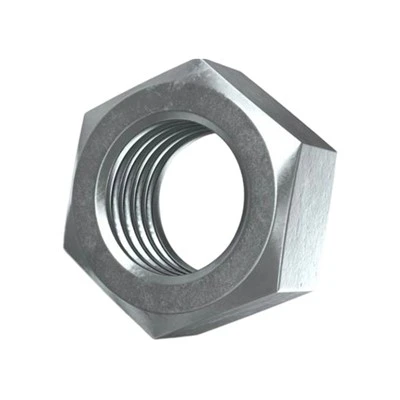
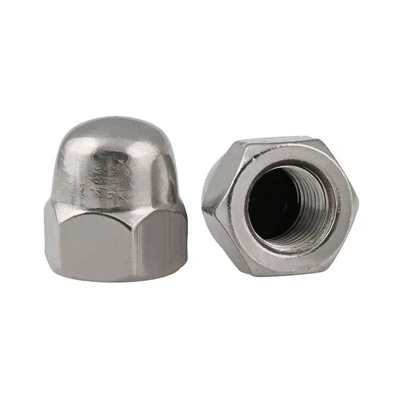
Now, let’s talk about internal threaded fasteners—the ones that are often hidden but just as critical as their external counterparts. Nuts are the most common internal threaded fastener, and they’re designed to pair with bolts to create a secure joint. Hex nuts are the standard, six-sided nut that fits with a standard wrench, making them easy to tighten in almost any application. But there are specialized nuts for specific problems. Lock nuts, for example, are designed to stay tight even in environments with constant vibration, like on heavy machinery or truck engines. The two most common types of lock nuts are nylon insert lock nuts, which have a small nylon ring inside that deforms when the bolt is tightened, creating friction that prevents the nut from loosening, and prevailing torque lock nuts, which have a distorted thread or metal insert that creates resistance to rotation. For outdoor or corrosive environments, stainless steel nuts are a must, as they resist rust better than standard carbon steel nuts. We also stock wing nuts, which have two flared wings that let you tighten the nut by hand, no wrench needed—perfect for temporary projects like bike racks, gardening equipment, or event displays where you need to adjust the joint quickly.
Another internal threaded fastener is the threaded insert, which is used to create a threaded hole in soft materials that can’t hold their own threads, like wood, plastic, or aluminum. For example, if you’ve ever tried to screw a shelf bracket into particleboard and the screw pulled out, you’ve seen the need for a threaded insert. Threaded inserts come in various types: press-in inserts, which are pressed into a drilled hole and have external ridges that grip the material; threaded rod inserts, which are used to create a permanent threaded connection in a surface; and helical inserts (commonly known by the brand name Heli-Coil), which are coiled metal inserts that are screwed into a pre-tapped hole to repair or reinforce threads in hard materials like aluminum. Helical inserts are often used in automotive repair, aerospace, and electronics, where a stripped thread can mean a part is unusable. As a supplier, we frequently work with furniture manufacturers and small appliance makers who use press-in inserts to create durable joints in soft materials, and we keep a wide range of helical inserts for industrial repair and maintenance teams.
There are also specialized threaded fasteners for extreme conditions or unique applications that deserve a mention, because they solve problems standard fasteners can’t handle. Stud bolts, for example, are long, fully threaded rods with no head on one end (or sometimes on both ends) that are screwed into a base material, and a nut is tightened on the other end to secure a second part. Stud bolts are commonly used in engine construction, where they need to hold parts like cylinder heads to the engine block, because they distribute pressure evenly and can be replaced if they become damaged. They’re also used in piping systems and heavy machinery where repeated disassembly is needed.
Then there are eye bolts and lag bolts, which are designed for lifting and heavy load applications. Eye bolts have a loop (eye) on one end and external threads on the other, so they can be screwed into a beam or machine part to lift heavy loads safely. Lag bolts (also called lag screws) have a large, coarse thread and a hex or square head, and they’re designed to be screwed into wood or masonry to support heavy objects like deck posts, pergolas, or heavy machinery bases. Unlike standard wood screws, lag bolts have a much larger diameter and deeper threads, so they can hold hundreds of pounds without pulling out. For construction and rigging companies, these are non-negotiable, and we keep them in sizes from 1/4 inch up to 2 inches, depending on the load requirements.
Stainless steel and plated fasteners deserve a special note, too, because their material composition is just as important as their type for long-term performance. Carbon steel fasteners are strong and affordable, but they rust easily when exposed to moisture or salt, so they’re best for indoor applications. Stainless steel fasteners, made from a mixture of steel and chromium (at least 10.5% chromium, per industry standards), resist corrosion and rust, making them ideal for outdoor projects, marine applications, food processing equipment, and any environment where moisture is a concern. We also offer plated fasteners, like zinc-plated or hot-dip galvanized fasteners, which have a coating that prevents rust at a lower cost than stainless steel. Hot-dip galvanized fasteners are coated in a layer of zinc by dipping the part into molten zinc, creating a thick, durable coating that’s perfect for outdoor construction and agricultural equipment. Zinc-plated fasteners are better for indoor or low-exposure applications, like household repairs or general manufacturing.
Over the years, I’ve seen firsthand how choosing the wrong threaded fastener can lead to delays, safety issues, and extra costs. A friend in the construction industry once used a standard Grade 2 bolt instead of a Grade 8 bolt to secure a bridge support beam—luckily, an inspector caught the mistake before the bridge was put into use, but it cost the project team thousands of dollars in rework and delays. Conversely, using an over-engineered fastener for a simple job, like using a Grade 8 bolt to hang a kitchen cabinet, is a waste of money and resources. That’s why we work closely with every customer, whether they’re a small business owner or a large industrial plant, to figure out exactly what their application needs. We ask questions like: What material are we fastening? How much weight or pressure will the joint handle? Will the joint be exposed to moisture, chemicals, or vibration? And how often will it need to be taken apart?
At the end of the day, threaded fasteners are more than just small metal parts—they’re the foundation of every structure, machine, and product that keeps our world running. Whether you’re a DIY homeowner tackling a weekend project, an engineer designing a new piece of equipment, or a maintenance manager keeping industrial machinery running smoothly, having the right type of threaded fastener is critical. If you’re not sure which fastener is right for your next job, or if you need a reliable supplier to keep you stocked with high-quality parts, reach out to our team to discuss your needs. We’ve got the expertise, inventory, and experience to help you find the perfect fastener for every application, no matter how big or small.
Threaded Fasteners References:
Fastener Facts: A Guide to Threaded Fastener Types and Applications. Industrial Fasteners Institute, 2022.
Machinery’s Handbook: Fastener Standards and Material Specifications. Industrial Press, 2019.
Corrosion Resistance of Fasteners: Selection and Application Guidelines. NACE International, 2021.
Handan Hengmai Fasteners Manufacturing Co., Ltd.
Handan Hengmai Fasteners Manufacturing Co., Ltd. is one of the most professional threaded fasteners manufacturers and suppliers in China. With abundant experience, we are committed to providing customized fasteners made in China with competitive price. We warmly welcome you to buy bulk high quality threaded fasteners for sale here from our factory.
Address: Industrial Zone, West of Beiduanzhuang Village, Linmingguan Town, Yongnian District, Handan City, Hebei Province
E-mail: hmfasteners.cn@gmail.com
WebSite: https://www.hmfasteners.com/
