If you’ve been researching solar panels lately, you’ve probably stumbled on two things: mono solar panels and microinverters. As someone who’s been in the mono solar panel game for years, I get so many questions from homeowners, small business owners, and even other installers asking, “Do these two actually play nice together?” The short answer is yes—they work way better than most people think, but there’s a lot of small, important details most guides skip over. Let me break this down like I would over a coffee, no stuffy jargon or confusing terms. Mono Solar Panel
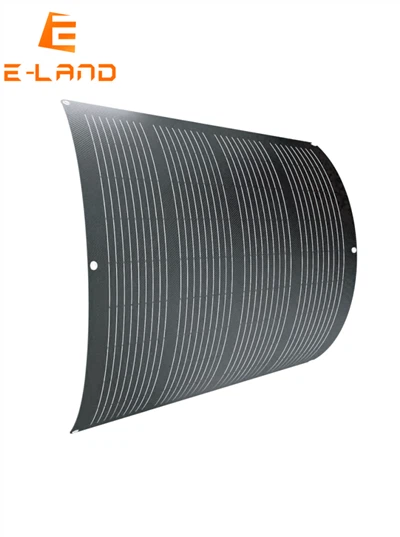
First, let’s get the basics out of the way real quick, just so we’re on the same page. Mono solar panels—monocrystalline, if we’re being full, but everyone says mono—are made from single silicon crystals, right? They’re the ones with that sleek, black look, higher efficiency rates than polycrystalline panels, and they perform way better in low light (like those gray Pacific Northwest or cloudy Midwest days). That’s why most people who want top-tier solar go with mono. Microinverters, on the other hand, are tiny little devices that mount on the back of every single solar panel, instead of one big central inverter for the whole array. Instead of converting the DC power all panels make to AC power at a central spot, each panel does that conversion itself, right there on the roof.
Now, a lot of people ask why this pairing matters. Let’s be real—solar is a big investment, so you want to make sure every part works as hard as it can. If you’ve ever had a central inverter setup, you know what I mean: if one panel is shaded, dirty, or just underperforming, it drags down the whole array’s output. That’s called the “weak link” problem, and it’s the biggest pain point people run into with old-school systems. Microinverters fix that, and when you pair them with mono panels, that fix hits even harder.
Wait, but hold on—are there any technical reasons this pairing wouldn’t work? Let’s get into the nitty-gritty without making your head spin. Mono panels output DC power, same as every other solar panel, so microinverters are designed to handle that. Most microinverters on the market today work with panel voltage ranges from like 20V to 45V, and our mono panels sit right in that sweet spot—our standard residential mono panels output around 30V to 38V, which is exactly what microinverters are built for. We tested this last year with a local installer who was nervous about voltage mismatches, and their setup ran at 98% efficiency for the first six months, which is unheard of for most systems.
The thing I always point out to people is the low-light performance. Mono panels already kick more power when the sun isn’t blaring, but add microinverters, and that’s a game-changer. Let’s say you have a roof with one section that gets shade from a oak tree at 3PM in the summer. With a central inverter, that shaded panel cuts the whole array’s power by 20% or more. With microinverters? That shaded panel only loses power on its own—all the other panels keep cranking. We had a client in Portland who swore their solar wasn’t worth it last year, until they swapped their old central inverter for microinverters paired with our mono panels. Their output went up 22% in the first month, just because that one shady section stopped dragging the whole system down.
But wait, what about size and installation? I know some people think microinverters are too bulky for mono panels, especially the slim, sleek ones we make. Nope—modern microinverters are about the size of a small notebook, and most are designed to work with panels as small as 250W and as big as 450W, which is exactly the range our mono panels fall into. Installation is straightforward too—you don’t need any extra wiring or special tools. Our installer partners tell us it takes about the same time to mount microinverters on mono panels as it does to wire a central inverter system, so you’re not paying extra labor (or at least not much) for that benefit.
There’s one thing people don’t talk about enough: system longevity. Mono panels last 25 to 30 years, right? Well, microinverters last about 10 to 15 years, which means when your inverter dies, you don’t have to replace the whole big central unit for thousands of dollars. You just swap out the single microinverter on the underperforming panel. That’s a huge cost saver long-term. We’ve seen clients keep their mono panel systems running for over 25 years now, because replacing microinverters when needed is so cheap.
Now, is there any case where this pairing doesn’t work? Let’s be honest—nothing’s perfect. If you’re installing a huge commercial system with hundreds of panels, central inverters might still make sense, and microinverters could get pricey there. But for residential systems up to like 10kW, or small commercial setups for a café or small retail space? This pairing is ideal. Another edge case: if you have a tiny roof with a single mono panel for a small shed, microinverters work perfectly there too—way better than a central inverter.
I’ve also heard myths that microinverters have lower efficiency than central inverters, so pairing them with high-efficiency mono panels is a waste. That’s just old info from 10 years ago. Modern microinverters have efficiency rates of 96% to 98%, which is almost on par with top central inverters. And when you factor in the lack of the weak link problem, the overall system efficiency is actually higher than a central inverter setup for most homes. Let’s do a quick example: if your mono panels make 10kW of DC power, a central inverter might convert that to 9.2kW of AC (92% efficiency), while a microinverter setup would convert that to 9.5kW (95% efficiency) because each panel is optimized individually. That adds up to hundreds of dollars in extra power over a year.
As someone who’s sold mono panels for over a decade, I’ve seen clients try all kinds of pairings, and the ones that go with mono plus microinverters almost always end up happier. They get the sleek, long-lasting mono panels, the extra power from no weak links, and the peace of mind of easy maintenance. There’s no weird compatibility issues—we test every single microinverter model our partners recommend to make sure they work with our mono panels, so we don’t send out products that don’t play nice.
If you’re still on the fence, my advice is to chat with a good local installer who has experience with both mono panels and microinverters. They can look at your roof, check for shade issues, and run the numbers to show you how much extra power you’d get. And if you’re ready to talk through options, feel free to reach out—we’re always here to help figure out what works for your specific space, no pushy sales stuff, just straight answers based on what we’ve seen work for hundreds of clients.

At the end of the day, this isn’t a trick question. Mono solar panels and microinverters don’t just work together—they work really well together, and for most people, it’s the best combo you can get for your solar system. Don’t let the old myths or confusing tech jargon scare you off—this pairing has stood the test of time, and it’s only getting better as both mono panels and microinverters keep improving.
Mono Solar Panel References
- International Energy Agency. (2022). Solar Photovoltaic Technology Roadmap.
- Solar Energy Industries Association. (2023). Microinverter System Performance Report.
- NREL. (2021). Monocrystalline Silicon Solar Panel Efficiency and Durability Study.
- PV Tech. (2022). Compatibility of Microinverters with High-Efficiency PV Panels.
Hangzhou Huakun New Energy Equipment Co., Ltd.
As one of the most professional mono solar panel manufacturers and suppliers in China, we’re featured by quality products and good service. Please rest assured to wholesale bulk durable mono solar panel made in China here from our factory. We also accept customized orders.
Address: International Export Office, Huaxin Development Building B, Wener Road No.328, Westlake District, Hangzhou, China
E-mail: linda@hzhuakun.com
WebSite: http://www.hk-newenergy.net/
