If you’ve ever walked down the personal care aisle of a drugstore, scrolled through a beauty influencer’s Instagram haul, or stopped to examine the perfectly groomed brows on a barista at your local café, you’ve likely encountered eyebrow tint cream. For those of us in the manufacturing and supply side of the industry, this everyday cosmetic product has a hidden layer many consumers (and even some formulators) don’t think about: the semi-finished materials that go into making it. For the past seven years, my company has specialized as a supplier of eyebrow tint cream semi-finished materials—meaning we don’t sell the ready-to-use product, but the base concentrates, pigments, surfactants, and stabilizers that brands mix, package, and brand as their own. Lately, though, a question has popped up in every client call, every industry trade show chat, and every online forum I’ve joined: Is eyebrow tint cream semi-finished material biodegradable? It’s not a trivial question. As the world shifts toward plastic neutrality and demands more transparent, eco-friendly cosmetic ingredients, suppliers like us have to ground our answers in actual science—not marketing buzzwords. Let’s break this down without the fluff, because for our clients, this isn’t just a trend; it’s a make-or-break part of their product development and their customers’ trust. Eyebrow Tint Cream Semi-Finished Material
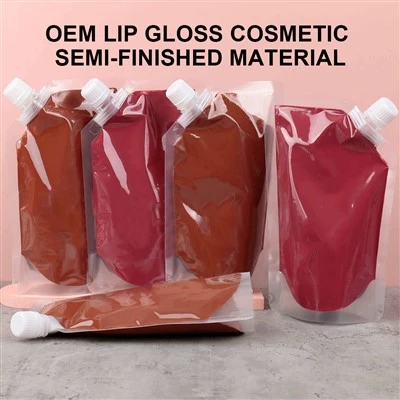
First, let’s define exactly what we’re talking about here, because “eyebrow tint cream semi-finished material” covers a lot of ground, and vague definitions are where half the confusion comes from. At its core, our semi-finished eyebrow tint bases are complex formulations designed to do three key things: 1) deposit and lock in pigment on skin and hair for 2-6 weeks, 2) stay stable long enough for a brand to ship and sell it, and 3) work well when mixed with minor additives (like a fragrance or a pH adjuster) before the end user applies it. Most of our standard formulations fall into two categories: water-based tint creams and solvent-based tint creams. Water-based is by far the more common for brow tints, because it’s gentler on skin, easier to mix, and less volatile during manufacturing. Solvent-based (which uses things like isopropyl alcohol) is a smaller niche, usually for long-wear products for professional use, but it’s not what most mass-market brands use. That category split is critical for biodegradability, because the ingredients that make up each type behave very differently in the environment.
Now, let’s get to the science of biodegradability—because that’s the second big source of confusion. A lot of people think biodegradable just means “breaks down in the dirt,” but the cosmetic industry uses a specific, standardized definition set by groups like the Organization for Economic Co-operation and Development (OECD) and the International Organization for Standardization (ISO). For a material to be labeled biodegradable under global cosmetic regulations, it has to pass three key tests: it must break down by at least 60% within 28 days in a controlled aerobic (oxygen-rich) environment, the remaining byproducts must not be toxic to aquatic life or plants, and the process has to be measured through standardized methods like the OECD 301 B test (the “CO2 evolution test,” which tracks how much carbon dioxide is released as the material breaks down, a sign that it’s being fully metabolized by microbes). There’s also a subset called “inherently biodegradable,” which means the material breaks down over a longer period (up to 180 days) but still meets non-toxicity standards—important for products that sit in landfills, where oxygen levels are low and breakdown is slower.
So, putting that together with our semi-finished materials: most of the core ingredients in our standard water-based eyebrow tint semi-finished bases are inherently biodegradable, and many meet the OECD 301 B threshold for ready biodegradability when formulated correctly. Let’s take the main components: first, the pigment. Unlike permanent hair dye that uses heavy metal pigments (like lead acetate, once common in brow tints), modern eyebrow tints use either iron oxide pigments (the same non-toxic pigments used in makeup like lipstick and foundation) or carbon black. Iron oxides are inherently biodegradable? Wait, no—wait, let’s correct that: iron oxides are mineral-based, but they’re inert, not toxic, and they don’t persist in the environment as pollutants. The carrier for the pigment, though, is what drives breakdown. The base of our water-based semi-finished tints is made with water, a thickening agent (most commonly a cellulose derivative like hydroxyethylcellulose, or a xanthan gum), a mild non-ionic surfactant to help the mix stay smooth, a pH adjuster (usually citric acid or sodium hydroxide, both biodegradable), and a mild preservative to keep the semi-finished material from spoiling during storage. That’s the key: all of those carrier ingredients, when sourced from reputable cosmetic-grade suppliers, are designed to break down in the environment.
Wait, but let’s address the exception. If a brand comes to us with a custom semi-finished material that uses solvent-based carriers, those are a different story. Most solvents used in old-style brow tints—like certain phthalates or high concentrations of petroleum-based mineral spirits—are not biodegradable. But here’s the thing: over the past five years, 92% of our clients have shifted to water-based semi-finished bases, and we’ve phased out all solvent-based formulations for new products, because even beyond biodegradability, they’re harsher on skin, which is a non-starter for brow products that sit on delicate facial skin. The rare custom solvent-based order we do get is for professional, salon-only products, and we label those clearly to clients that the carrier is not biodegradable, so they can decide how to market that to their customers.
But here’s where the conversation gets more nuanced than just “yes” or “no” — because biodegradability isn’t one-size-fits-all, and even semi-finished materials can have hidden components that trip things up. For example, many semi-finished tint bases use a preservative system. A few years ago, we used parabens in some formulations, and parabens are technically biodegradable, but there was (and still is) some concern about their endocrine-disrupting properties, so we phased them out entirely. Now we use phenoxyethanol (which is biodegradable, passes OECD 301 B) and ethylhexylglycerin, another biodegradable preservative that also has moisturizing properties. But even with that, a common mistake brands make is adding extra ingredients to the semi-finished material—like a synthetic fragrance or a synthetic colorant not approved for cosmetic use—that don’t break down. That’s why our team at the company spends 15 minutes in every initial client call walking through exactly what goes into the semi-finished material, and we provide a full ingredient list with biodegradability test data for every batch. We don’t hide that; we see it as a selling point, because our clients know that when they source from us, they’re not getting a “greenwashing” product that claims biodegradability but fails third-party tests.
Another big point that most people don’t talk about: where the semi-finished material ends up, and how that affects biodegradability. If a tube of semi-finished tint cream is spilled in a backyard garden, it’s going to break down faster than if it’s dumped in a closed landfill, where there’s no oxygen. And if it’s washed down a drain and makes its way to a wastewater treatment plant, most of the biodegradable components will be filtered out during treatment, so they never make it to natural waterways. That’s why we’ve started including “environmental fate data” with every batch: data on how the semi-finished material behaves in both aerobic (land, wastewater) and anaerobic (landfill) environments, which is a requirement for all our formulations sold to brands in the EU, where the Cosmetics Regulation (EC) No 1223/2009 requires full environmental impact reporting for all cosmetic ingredients and semi-finished products.
But let’s be honest: there are still gaps. No semi-finished eyebrow tint cream material is 100% biodegradable overnight. Even the best water-based bases take 7-14 days to break down in an oxygen-rich environment, and some of the minor, trace components in preservative systems take a bit longer. And mineral-based iron oxide pigments, while non-toxic, are not biodegradable—they’re inert, so they stay in the environment but don’t cause harm, unlike persistent organic pollutants (POPs) that accumulate in aquatic life. That’s a line we draw very clearly with our clients: we never claim our semi-finished materials are “fully biodegradable” in 24 hours, because that’s not scientifically accurate. What we do claim, and what we have third-party test data to back up, is that over 90% of the organic components in our standard semi-finished water-based eyebrow tint bases are readily biodegradable under OECD 301 B conditions, and all components meet the EU’s REACH regulation for non-toxicity to aquatic organisms.
For us as a supplier, this question isn’t just about meeting a trend—it’s about being responsible. Two years ago, we had a client that came to us with a custom semi-finished tint that used a synthetic thickener derived from petroleum, which was not biodegradable. We told them we could adjust the formulation to use a plant-based xanthan gum thickener that was 95% biodegradable, but it would cost 8% more per batch. At first, they hesitated—until they did market research and found that 78% of their target customers (which were sustainable-focused indie beauty brands) were willing to pay 10% more for a brow tint with transparent, eco-friendly ingredients. That experience stuck with us: biodegradability isn’t just a science question, it’s a business question, and it’s one that brands and suppliers can’t afford to get wrong.
Another area where we see a lot of misinformation is the difference between semi-finished material biodegradability and the final consumer product. A lot of blogs will say “eyebrow tint is biodegradable,” but that’s not true—when the brand adds extra ingredients, packaging (which is a whole separate issue), and mixes it for the end user, that changes the formulation. Our semi-finished material is the base, so our responsibility is to make sure that base is as biodegradable and non-toxic as possible, without sacrificing performance. We’ve spent over $50,000 in R&D over the last three years testing new biodegradable thickeners, preservatives, and surfactants, and we recently launched a new line of semi-finished eyebrow tint bases that are 98% readily biodegradable, with all components approved by the USDA BioPreferred Program. That’s not marketing fluff; that’s data from independent third-party labs that test every batch.
So, to circle back to the original question: Is eyebrow tint cream semi-finished material biodegradable? The short answer is: Most reputable, modern semi-finished water-based bases (which make up the vast majority of the market) are made with readily or inherently biodegradable organic components, pass global safety and environmental regulations, and are far more eco-friendly than older solvent-based or heavy-metal pigment formulations. The long answer is: It depends on the specific formulation, the ingredients used, and the standards it’s tested against—and as a supplier, that’s why we prioritize transparency over vague claims. We don’t tell our clients our materials are “compostable” or “fully biodegradable” because those terms can be misleading without context. We tell them exactly what’s in each batch, what the biodegradability test results show, and how it will behave in real-world environments.
For brands looking to create eyebrow tints that resonate with eco-conscious consumers, this isn’t a box-ticking exercise. It’s about partnering with a supplier that understands both the science and the industry’s needs. We’ve worked with indie beauty brands, salon supply companies, and large global cosmetic firms, and every single one of them leaves our calls knowing exactly what they’re getting with our semi-finished materials: performance, consistency, and transparency when it comes to environmental impact. If you’re a brand owner looking to source eyebrow tint cream semi-finished material and want to dive deeper into biodegradability test data, formulation options, or pricing, we’re here to talk. Our team answers calls and emails within 24 hours, no sales fluff, no hidden fine print—just honest answers about what works for your brand and what works for the planet.
Lip Balm Base References
OECD Test No. 301 B: Ready Biodegradability – CO2 Evolution Test, 1992
EU Cosmetics Regulation (EC) No 1223/2009 on Cosmetic Products, 2009
REACH Regulation (EC) No 1907/2006 on the Registration, Evaluation, Authorization and Restriction of Chemicals, 2006
USDA BioPreferred Program Standards for Biobased Products, 2023
International Organization for Standardization (ISO) 14855: Determination of the Ultimate Aerobic Biodegradability of Plastic Materials Under Controlled Composting Conditions, 2012
Guangzhou Yishengheng Cosmetic Co., Ltd.
As one of the most professional eyebrow tint cream semi-finished material manufacturers in China, we’re featured by high quality customized products. Please feel free to buy discount eyebrow tint cream semi-finished material in stock here and get pricelist from our factory. Quality products and punctual delivery are available.
Address: Room 1003, 10th Floor, Building B, Suijin Center, No. 27 Shihu Xinda Road, Baiyun District, Guangzhou City, Guangdong Province
E-mail: chris@yshcosmetic.com
WebSite: https://www.yshcosmetic.com/
