Hey there, fellow folks who work with thermal mats or just someone trying to pick the right stuff for a project—if you’ve ever been confused about how to tell if a Thermal Matt PP (that’s polypropylene, for anyone who’s not deep in the plastics game) is actually worth your money, you’re in the right spot. I’ve been in the game for over a decade, running a small supply shop that’s all about thermal mats, not the big corporate stuff that cuts corners to make a quick buck. I’ve seen too many people get stuck with mats that flop fast—either they don’t hold heat right, break after a month, or start leaking weird stuff. So today, I’m breaking down exactly how I (and my team) evaluate Thermal Matt PP quality, no fancy jargon, just real-world stuff that actually matters. Let’s dive in. Thermal Matt PP

First off, let’s get the basics straight: Thermal Matt PP is that flexible mat made from polypropylene resin, usually filled with some kind of heat-retentive material (like ceramic microspheres or even phase-change materials these days) and designed to hold and transfer heat evenly. You’ll see ’em used for things like underfloor heating, medical warming pads, craft heating tables, even greenhouse seed starting mats. The quality here isn’t just “it’s plastic”—it’s the difference between a mat that lasts 5 years and one that splits at the seam after 3 uses, or a mat that wastes half your energy and one that actually does what it’s supposed to.
First check I always do is the raw PP resin itself. Not all PP is created equal, y’know? A lot of cut-rate suppliers use “recycled PP” that’s been ground up and melted down a bunch of times. The problem with that is it loses its molecular strength fast. I once got a batch of cheap PP mats from a guy who swore they were “heavy duty”—we tested ’em and the resin was so brittle that when we bent the mat back on itself 10 times, it cracked right open, no joke. Good quality Thermal Matt PP uses either virgin PP resin or at most a mix of 25% or less clean, single-stream recycled PP. Single-stream is key here—recycled PP from a bunch of different sources can have weird contaminants that mess with heat conductivity. Virgin PP’s just more consistent, no surprises. I also run a quick melt index test (don’t panic, it’s not rocket science) which basically tells me how flexible the resin is when it’s warm. If the melt index is too high, the mat gets soft and sags when it’s on a hot surface—super annoying, especially for underfloor stuff. Too low, and it’s stiff like a board, hard to lay down and won’t conform to uneven floors. The sweet spot? We aim for a melt index between 3 and 8 for our mats, that’s where it’s flexible but sturdy.
Next up is the core heat-retentive material—this is the whole point of the mat, right? If the PP is strong but the mat doesn’t hold heat, what’s the use? Most good Thermal Matt PP uses either ceramic microspheres, graphite particles, or phase change material (PCM) embedded in the PP matrix. Cheap mats will either use way too little of this stuff, or use low-quality fillers that don’t conduct heat well. I test this a few ways. First, I do a heat retention test: I heat a section of the mat to 140°F, turn the heat source off, and track how long it stays above 100°F. Our good mats hold that temp for 45 minutes minimum—anything under 25 minutes is garbage. Another trick: I use a thermal camera (no fancy lab gear, just a basic FLIR I picked up for work) to check for hot spots. If the mat has super bright spots or dark spots, that means the heat material isn’t evenly mixed. Uneven mixing leads to parts that get way too hot (fire hazard, by the way—especially if it’s for under flooring) and parts that don’t work at all. I once rejected a whole container of mats because a thermal scan showed half the mat was dead—those were the ones the supplier said “passed visual inspection,” yeah right. Also, avoid any mats that use metal fillers unless they’re sealed in—we had a customer once whose cheap metal-filled mat started rusting, leaked brown gunk all over their craft table. Sealed ceramic or graphite is way safer.
Then there’s the durability and seam integrity, which is something people overlook until it’s too late. Thermal Matt PP is usually either welded or glued together at the edges, right? Glued seams almost always fail faster—glue breaks down when it’s heated over time, or if it gets wet. Good mats use ultrasonic welding, that’s a fancy way of saying they melt the PP edges together so it’s one solid piece, no extra glue. I test this by pulling the seams apart with a little pressure, or even stretching the mat a bit—if the seam breaks before the PP itself, that’s a win. I also do a flex test: I roll the mat up tight 50 times, unroll it, check for cracks or splits along the edges. If it cracks after 20 rolls, that’s PP resin issue we talked about earlier. Another thing: water resistance. A lot of thermal mats get used around water—bathrooms, greenhouses, even pet warming mats. If the mat isn’t waterproof, it can absorb moisture, which kills its heat retention, and also leads to mold or mildew growing in the PP. I test this by submerging a mat section in water for 24 hours, weighing it before and after. If it gains more than 0.5% of its weight in water, it’s not worth using—we make sure our mats absorb less than 0.1%, that’s the mark for good water resistance.
Chemical resistance is another big one, especially if you’re using the mat for industrial or hobby stuff. If it’s gonna be around cleaning chemicals, fertilizers, even food (some people use thermal mats for food warming!), the PP shouldn’t break down or leach stuff. I once had a customer bring back a cheap mat they used under their kitchen counter that smelled like plastic and left a weird sticky residue on their cutting board. That’s because the supplier used cheap additives that leach when they get warm. We test for this by exposing the mat to common chemicals—like white vinegar for kitchen stuff, mild fertilizer for greenhouses, rubbing alcohol for cleaning—and checking for discoloration, brittleness, or odor after 7 days. No changes? Good. Also, if the mat is for medical or food use, it needs to meet FDA standards—ask your supplier for test docs, don’t just take their word for it.
Wait, and let’s not forget about weight. I know, weight sounds trivial, but it’s a quick tell. Good Thermal Matt PP is dense but not heavy—our mats weigh around 2 lbs per square foot for a standard thickness. Cheap mats are either way too light (meaning they have barely any filler, so terrible heat retention) or way too heavy (meaning they used too much cheap filler like sand mixed in with the heat stuff, which makes them stiff and doesn’t help heat at all). Sand makes the mat grindy too, which is uncomfortable if it’s for people or pets, right? I always feel the material—if it’s smooth all over, no grit, that’s a good sign. If you can feel little grains under your hand, run. That’s almost always sand or low-quality filler.
Also, let’s talk about safety. This is non-negotiable. Thermal mats get hot, so they need to meet basic electrical and fire safety standards, right? Wait, hold on—some thermal mats are electric, some are passive (they just hold heat from a separate source, like an underfloor boiler). If it’s electric, you need to make sure the wiring is sealed inside the PP, no exposed wires, and the mat can’t overheat. Passive mats still need to be flame-resistant—PP is flammable if it’s low quality, but good quality PP has additives that make it self-extinguish. I once had a small fire drill at our warehouse with a bad batch—we lit a corner of a cheap PP mat and it burned like a candle, whereas our good mats just self-extinguished in 2 seconds when we took the flame away. That’s a huge safety thing, don’t skip that test.
Let me wrap up with a quick story to make this real. Last year, a guy came to me from a landscaping company—he’d bought 50 thermal mats from a big online supplier for greenhouse seed starting. Within 2 months, half the mats were split at the seams, the other half didn’t stay warm, and a few had started melting a little along the edges where they were by the grow lights. He said he’d paid half what my mats cost, so he thought he was getting a deal. When he showed me one, I checked it out: recycled PP that was super brittle, barely any ceramic filler, glued seams, and it burned when I lit a tiny corner. Told him why it was garbage, he bought all new mats from us. Now he refers all his crew to me. So the cheap price tag isn’t a deal—it’s a headache waiting to happen.
At the end of the day, evaluating Thermal Matt PP quality isn’t about guessing—it’s about checking a few concrete things: raw PP resin, heat retention and distribution, seam durability, water and chemical resistance, safety standards, and even the weight/feel. I don’t cut corners with any of this, because I’d rather have a customer who comes back for 5 years than one who complains after a month.
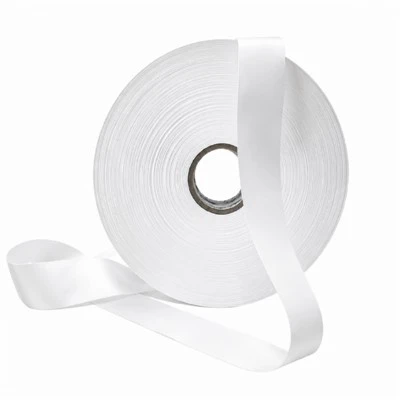
If you’re in the market for Thermal Matt PP—whether you need 10 mats for a small project or 1000 for a big industrial job—hit us up. We do all these tests on every batch we get, so you know exactly what you’re getting, no surprises, no garbage. Shoot us a message to chat through your needs, whether it’s for underfloor heating, medical use, greenhouse, whatever—we can tailor a mat that fits your project perfectly. Don’t waste time and money on cheap stuff that’ll let you down.
Woodfree Paper References
- Plastics Engineering Handbook, Society of Plastics Engineers
- Thermal Insulation Materials: Properties and Performance, Woodhead Publishing
- Polypropylene for Packaging and Industrial Applications, CRC Press
China Lisontec New Material Co., Ltd.
We are one of the most professional thermal matt pp manufacturers and suppliers in China, also support customized service. As we have world-leading production equipment and strong manufacturing capabilities, we warmly welcome you to wholesale bulk thermal matt pp made in China here from our factory.
Address: 8-107, Xianlin Valley, Qimin West Road Qixia, Nanjing, China
E-mail: info@lisontec.com
WebSite: https://www.lisontec.com/
