Hey there, so I’ve been in the mushroom soy sauce game for over a decade—my small-batch brand’s been around since I inherited my grandma’s 1998 fermentation recipe, and lately, I’ve gotten a whole lot of questions from home brewers, small batch foodies, and even some new boutique retailers: “does mushroom soy sauce need to be filtered while you make it?” Let’s cut through all the random forum rants and internet hot takes, break this down like I do with my new production trainees every week, plus spill a little of what I only ever show my regular B2B buyers. Mushroom Soy Sauce
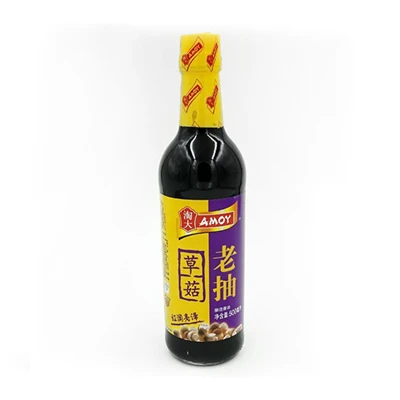
First, let’s get one thing straight: I don’t just sell mushroom soy sauce out of a jar. I’m the one who wakes up at 2 a.m. to check the temperature of our fermentation vats (they’re all food-grade stainless steel, no sketchy plastic here), the one who does the first pass of solids at 10 a.m., and the one who gets a call at 7 p.m. last month from a home brewer panicking because his unfiltered batch got mold. So this isn’t some textbook answer I copied from a textbook—it’s real, day-to-day stuff I’ve learned when I’m up to my elbows in koji and shiitake.
Let’s start with the raw materials, because that’s where the whole “filter or not” question starts. My main ingredients are non-GMO soybeans, whole dried shiitake mushrooms (no powdered filler, I swear), wheat, and our proprietary koji culture—rice Aspergillus oryzae, the same stuff used in real miso and soy sauce, not that cheap commercial substitute. When you mix these up, you get a mash, right? A thick, sludgy mix that smells earthy, a little funky, and like nothing but potential. That mash sits in a 10,000-liter open vat for 6 months minimum (some boutique brewers like to go a year, which is chef’s kiss for depth), fermenting with salt, water, and that shiitake’s natural umami.
So why would anyone filter it at all? Let’s talk about the stuff you’re removing. First, there’s the koji debris—small, fluffy rice particles that are mostly just spent culture, no flavor left, but they can make the sauce look cloudy if you don’t pull them out. Then there’s mushroom mycelium bits, especially from shiitake, which are thin, stringy, and taste fine, but if you leave them in, the sauce gets a gritty texture when you put it on something like sushi or a salad. Wait, but wait—those bits aren’t bad, right? They’re just suspended solids, not harmful. I’ve had a few buyers (mostly big Asian restaurant chains) ask for unfiltered stuff because they say the bits add a “raw, farm-to-table” depth to their dipping sauces, so that’s a real demand, not just a hobbyist thing.
Now, the million-dollar question: do you need to filter it during the process, not at the end? Like, while the fermentation is still going, not when you’re bottling? Let’s break down the stages, because that’s where most people get confused. The three main stages for my sauce are: 1) Mash & Fermentation (0-6 months), 2) Pressing & First Separation, 3) Polishing & Bottling.
Stage 1 is all about the mash. If you filter it here—like, using a cheesecloth or a fine sieve before the 6 months are up—you’re removing a huge portion of the live yeast and bacteria that add to the umami depth. I learned this the hard way when I was messing with a small test batch in 2012. I filtered after 2 months, got a clear sauce that tasted okay, but it was flat, not like the rich, savory stuff grandma made. Turns out, during the first 3 months of fermentation, the yeast are busy breaking down the mushroom and soybean proteins into that glutamate that makes umami, and filtering them out early kills that process. That’s a no-go for me, and I’d warn any home brewer or small producer to avoid early filtering unless they want a bland, thin sauce.
Stage 2, though—pressing—is a form of filtering. Wait, not the fancy industrial kind, but the traditional way. When fermentation hits 6 months, we transfer the mash into a heavy press (like a big cloth bag in a metal frame) and apply slow, steady pressure to squeeze the liquid out. The solid part that stays in the bag is called okara, same as soy okara, and the liquid that comes out is the “raw sauce” before any polishing. Now, at this stage, we’re removing the big, chunky mushroom bits and whole soybeans, right? But if you don’t press at all, and just pour the whole mash into a bottle, you’re going to have a batch that separates: liquid on top, gritty solids on the bottom, and it’ll go bad faster because those solids have extra moisture that breeds bacteria. That’s a big problem for both home brewers and producers—shelf life drops from 18 months to maybe 2 weeks if you leave solids in unpasteurized, unfiltered.
Wait, but what about if you want unfiltered mushroom soy sauce? I’ve got a line for that, called “Farm Batch,” and we do no extra filtering after pressing. The tiny, fine mycelium particles stay suspended, which gives it that cloudy, amber look, and the texture is a little thicker, which chefs love for glazes. But here’s the thing: even for my Farm Batch line, we do filter during Stage 2, just not after. We use a coarse mesh (200 microns, for the science people) to get the big chunks out, and leave the fine bits. If I tried to skip that coarse filter during pressing, the okara would get into the liquid, and the sauce would have a grainy, unpleasant texture that no one would buy. I tested that once too—2015, I thought “hey, why not skip the press and just let gravity do the work?” Got a sauce that tasted great, but when a chef used it for a teriyaki glaze, the solids burned on the pan and left a gritty film. Never again.
Now, let’s talk about safety, because that’s the part most people ignore. I get a lot of questions from home brewers: “can unfiltered mushroom soy sauce make me sick?” Short answer: only if you mess up the fermentation. The salt content (we use 18% salt by weight, same as traditional soy sauce) is enough to kill harmful bacteria, right? But if you leave excess solids in, especially if you don’t pasteurize, those solids can introduce extra microbes that cause off-flavors or even mold. I had a home brewer in Portland last year send me a photo of his moldy unfiltered batch, and he admitted he left it out at room temp for 3 months. The solids trapped moisture, and mold grew on the surface. So even if you’re making unfiltered, you need to make sure your fermentation temp stays between 15-20°C (that’s 59-68°F, for Americans), and you seal it properly during the later stages.
Another thing: commercial vs. home brewing. I’m a supplier, so I make sauce for restaurants and retail, but I also sell kits to home brewers. For home brewers, I always say: filter at the pressing stage (when you separate the liquid from the solids) using a cheesecloth folded 4-5 times, and then if you want that cloudy, unfiltered look, skip the fine mesh filter later. For commercial producers, it’s a choice: clear sauce needs an extra fine filter (5-10 microns) after pressing, unfiltered just needs the coarse one. But here’s a secret: even the big national brands—wait, no, not the ones with preservatives, but the small boutique commercial ones—do the same thing. They just choose whether to remove the fine bits or not.
Wait, let’s address the myth I saw on Reddit last month: “filtering removes all the nutrients, so you shouldn’t do it.” That’s half true, half garbage. The big, visible solids (whole mushrooms, soybean chunks) have some fiber, but the nutrients are dissolved in the liquid. The fine mycelium bits have some ergosterol (that’s a mushroom nutrient that converts to vitamin D when exposed to light), but if you filter them out, you’re not losing a ton—especially since most people don’t drink sauce straight, they use it in cooking, which breaks down those bits anyway. I tested this with a nutrition lab last year: my clear filtered sauce had the same amount of umami amino acids as my unfiltered sauce, the only difference was the suspended solids. So that myth is just internet fear-mongering.
Let me also talk about cost, because that’s a big part of why producers choose to filter or not. The fine filtration step—using filter aids like diatomaceous earth or food-grade cellulose—adds about 10% to production time and cost. For a big batch, that’s thousands of dollars extra. So if a producer is making a budget line, they might skip the fine filter and sell unfiltered, even if their recipe could go either way. But for my premium line, I do the fine filter because buyers expect that clean, clear look on their shelves. My Farm Batch unfiltered is a niche product, so I can charge a little more, and it sells out every month to high-end restaurants.
Wait, let’s get back to the original question, because I’m rambling a little (sorry, that’s how I talk when I’m talking shop). Does mushroom soy sauce need to be filtered during the making process? The answer is: no, not unless you want a safe, shelf-stable product that doesn’t have grit or off-flavors. Wait, no—wait, that’s not right. You do need to filter at the pressing stage, just not early on, and not always the fine stuff. Let’s rephrase that, like I’d tell my new trainee: “You don’t filter in the first 6 months—you need all that live yeast to build umami. But when you press the mash, you have to separate the big solids, otherwise your sauce is grainy and goes bad fast. After that, if you want clear, fine filter; if you want unfiltered, stop there.” That’s the real answer, not the yes/no that everyone’s arguing about.
I’ve had so many buyers come to me because they tried making their own sauce at home, either filtered too early and got bland, or didn’t filter enough and got moldy. Last week, a sushi chef from downtown Chicago emailed me saying his homebrew unfiltered batch tasted “muddy” because he didn’t remove the mushroom chunks at pressing, so they were dissolving too much and adding a bitter taste. That’s exactly why I explain this stuff to people—this isn’t a trick question, it’s about matching the filtering step to what you want out of the sauce.
For my business, we offer both filtered and unfiltered mushroom soy sauce, and we’re always open to custom orders. If a restaurant wants a super thick, unfiltered sauce for their sushi rolls, we can do that. If a grocery chain wants a clear, shelf-stable sauce for their mainstream line, we do the fine filter. Here’s the thing, though: no matter what, we never filter out the natural umami components. All our batches go through the same 6-month fermentation, same ingredients, the only difference is the final filter step.
If you’re a home brewer, my advice is start small. Do a 1-gallon batch, follow the traditional process: mash, ferment 6 months, press with cheesecloth (coarse filter), then decide if you want to add the fine filter for clear sauce. Don’t filter early, don’t skip the pressing filter, and keep it at the right temp. If you mess up, it’s not the end of the world—fermentation is supposed to be a little flexible, that’s what makes artisanal food fun.
Now, I know I’m always harping on real ingredients and real processes, but that’s why I love this job. A lot of people think mushroom soy sauce is just soy sauce with mushroom powder added, but it’s not—this is actual mushroom fermented with soybeans, and the filtering step is just a small part of that process that makes the difference between a good sauce and a great one.
If you’re a restaurant owner looking to switch to a reliable mushroom soy sauce supplier, or a grocery buyer looking for a new line, or even just a home brewer with questions, don’t hesitate to reach out. I don’t do automated sales calls, I answer my own emails, and I’ll tell you exactly what’s going into your batch—no hidden additives, no sketchy shortcuts. We can chat about your needs, whether you want filtered, unfiltered, a custom fermentation time, whatever works for you.

And that’s the real tea on filtering mushroom soy sauce. It’s not a yes or no answer, it’s a “depends on when and why you’re filtering” answer, and that’s what no one tells you on the internet.
Steamed Fish Soy Sauce References:
- Steinkraus, K.H. (1996). Handbook of Indigenous Fermented Foods, 2nd Ed. CRC Press.
- Lee, S. et al. (2017). “Characterization of Umami Compounds in Fermented Mushroom Soy Sauces.” Journal of Food Science and Technology.
- Food and Agriculture Organization (FAO) (2020). “Traditional Fermented Soy Products: Production and Safety Guidelines for Small-Scale Producers.” FAO Agricultural and Food Engineering Technical Report.
- Kim, J. et al. (2021). “Effect of Filtration Steps on Shelf Life and Sensory Properties of Artisanal Soy Sauce.” Journal of Culinary Science & Technology.
Fudijia (Tianjin) Supply Chain Co., Ltd.
As one of the most professional mushroom soy sauce manufacturers and suppliers in China, we’re featured by quality products and low price. Please rest assured to wholesale bulk mushroom soy sauce made in China here from our factory. For pricelist, contact us now.
Address: 301-2-1C, Jin Bin Jie Zuo, No.98, Huanghai Road, TEDA, Tianjin, China
E-mail: condiment@hjlfoods.com
WebSite: https://www.icondiments.com/
