If you’ve ever stood in a bustling manufacturing plant, a cramped mechanical room, or even a rooftop HVAC unit on a sweltering summer afternoon, chances are aluminum silicate insulation has done quiet, critical work right around you. As a 12-year veteran supplier of this high-performance material, I’ve spent thousands of hours fielding the same question from project managers, building owners, and construction foremen: “What’s the actual price range for aluminum silicate insulation?” The short answer is never one number. It’s a range shaped by a dozen variables, and over the years I’ve learned that guessing at costs without digging into those details only leads to budget blowouts and costly last-minute changes. Today, I want to break down that range, explain what drives it, and walk you through how to plan for it—straight from the perspective of someone who ships this material to job sites across North America every week. Aluminum Silicate Insulation
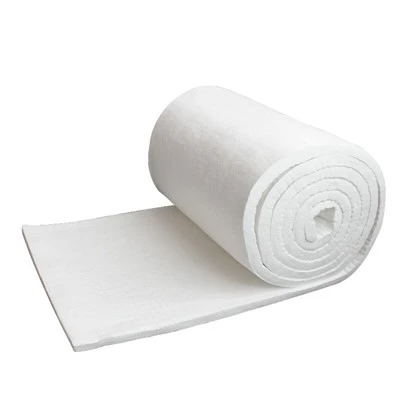
First, let’s get clear on what aluminum silicate insulation actually is, because that foundation is everything to its pricing. Unlike cheap fiberglass batts you might use for a backyard shed, aluminum silicate is a type of ceramic fiber insulation, engineered to withstand extreme temperatures that would melt or degrade other common insulation types. We’re talking about continuous use temperatures between 1200°F and 2400°F—perfect for furnaces, boilers, exhaust stacks, kilns, and high-temperature process piping. It’s also lightweight, resistant to thermal shock, and doesn’t release harmful fibers when installed correctly, which is a big win for worker safety compared to older insulating materials like asbestos (something we explicitly avoid in every product we sell).
Now, back to that price range. When customers first ask for a quote, they almost always start with a per-square-foot or per-pound number, and that’s where things get tricky. Let’s set the baseline for the most common, entry-level aluminum silicate insulation: standard-density, general-purpose ceramic fiber blanket. For this product, the base price per square foot (for a 1-inch thick blanket, the most common size for medium-temperature applications) runs between $1.20 and $2.50 as of 2024. If you price by the square yard, that translates to roughly $10.80 to $22.50 per square yard. By the pound, it’s between $0.80 and $1.70 per pound. But this is just the starting point. The moment you add in the factors that matter for real-world jobs, that range widens dramatically.
The biggest driver of price is density and grade of the insulation. Not all aluminum silicate is created equal. Our product line has four distinct grades, each designed for different temperature and performance needs, and each with its own price tag. The first is our standard general-purpose grade, designed for 1200°F to 1800°F continuous use—this is the $1.20 to $2.50 per-square-foot range I mentioned earlier. Next, we have our high-temperature grade, rated for up to 2400°F, which uses purer aluminum oxide and silica and has a finer fiber structure to resist degradation at peak heat. That grade runs 30% to 50% more expensive than the standard line: $1.56 to $3.75 per square foot for 1-inch thickness. For industrial applications where precision and long-term reliability are non-negotiable, we also offer our dense board aluminum silicate insulation, which is pressed into rigid sheets instead of blankets to handle higher mechanical stress (like covering furnace walls or turbine housings). Dense board is the priciest of our core lines, at $2.10 to $4.80 per square foot, because it requires more manufacturing steps and has a longer service life—often 10 to 15 years, compared to 5 to 10 years for standard blankets. Finally, we have our specialty aluminum silicate products, like needled blankets with reinforced ceramic skins or insulation formulated for acidic environments, which can cost 2 to 3 times the standard grade for custom projects.
Thickness is another huge factor that most first-time buyers overlook. Aluminum silicate insulation is measured in inches, and the thicker the material, the higher the cost—this is basic thermodynamics, but it’s often mixed up with labor or installation costs, which we’ll get to in a minute. For example, our standard blanket grade costs $1.20 per square foot for 1-inch thickness, but jumps to $2.40 per square foot for 2-inch thickness, and $3.60 for 3-inch thickness. Why? Because thicker blankets require more raw material, more time to manufacture, and more rigorous quality testing to ensure they don’t compress or sag over time (sagging insulation is a huge safety and efficiency risk in high-temperature applications). For every additional half-inch of thickness, you’ll typically see a 50% to 70% increase in material cost, depending on the grade. That’s why it’s so important for buyers to calculate the required R-value or thermal resistance for their specific application, not just grab the thickest blanket they can find. A common mistake I see is a plant manager ordering 3-inch insulation when a properly sized 1.5-inch grade would meet their thermal needs at half the cost—if you don’t account for thermal resistance requirements, you’ll pay way more than you need to.
Quantity is the third big price driver, and it’s one where loyalty and long-term partnerships pay off. We run our own manufacturing facility, which means we can offer tiered pricing based on order volume, and most of our repeat commercial customers don’t realize how much a difference that makes. For small, one-off projects that need 500 square feet or less, standard-grade blanket will cost the top end of the $1.20 to $2.50 range we quoted earlier—often around $2.30 per square foot. For mid-sized projects between 500 and 5,000 square feet, that drops to $1.50 to $1.90 per square foot, and for large industrial orders of 5,000 square feet or more, we can bring that down to $1.20 to $1.60 per square foot. We also offer bulk pricing for customers who take delivery on a quarterly or annual basis, which is 10% to 15% lower still. This isn’t a gimmick to lock you into long contracts—we do this because manufacturing runs more efficiently when we batch larger orders, and we pass those savings along to keep our customers coming back.
Now, let’s talk about installation, because that’s a part of the total cost that gets lumped in with insulation pricing all the time, and it’s where a lot of budget estimates go wrong. As a supplier, we don’t handle installation, but we work closely with hundreds of trusted contractors across the country, and I can tell you what to expect for labor costs. Aluminum silicate insulation is lightweight, but it’s not like hanging fiberglass batts—high-temperature installations require specialized tools, training, and safety gear, because even cool fibers can irritate skin, and working around active furnaces or exhaust lines carries its own risks. For blanket insulation, installation labor runs between $0.70 and $1.50 per square foot, depending on the complexity of the job. Piping and small vessels take more time and precision than flat furnace walls, so labor for piping insulation can jump to $1.20 to $2.20 per linear foot, or $1.80 to $3.50 per square foot. Dense board insulation is even more labor-intensive, since it’s heavy and requires cutting with specialized tools to fit around corners or equipment, so labor can add $2 to $4 per square foot on top of material costs. That means a 1,000-square-foot project of standard blanket insulation could have a total cost (material + labor) between $1,900 and $4,000, which is a far cry from the material-only number I quoted earlier.
Another factor that affects both material and total cost is compliance and certifications. In the U.S., industrial projects have to meet strict OSHA, NFPA, and ASTM standards for insulation material, especially if they’re in food processing, chemical manufacturing, or power generation. We test every batch of our aluminum silicate insulation to meet ASTM C610, the standard specification for ceramic fiber insulation, and all our products are OSHA-compliant for fiber emissions and worker safety. If you buy uncertified insulation from a discount supplier, it might be 20% cheaper upfront, but you could face fines for non-compliance, or worse, the insulation could fail thermal testing, leading to unplanned downtime or safety hazards. We’ve seen customers lose tens of thousands of dollars in production time because they tried to save a few dollars on cheap, untested insulation—something we never want to see.
Over the years, I’ve also noticed that market fluctuations can shift prices by 5% to 10% year over year, and 2024 is no exception. Raw material costs for aluminum oxide and silica, the main ingredients in aluminum silicate, have risen 8% since 2022 due to supply chain shifts and increased demand from electric vehicle battery manufacturing, which also uses these materials. Energy costs for manufacturing ceramic fibers have also gone up, since producing aluminum silicate requires heating raw materials to temperatures above 3000°F. That’s why it’s important to get a quote that’s valid for 30 to 60 days, rather than locking in a price for a project that’s delayed for months.
Now, let’s get to the part that matters most to you: how to avoid overpaying. From my experience working with hundreds of customers, the biggest mistake is focusing only on the initial material price, not on total cost of ownership. A lower-priced, lower-grade insulation might seem like a steal at first, but if it only lasts 5 years before it sags or degrades, you’ll have to replace it sooner, and the downtime for installation will cost far more than the savings on materials. For example, our standard-grade blanket costs $1.50 per square foot, with a 7-year service life. A generic alternative from a discount supplier might cost $1.00 per square foot, but only last 3 years—over a 10-year period, that’s $1.50 per square foot vs. $3.33 per square foot, plus the cost of two installation jobs. For most industrial applications, investing in a higher-quality, appropriately rated aluminum silicate insulation will save you 20% to 30% over the long run.
The best way to get an accurate, fair price range for your project is to share as many details as possible with your supplier. Tell them: what temperature is your application operating at? What type of equipment are you insulating? Do you need blankets, boards, or a custom shape? How much square footage or linear footage do you need? What’s your timeline for delivery? We’ve had customers come to us thinking they needed a $5-per-square-foot high-temperature grade, only to learn that a standard grade would work perfectly for their 1500°F boiler application, saving them thousands of dollars without sacrificing performance. Conversely, we’ve had another customer who tried to use standard grade insulation for a 2200°F kiln, only to have it fail and shut down their production line for two days—something we’re always happy to help avoid when we ask the right questions.
At the end of the day, aluminum silicate insulation isn’t a commodity you buy at a hardware store. Its price is tied to performance, safety, and reliability, all of which directly impact your business’s bottom line. Whether you’re a small manufacturing plant needing insulation for exhaust stacks, a large refinery working on a new process unit, or a construction company building a new commercial HVAC system, the price range for aluminum silicate insulation will always be a range, not a fixed number. The key is to work with a supplier who will walk you through that range, explain the tradeoffs, and help you pick the right product for your needs, not just the cheapest one.
Aluminum Silicate Insulation If you’re ready to get a personalized quote for your project, or you have more questions about what grade or thickness of aluminum silicate insulation is right for your application, don’t hesitate to reach out. We’ve built our business over the last decade on transparency, fair pricing, and products that stand the test of extreme heat, and we’re happy to help you navigate every step of the process—from choosing the right material to delivery and installation support. References: ASTM International. Standard Specification for Ceramic Fiber Insulation (ASTM C610); Occupational Safety and Health Administration (OSHA). Safety and Health Regulations for General Industry; National Fire Protection Association (NFPA). Standard on Insulation Materials (NFPA 90A); U.S. Energy Information Administration. Industrial Energy Demand for Ceramic Materials, 2024.
Langfang Yafeng Energy-Saving Technology Co., Ltd.
As one of the most professional aluminum silicate insulation manufacturers and suppliers in China, we’re featured by quality products and good price. Please rest assured to buy bulk premium aluminum silicate insulation for sale here from our factory. Welcome to view our website for more information.
Address: Langfang Xinyafeng, Liugezhuang Town, Dacheng County, Langfang City, Hebei Province
E-mail: yafengbaowen@gmail.com
WebSite: https://www.xyfinsulation.com/
