Hey there, Standard Bathroom Mirrors
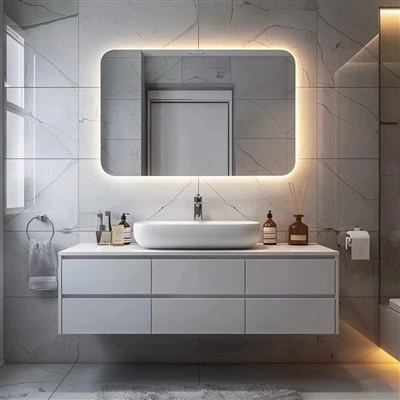
If you’ve ever stood in front of a bathroom mirror first thing in the morning—blinking through sleep, squinting to see if you’ve missed a spot shaving or if your hair’s going to be a disaster zone by noon—you might’ve never thought to wonder, “How much does this thing actually weigh?” As someone who’s spent the last 12 years running a company that supplies standard bathroom mirrors to plumbers, renovators, and even big retail chains, this is one of the most common questions I get from folks picking out mirrors for a project. And it’s not just a random curiosity—getting the weight right matters for safety, installation, and making sure your mirror works as hard as it needs to for decades.
Let’s start with the basics: when we say “standard bathroom mirrors,” we’re not talking about those custom, oversized statement mirrors you’d find in a luxury master bath. Standard is the workhorse. It’s the rectangular, frameless or thin-framed mirror that fits most average bathroom vanities, the one that’s ordered in bulk for apartment complexes, student housing, and small residential builds. So their weight doesn’t just depend on size, it depends on materials—something I’ve tested over and over in our warehouse to make sure we’re not selling anything that’ll slip off a wall a year later.
First, let’s break down size because that’s the biggest factor. The most common standard sizes for bathroom mirrors are 24×36 inches, 20×28 inches, and 18×24 inches. These are the sizes that fit the average vanity—most bathroom vanities are between 24 and 48 inches wide, so a mirror that’s 2 to 6 inches narrower works perfectly. Now, glass is the core of every bathroom mirror, and standard mirror glass is usually 1/4-inch thick for residential use. Why not thicker? Thicker glass is heavier, harder to ship, and more expensive for the customer, and for a standard bathroom mirror on a wall that’s properly studded, 1/4-inch is more than enough to stay steady.
From there, weight adds up pretty consistently. A 18×24 inch frameless mirror (just the glass, no frame or backing) weighs right around 10 pounds. That’s light enough that one person can pick it up, carry it to a job site, and hang it without a helper, but solid enough that it doesn’t feel flimsy when you lean in close. Next up, the 20×28 inch frameless comes in at about 13 pounds. I’ve stacked these in our warehouse a hundred times, and they’re still light enough to move easily, but you can feel that extra 3 pounds when you lift it—enough that you’ll definitely want to make sure your drill is set to hit a wall stud, not just drywall. The biggest of the common standard sizes, 24×36 inches, is around 18 pounds. That’s the mirror you’ll often see in a 36-inch vanity, and while it’s not heavy enough to require special hardware, it’s big enough that you’ll want a friend to hold it while you screw it in, unless you’re super steady on a ladder.
Now, what if it has a frame? That’s a huge question I get, because a lot of customers prefer a framed mirror for a more traditional look. Frame material changes everything. If it’s a thin plastic frame, that might add only 1 to 2 pounds to the total weight, so a 24×36 inch framed plastic mirror is around 20 pounds. But if it’s a solid wood frame, which is common for farmhouse or modern classic bathroom designs, that adds a lot more. A 24×36 inch wood-framed standard mirror can be anywhere from 22 to 28 pounds, depending on the wood—oak is heavier than pine, for example. And don’t forget the backing! Most standard mirrors have a cardboard or particleboard backing to protect the silver coating on the glass. That adds another pound or so, so a framed mirror with backing will be a little heavier than the frameless version I mentioned earlier.
Wait, but what about older mirrors? I get that question too, because some people renovating old homes come across mirrors from the 1950s or 1960s and wonder if they’re the same as today’s standards. Back then, standard mirror glass was often 3/16-inch thick, not 1/4-inch, so they were lighter—an 18×24 inch old mirror might weigh only 7 or 8 pounds. But that old glass is also more likely to be warped, and the silver backing is probably damaged, so even if it’s lighter, it’s not a good choice for a new install. We only supply mirrors made with modern, 1/4-inch float glass, which is clearer and more durable, even if it’s a little heavier.
Another thing that affects weight: whether it’s a lighted mirror? No, wait—standard bathroom mirrors don’t usually have built-in lighting, that’s a specialty product. The only time a standard mirror might have extra parts is if it’s a medicine cabinet mirror, but even then, the cabinet is usually separate from the mirror, so the mirror part itself is still the weight we talked about. Medicine cabinets add 10 to 30 pounds depending on size, but that’s the cabinet, not the mirror glass.
Now, why does this weight matter? As someone who’s seen their share of jobs go wrong, I can tell you it’s not just a number. If you hang a 25-pound wood-framed mirror on drywall that’s only fastened to the wall with small drywall anchors, it’s going to fall. I’ve had a customer call me at 2 a.m. once, panicking because their new framed mirror had slid down the wall and cracked. It turned out their contractor used plastic anchors instead of Toggle bolts or molly bolts, which are rated for heavy loads. So when you’re installing a standard mirror, here’s the rule of thumb I’ve learned over the years: if your mirror is under 15 pounds, plastic drywall anchors work fine, as long as they’re rated for wall mirrors. If it’s between 15 and 25 pounds, use Toggle bolts, and if it’s over 25 pounds, you have to screw it directly into a wall stud. That’s the kind of advice we give every customer when they order from us, because we don’t just sell mirrors—we want them to last.
I’ve also tested shipping weights, because that’s another part of my job. When we ship a 24×36 inch frameless mirror, the total weight with the box and packing material is around 22 pounds. The wood-framed version of the same size comes in at about 35 pounds total. We package them with foam corners and cardboard boxes that are built to handle that weight, because if a mirror breaks on the way to the customer, that’s a loss for both of us. We’ve cut our damage rate to less than 1% over the last five years by using the right packaging, and that’s because we know how much the mirrors weigh, so we can pick the right materials to protect them.
Wait, what about smaller standard sizes? Sometimes people ask about mirrors that are 16×20 inches, which is another common size for half-baths. That’s a standard size too, right? Yeah, we call that a “powder room standard.” A 16×20 inch frameless mirror is about 7 pounds, and the framed version is around 10 pounds. Those are super easy to hang, even by one person, and they’re perfect for small bathrooms. I actually have a 16×20 inch wood-framed mirror in my own powder room at home, and I hung it myself with plastic anchors—took 10 minutes, and it’s been up for 7 years without a problem. That’s the beauty of standard mirrors: they’re designed to be easy to work with for both professionals and DIYers.
A lot of people also confuse standard bathroom mirrors with full-length mirrors, but those are totally different. Full-length mirrors are usually 5 feet tall or more, and they’re made with thinner glass (1/8-inch) to keep the weight down. A 5-foot full-length mirror weighs around 15 pounds, which is way lighter than a standard 24×36 inch mirror, but that’s a different product for a different use. We don’t supply full-length mirrors as part of our standard line, because our focus is on the wall-mounted mirrors for bathrooms that are used for grooming, not for checking out your entire outfit.
Let me check if I’m missing anything. Oh, what about tempered glass? Wait, standard bathroom mirrors aren’t tempered, right? Tempered glass is for things like shower doors, because it breaks into small pieces instead of sharp shards. Mirror glass is annealed, which is fine for wall use, and that’s what we use. Tempered mirror glass is more expensive and heavier, so it’s not part of our standard line—our mirrors are already safe enough for bathroom use, as long as they’re installed correctly.
I’ve had plumbers tell me that when they’re bidding on a job, they like to know the weight of the mirror because it affects the time they need to spend on installation. A heavier mirror takes longer to measure, line up, and secure, so knowing that a 24×36 inch wood-framed mirror is 25 pounds means they can charge the right price, and they don’t have to rush and make a mistake. That’s why we print the exact weight of every mirror on our product pages—it’s not a secret number, it’s useful information for everyone involved.
So to sum up, the average weight of a standard bathroom mirror depends on size and frame, but here’s the quick cheat sheet:
- 18×24 inch frameless: ~10 lbs
- 20×28 inch frameless: ~13 lbs
- 24×36 inch frameless: ~18 lbs
- 18×24 inch wood-framed: ~15 lbs
- 24×36 inch wood-framed: ~25 lbs
- 16×20 inch powder room frameless: ~7 lbs
If you’re a homeowner doing a DIY project, a contractor putting in a dozen mirrors for an apartment building, or a renovator looking to stock up for jobs, knowing these weights will help you choose the right mirror for your space, and make sure it’s installed safely.
At the end of the day, a bathroom mirror is one of those things you don’t think about until you need it. It’s the first thing you see when you wake up, the last thing you see before you leave the house, and it has to hold up to daily use for years. That’s why we’ve spent years perfecting our standard line: we use the right glass, the right frames, and we share all the info you need—including weight—so you can make the best choice for your project.
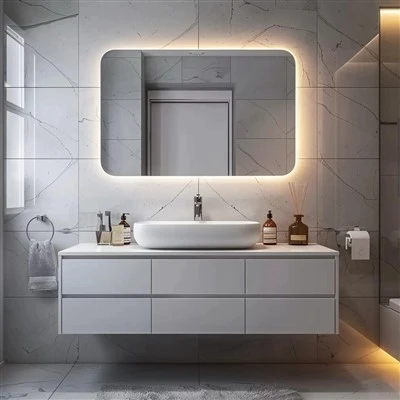
If you’re looking to order standard bathroom mirrors for a residential build, a commercial project, or just need a few for your home renovation, we’d be happy to chat through your needs, answer any questions, and help you pick the perfect mirrors that fit your budget and your space. Don’t hesitate to reach out to our team to start a conversation about your upcoming projects.
Standard Bathroom Mirrors References:
- National Kitchen and Bath Association. (2021). Bathroom Design Standards and Installation Guidelines.
- Glass Association of North America. (2020). Mirror Glass Specifications for Residential and Commercial Use.
- Construction Specifications Institute. (2019). Wall Mounted Mirror Installation Best Practices.
- Residential Building Code Council. (2022). Load Requirements for Wall-Mounted Fixtures in Bathrooms.
Taizhou Zhiyuan Electronic Technology Co., Ltd.
As one of the most professional standard bathroom mirrors manufacturers and suppliers in China, we’re featured by quality products and good service. Please rest assured to wholesale customized standard bathroom mirrors from our factory. Welcome to contact us for free sample.
Address: Duqiao Town, Linhai City, Taizhou City, Zhejiang Province
E-mail: hsuming@zyledmirror.com.cn
WebSite: https://www.zyledmirror.com/
