Hey there! I’m a guy who’s been in the final drive gearbox supply business for quite a while. And today, I wanna chat with you about how the final drive gearbox works in an all-wheel-drive system. Final Drive Gearbox
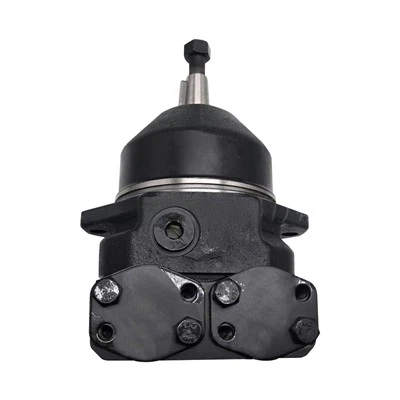
First off, let’s get a bit of background. An all-wheel-drive (AWD) system is pretty awesome. It sends power to all four wheels of a vehicle, which gives you better traction and control, especially in tricky driving conditions like snow, mud, or uneven terrain. And right at the heart of making sure that power gets to the wheels properly is the final drive gearbox.
So, what exactly is the final drive gearbox? Well, think of it as the last stop in the power transfer chain in an AWD system. The engine generates power, and that power goes through a bunch of other components like the transmission and the driveshaft. By the time it gets to the final drive gearbox, it needs to be adjusted and distributed correctly to the wheels.
One of the main jobs of the final drive gearbox is to change the direction of the power flow. The driveshaft usually runs along the length of the vehicle, but the wheels rotate in a different plane. The final drive gearbox uses a set of gears, typically a ring and pinion gear setup, to turn that power flow 90 degrees so that it can be sent to the wheels.
The ring gear is a large, circular gear, and the pinion gear is a smaller gear that meshes with the ring gear. When the driveshaft spins the pinion gear, the pinion gear then turns the ring gear. This is where some important stuff happens. The ratio between the number of teeth on the ring gear and the pinion gear determines the final drive ratio.
The final drive ratio is a big deal. It affects how much torque gets to the wheels and how fast the vehicle can go. A higher final drive ratio means more torque at the wheels, which is great for things like towing or getting a vehicle moving from a stop. But it also means the engine has to spin faster to reach a certain speed. On the other hand, a lower final drive ratio allows the vehicle to go faster at lower engine RPMs, which is better for fuel efficiency on the highway.
In an AWD system, the final drive gearbox also has to distribute the power between the front and rear wheels (or in some cases, all four wheels evenly). This is where things can get a bit more complicated. There are different ways to do this, depending on the design of the AWD system.
Some AWD systems use a center differential in the final drive gearbox. A differential is a device that allows the wheels on the same axle to rotate at different speeds. In an AWD system, the center differential helps distribute the power between the front and rear axles. It can sense which wheels have more traction and send more power to those wheels.
For example, if you’re driving on a slippery surface and the rear wheels start to slip, the center differential can transfer more power to the front wheels to keep the vehicle moving forward. This is really important for maintaining control and stability.
Another way to distribute power in an AWD system is through a transfer case. The transfer case is often integrated with the final drive gearbox or works in conjunction with it. It can send different amounts of power to the front and rear axles based on the driving conditions. Some transfer cases are manually operated, while others are automatic and can adjust the power distribution on the fly.
Now, as a final drive gearbox supplier, I know how important it is to have a high-quality gearbox in an AWD system. A poorly made gearbox can lead to all sorts of problems. It can cause noise, vibration, and even premature wear and tear on the other components in the drivetrain.
That’s why we put a lot of effort into making our final drive gearboxes. We use high-quality materials and advanced manufacturing techniques to ensure that our gearboxes are durable and reliable. We also test our gearboxes thoroughly to make sure they meet the highest standards.
Our gearboxes are designed to work seamlessly with different AWD systems. Whether it’s a small SUV or a large truck, we can provide a final drive gearbox that will fit the specific needs of the vehicle. And we’re always working on improving our products to keep up with the latest advancements in AWD technology.
If you’re in the market for a final drive gearbox for your AWD vehicle, or if you’re a manufacturer looking for a reliable supplier, I’d love to have a chat with you. We can discuss your requirements and see how our products can meet your needs. Just reach out, and we can start the conversation.

In conclusion, the final drive gearbox is a crucial component in an all-wheel-drive system. It takes the power from the engine, changes its direction, adjusts the final drive ratio, and distributes it to the wheels. A good quality final drive gearbox can make a big difference in the performance and reliability of an AWD vehicle. And that’s what we’re all about as a supplier – providing top-notch final drive gearboxes to keep your vehicles running smoothly.
Hydraulic Spare Parts References:
- Automotive Engineering textbooks on drivetrain systems
- Industry research papers on all-wheel drive technology
Wuhan Xinlaifu Hydraulic Equipment Co., Ltd.
Address: Liansu Industrial Park, No.1, Xincheng 11th Road, Dongxihu District, Wuhan, Hubei, China
E-mail: service@xlf-hydraulic.com
WebSite: https://www.xlf-hydraulic.com/
