If you’ve ever walked into an industrial facility, a power substation, or a commercial building that relies on reliable electricity, you’ve probably passed by a medium voltage (MV) switchgear cabinet without giving it a second thought. These unassuming metal enclosures are the workhorses of electrical distribution, safely managing power between generation sources and the loads that keep operations running. But what most people don’t stop to consider is the small, often overlooked control panel sitting on the front or inside of every MV switchgear unit—until something goes wrong. Medium Voltage Switchgear

As a MV switchgear supplier with over 15 years in the industry, I’ve seen firsthand how a misunderstood control panel can turn a minor electrical hiccup into a days-long production shutdown, and conversely, how a well-designed control panel can prevent that same scenario entirely. Too often, clients focus solely on the switchgear’s ability to carry high voltage or its physical footprint, treating the control panel as an afterthought. Today, I want to break down exactly what that control panel does, why it’s non-negotiable for safe, efficient power distribution, and how to make sure you’re getting one that works as hard as your switchgear does.
First, let’s start with the basics: what medium voltage switchgear is, and where it fits in the electrical ecosystem. Unlike low-voltage gear that powers office outlets or small machinery, MV switchgear handles voltages between 1 kV and 35 kV—enough to power entire assembly lines, mining sites, or municipal water treatment plants. It acts as a central hub, routing power from transformers to various loads, isolating sections of the grid for maintenance, and protecting equipment from overloads or short circuits. The control panel is the brain that makes all of this happen; without it, switchgear is just a heavy metal box with dangerous electricity inside, impossible to operate safely or reliably.
The first core function of the MV switchgear control panel is operation and control of the switchgear’s primary components. Every switchgear unit is equipped with circuit breakers, load break switches, and disconnectors—devices that make or break the flow of power. Manually opening or closing a 10 kV circuit breaker without proper insulation or procedure is not just dangerous; it’s a serious workplace hazard that can lead to arc flashes, burns, or fatalities. The control panel acts as the safe interface between human operators and these high-voltage components. It houses manual controls (like pushbuttons or selector switches) for routine operations, as well as motorized actuators that allow switchgear to be opened or closed remotely, cutting down on the time and risk of on-site work. For larger installations, like a factory with multiple switchgear bays, the control panel lets operators manage the entire distribution system from a single room, no need to climb into substations or work around live power.
But control isn’t just about flipping switches—it’s about precision. The control panel is calibrated to ensure that switchgear components act in the correct sequence, which is critical for power reliability. For example, when a switchgear needs to be taken offline for maintenance, the sequence must be: open the circuit breaker first, then the load break switch, then the disconnector. If you reverse that order, you can create an arc fault while the switch is still carrying power. The control panel is programmed to prevent out-of-sequence operations, either through interlocks that physically block incorrect inputs or through software logic that won’t activate a switch until the prior step is complete. This small, built-in layer of automation is what separates a functional control panel from a dangerous one, and it’s something I always emphasize to new clients—skimping on interlocks to save a few dollars is a false economy that can lead to catastrophic failures.
Next, the control panel’s most life-saving function: protection and fault management. MV systems are prone to faults—short circuits, overloads, ground faults—that can destroy equipment, disrupt power, or cause arc blasts that are devastating to people and property. The control panel is home to the protection relays that detect these faults and trigger the appropriate response in milliseconds. Modern protection relays, which are often mounted within the control panel, use sophisticated algorithms to distinguish between a harmless temporary load spike and a dangerous fault. When a fault is detected, the control panel sends a signal to the circuit breaker to trip, isolating the faulty section of the switchgear and preventing the fault from spreading to the rest of the system.
What many clients don’t realize is that the control panel’s protection logic is customized to their specific operation. A mining site, for example, has heavy, cyclical loads that can cause frequent temporary overloads, so the control panel can be set to delay tripping slightly to avoid unnecessary shutdowns. A municipal substation, on the other hand, requires instantaneous tripping for ground faults to protect public safety, so its control panel’s relay settings prioritize speed over tolerance. As a supplier, we work closely with clients to map their load profiles, fault history, and uptime requirements to design a control panel that balances protection with operational continuity—something off-the-shelf control panels can’t match.
Beyond protection, the control panel acts as the system’s central monitoring hub. Today’s MV switchgear control panels are equipped with a range of sensors that track key parameters: voltage, current, power factor, temperature of critical components, and the condition of circuit breaker contacts. These readings are displayed on an HMI (Human-Machine Interface) screen within the control panel, or can be transmitted to a facility’s building management system (BMS) or a remote monitoring platform. For facility managers, this means no more guessing about how their power system is performing; they can see in real time if a circuit is running overloaded, if a breaker is showing signs of wear, or if there’s a minor voltage imbalance that could lead to a bigger fault down the line.
We’ve seen how this monitoring function saves clients thousands of dollars in unplanned maintenance. Last year, a food processing plant we supply noticed a gradual rise in circuit temperature on their HMI, displayed on the control panel. Their maintenance team was able to schedule a shutdown during a planned production lull to tighten loose connections, avoiding a potential fire that would have cost them an estimated $200,000 in lost production. That’s the value of a control panel that doesn’t just control power, but gives you visibility into its health. It also simplifies compliance: most local electrical codes require MV systems to have continuous monitoring and fault logging, and the control panel keeps detailed records of all operations and faults, making inspections a breeze.
Another often-overlooked function of the control panel is coordination between multiple switchgear units. For facilities with a complex distribution network—like a hospital campus, a port, or a data center—multiple switchgear bays work together to route power, especially during outages. The control panel acts as the communication link between these units, ensuring that when one switchgear trips on a fault, the others adjust their load distribution to compensate, keeping critical loads (like operating rooms or server banks) powered. Without a coordinated control panel system, a single fault could cause a cascading shutdown of the entire facility. This is especially important for facilities with high uptime requirements, where even a 10-minute outage can have serious consequences.
Now, let’s talk about what makes a good control panel, because not all control panels are created equal. As a supplier, I’ve seen cheaply made control panels that use low-grade wiring, poorly calibrated relays, and flimsy HMIs that fail after a few years of use. These panels might work for a small office, but they’re not built for MV environments, which are often dusty, humid, or exposed to harsh conditions (like outdoor substations or mining sites). A quality MV switchgear control panel needs to be rated for the environment it’s installed in: IP65 for outdoor use, for example, to prevent dust and water from damaging components, with wiring that’s rated for high temperatures and resistance to vibration.
The control panel’s components also need to be from reputable manufacturers. Protection relays, circuit breaker actuators, and HMIs are the workhorses of the panel, and cutting corners here means you’ll end up with frequent breakdowns. We always use relays from brands with a track record of reliability in MV applications, and we test every control panel before it leaves our facility, simulating faults, power outages, and sequence errors to make sure it performs as intended. A good control panel is also future-ready: it should have the capacity to add new sensors or connect to a BMS later, so you don’t have to replace the entire unit when your facility expands or upgrades its monitoring system.
I often get asked by clients: can’t I just use a generic control panel for my MV switchgear? The answer is no—and here’s why. Generic panels are designed for one-size-fits-all applications, which means they can’t be customized to your load’s unique needs. A manufacturing plant with variable speed drives, for example, has different power characteristics than a office building, and a generic control panel won’t adjust its protection logic to match. That can lead to unnecessary tripping (and lost production) or missed faults (and expensive equipment damage). Customized control panels also take into account your team’s expertise: if your operators are comfortable with a certain type of HMI, we can design the panel to match, reducing training time and the risk of human error.
At the end of the day, the control panel’s role boils down to three core promises: keep operators safe, prevent power disruptions, and protect your equipment. It’s not a glamorous part of the MV switchgear, but it’s the part that makes the entire system work. For any business relying on medium voltage power, skimping on a quality control panel is a risk that isn’t worth taking.
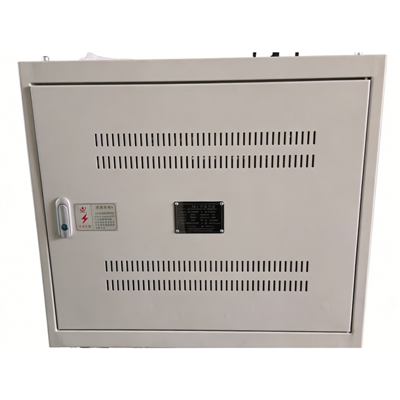
If you’re currently planning a new MV switchgear installation, upgrading your existing system, or dealing with unplanned power issues that you suspect are related to your control panel, I’d be happy to walk you through the options that are right for your facility. We’ve worked with clients across industries to design control panels that meet their specific needs, balancing safety, reliability, and cost-effectiveness. Reach out to our team to discuss your requirements, and we’ll provide a detailed assessment and customized solution for your power distribution system.
Outdoor Prefabricated Enclosed Ring Main Unit References
- International Electrotechnical Commission (IEC) 62271-102, “High-voltage switchgear and controlgear – Part 102: Alternating current circuit-breakers”
- IEEE Standard C37.10, “IEEE Standard for AC High-Voltage Circuit Breakers Rated on a Symmetrical Current Basis”
- National Electrical Manufacturers Association (NEMA) ICS 2, “Industrial Control and Systems – Control Panels”
- Electrical Safety Foundation International (ESFI), “Arc Flash Safety: Best Practices for Medium Voltage Systems”
Huachi Electric Co., Ltd.
We’re well-known as one of the leading medium voltage switchgear manufacturers in China, featured by quality products and good service. Please rest assured to buy customized medium voltage switchgear made in China here from our factory. Contact us for more details.
Address: Plastic Park, Tongyu Street, Luqiao District, Taizhou City, Zhejiang Province
E-mail: HCDQ2026@163.com
WebSite: https://www.huachi-electric.com/
