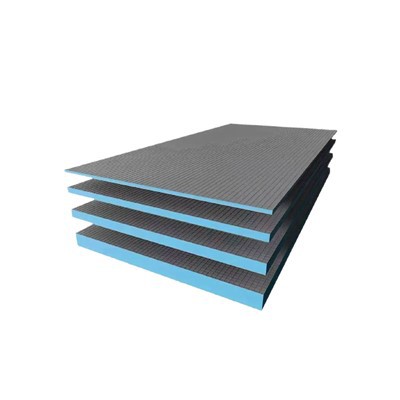
If you’ve ever stood in a tile shop or on a construction site, listening to tile setters argue about which underlayment will outlast the grout, you’ve probably heard someone mutter, “Waterproof backer board only lasts so long.” As a supplier of standard waterproof backer board, I get this question all the time. I’ve had tile contractors ask it before a job starts, homeowners ask it when they’re renovating a bathroom, and even architects ask it for commercial projects where a 20-year warranty just doesn’t cut it. The truth is, there’s no one-size-fits-all answer. A backer board’s lifespan doesn’t depend on the material itself—well, not entirely. It depends on how it’s installed, what it’s installed over, what’s on top of it, and whether anyone makes a mistake that cuts its life short. Over the 12 years I’ve been supplying backer board, I’ve seen some units last 50 years and others fail in 10. Today, I want to break down what really determines how long your standard waterproof backer board lasts, no sales pitch, just what I’ve learned on the job. Standard Waterproof Backer Board

First, let’s get one thing straight: standard waterproof backer board isn’t 100% waterproof. That’s a myth a lot of people buy into when they first start shopping. The backer board itself—most of it is made from cement mixed with fiberglass mesh or coated with a water-resistant compound—will not absorb water like regular drywall. But the gaps between the panels? That’s where the water gets in, if you don’t tape and bed them properly. I once worked with a contractor who skipped the mesh tape on the seams because he was running late for a job. Three years later, the homeowner called us with a soggy shower floor and rotting subfloor. The backer board wasn’t bad— the seams were. That’s the first big factor in lifespan: installation.
Let’s start with the core material. Our standard waterproof backer board is made from Type X cement, reinforced with alkali-resistant fiberglass, and coated with a proprietary water-resistant wax. We test it in our warehouse by submerging samples in water for 90 days straight; when we pull them out, their compressive strength is still 98% of what it was before, and they show no sign of warping or crumbling. Independent testing from the National Tile Contractors Association (NTCA) says that cement-based backer board, when it’s properly made, has a basic structural lifespan of 30 to 50 years, if it’s never exposed to direct, prolonged water. But that’s the basic number. The fine print is in how it’s installed.
Subfloor preparation is huge. Most backer board is meant to go over a structural subfloor—usually plywood or OSB. If that subfloor isn’t level, or if there are gaps larger than 1/8 inch between the sheets, the backer board will flex. That flex is bad. It causes the grout and tile above to crack, and eventually, it can cause the backer board’s core to break down. I saw a job in 2018 where a builder installed backer board over OSB that had water damage under the tub. The OSB rotted, so the backer board was sitting on a soft, uneven surface. Within 15 years, the backer board had started to delaminate from the subfloor, and the entire shower had to be redone. If the subfloor is solid, properly sealed, and level, the backer board will hold up way longer.
Then there’s the fasteners. Too many installers just grab regular drywall screws to attach backer board to the subfloor. That’s a mistake. Standard waterproof backer board needs corrosion-resistant fasteners—stainless steel or hot-dipped galvanized—because even a tiny amount of water can get to the screw and cause it to rust. A rusted screw expands, which creates pressure that cracks the backer board around the hole. We supply fasteners with every order, and I always tell installers, don’t skip them. I had a customer in Ohio install backer board with regular screws. By year 12, half the screws were rusted, and the backer board was pulling away from the wall. If he’d used the right screws, that job could have lasted twice as long.
Now, what’s on top of the backer board? Tile, obviously, but also how the tile is installed. Mortar matters. Most installers use thin-set mortar, but if they use the wrong type—like a mortar that isn’t designed for backer board— it can break down over time. Grout also plays a part. Epoxy grout is more water-resistant than cement grout, so it adds an extra layer of protection to the seams. I’ve seen a bathroom with cement grout that started cracking at the 8-year mark, which let water get between the tile and backer board, leading to mold behind the board. That said, if the installation is correct, even cement grout can last 20 years or more.
Environment is another big one. Showrooms, bathrooms, and laundry rooms are high-moisture areas. A backer board in a basement bathroom that’s always damp is going to have a shorter lifespan than one in a guest bathroom that only gets used on weekends. Commercial spaces, like restaurants or gyms, see more traffic and more cleaning, which can wear down the grout and tile over time. If the grout cracks and isn’t resealed every few years, water seeps in, and that water sits on the backer board’s seams or edges. I supply backer board for a chain of coffee shops in the Southeast, where humidity is high. Their backer board is 10 years old, and it’s still in great shape, because they have a maintenance crew that reseals the grout every two years. But I had a laundromat in Florida where grout wasn’t resealed for 5 years, and the backer board started showing signs of moisture damage at year 10. That’s not the board’s fault—that’s maintenance.
What about common mistakes that shorten lifespan? Let’s list a few, because these are the ones I see most often. First, using backer board outside its intended use. Our standard waterproof backer board is designed for interior wet areas—showers, tub surrounds, bathrooms, laundry rooms. It’s not meant for above-ground pools, or exterior patio flooring, or areas that get direct constant water exposure year-round. I once had a contractor install our backer board on an exterior pool deck, and by year 7, the edges had started to crumble from sun and constant water exposure. The board is fine for inside, but outside? It’s not built for that. Second, not sealing the edges. Backer board has cut edges that are more porous than the factory edges. If you don’t seal the cut edges with a waterproofing membrane or a thin coat of liquid waterproofing, water can seep in through the sides. That’s a small step, but it adds years to the board’s life. Third, not using a waterproofing membrane on top of the backer board. For showers, especially curbless showers, a membrane between the backer board and tile is non-negotiable. I’ve seen showers without a membrane that fail at 10 years, while identical jobs with a membrane are still going strong at 25.
Wait, what about warranty? A lot of customers look at the warranty to figure out lifespan. Our standard waterproof backer board comes with a 10-year limited warranty. That means if the board fails within 10 years due to manufacturing defects, we’ll replace it. But that warranty doesn’t cover bad installation, wrong use, or lack of maintenance. A 10-year warranty doesn’t mean the board will only last 10 years— it means that’s how long we stand behind it against our own mistakes. I’ve had customers call me at 15 years, telling me their board is still perfect, and that’s exactly what we want to hear.
What about real-world examples? Let me give you a few from the jobs I’ve supplied. In 2005, I supplied backer board for a master bathroom in a home outside Chicago. The installer did everything right: solid plywood subfloor, stainless steel screws, taped and bedded seams, a waterproof membrane, and epoxy grout. That homeowner still lives there, and last year, they had a bathroom renovation to update the vanity, and the backer board was in perfect shape. The tile was 18 years old, the grout was still intact, and the backer board had no warping, no water damage, no cracks. That’s the upper end of the lifespan. Then there’s the job in Austin from 2012: installer used OSB subfloor that had a soft spot, skipped sealing the edges, used regular screws. By 2020, the shower had a leak, and the backer board had delaminated from the subfloor. That’s 8 years, and all because of small mistakes in installation. Another example: a commercial laundry room in Atlanta, installed in 2014. Proper backer board, good subfloor, stainless screws, cement grout. They resealed the grout every 3 years. As of 2024, the backer board is still functional, though the grout and tile are starting to show wear.
So putting it all together: a well-installed standard waterproof backer board can last anywhere from 20 to 50 years. That’s the range. If you cut corners on installation, use it in the wrong space, or skip maintenance, it can fail in as little as 8 years. If you do it right, it will outlast the tile in most cases, which usually needs to be replaced every 15 to 30 years depending on the quality.
I know when you’re renovating or building, you just want a number to plan for. You don’t want to have to worry about installation tricks or humidity levels. The truth is, the best thing you can do is work with an experienced tile setter who knows how to install backer board correctly. The second best thing? Buy a quality backer board from a supplier that stands behind their product, like our standard waterproof backer board. We don’t cut corners on materials, and we test every batch to make sure it meets NTCA standards.
If you’re planning a project and want to make sure your backer board lasts as long as possible, reach out to us to discuss your needs. We can help you pick the right backer board for your space, give you guidance on installation best practices, and work with you to get the materials you need on time and within budget. Don’t wait until you have a water leak to deal with a bad backer board—plan for longevity from the start.
Waterproof Backer Board References:
National Tile Contractors Association. (2021). "Backer Board Selection and Installation Guidelines." NTCA Technical Bulletin 102.
Portland Cement Association. (2019). "Cement-Based Backer Board: Performance and Durability Characteristics." PCA Research Report 2019-03.
International Code Council. (2022). "Residential and Commercial Waterproofing Requirements for Wet Areas." IRC Section R702 and IBC Section 1203.
Address: Zhongze Village, Baohai Town, Tiantai County, Taizhou City, Zhejiang Province
E-mail: 906915688@qq.com
WebSite: https://www.yhhold.com/
