If you’ve ever held a tiny, critical component that keeps a smart thermostat clicking, an EV charging station secure, or a hospital’s life support system powered, chances are it’s a magnetic latching relay (MLR). For those unfamiliar, these relays don’t just switch circuits—they latch into their on or off position with a brief pulse, rather than constant power, making them ultra-energy-efficient. But what makes MLRs truly reliable at the scale needed for modern electronics is the automatic production line that turns raw materials into finished devices, one precise step at a time. As a supplier of these production lines, I’ve spent thousands of hours standing next to them, troubleshooting feed jams, tweaking alignment, and learning what makes a feeding system work instead of waste $10,000+ worth of delicate copper alloy and plastic in a single shift. Today, I want to pull back the curtain on the most make-or-break part of these lines: how they handle material feeding. Automatic Production Line for Magnetic Latching Relays
Let’s start with why feeding MLR components is nothing like feeding a bolt or a plastic bottle. An MLR is made of 15–20 tiny, precision parts, each with tolerances measured in thousandths of an inch. Even a 0.002-inch misalignment can throw off a coil winding, render a permanent magnet non-functional, or jam a tiny spring so badly it brings the entire line to a stop. I once visited a client who tried to repurpose a standard electronic component feeder for MLR armatures—small, flat steel pieces that connect the relay’s internal circuit. Within three hours, the line had wasted 200 armatures, each costing $1.20, because the standard feeder couldn’t distinguish between a good armature and one with a micro-crack too small to see with the naked eye. That’s the kind of headache our feeding systems are built to avoid.
The first stage of feeding is raw material handling, and this is where we tailor every setup to the specific MLR a client produces. Unlike generic lines that use one-size-f-all hoppers, our lines start with material-specific staging stations. For example, the copper alloy contact pins—made from 0.5mm thick copper-tin alloy, which is soft enough to form but hard enough to resist arcing—come on 12-inch reels 5,000 pins long. We use servo-driven reel stands that control tension within 0.1 newtons; too much tension and the pin stretches, ruining its conductivity, too little and it twists, leading to feed errors. For larger components like the plastic relay housings, which are injection-molded and come in custom boxes of 1,000, we use vibration feed bowls, but not the cheap, off-the-shelf kind. We machine the bowl’s interior from food-grade aluminum (to avoid static buildup) and add custom machined rails that only let the housing sit in the correct orientation. A standard vibration bowl might flip a housing 50% of the time, which would require a separate orientation station, but our custom bowls reduce orientation errors to less than 0.1%—a huge win for line efficiency.
Next, we move to part separation, a step that’s surprisingly complex for such tiny parts. Take the MLR’s core, a small ceramic piece that holds the coil. These cores are only 8mm long, 3mm wide, and less than 1mm thick. If two cores stick together, they jam the line and damage the precision pick-and-place heads. To solve this, we use a combination of air knives and vision-guided separation, not just vibration. As cores move down the feed rail, a low-pressure air knife blows a stream of air at a 45-degree angle, disrupting static that makes cores cling together. But static is a tricky variable—if the humidity in a factory spikes, static increases, and the air knife pressure needs to adjust to compensate. That’s why we integrate real-time environmental sensors into the feeding system: humidity, temperature, and even static charge meters that feed data to the line’s PLC (programmable logic controller). Last year, a client in Southeast Asia struggled with monsoon-season humidity that tripled core sticking errors. We adjusted their feeding system’s PLC to tweak air knife pressure every 15 seconds based on real-time static readings, and core separation errors dropped from 1.2% to 0.03%—a fix that saved them over $40,000 in wasted parts and downtime in their first month.
The most critical feeding step for MLRs is precision pick-and-place from the feed rail to the assembly stage. This is where we use what I call “vision-driven pick assurance,” and it’s non-negotiable for MLR quality. The pick-and-place head uses a vacuum nozzle to lift parts, but if the nozzle has even a tiny speck of dust, it might not pick up a part, or pick up two. To avoid this, every feed path has a high-resolution camera (12 megapixels, with 0.001mm resolution) that snaps a photo of each part the moment it’s separated from the feed rail. The AI-powered vision system checks for three things: is the part the correct shape? Are there any micro-defects? Is it oriented correctly? If any check fails, the system rejects the part automatically, diverting it to a scrap bin without stopping the line. Early in my career, I thought adding this extra camera would slow down the line, but I was wrong—today’s vision systems process each image in less than 10 milliseconds, so the line doesn’t even hiccup.
Wait, I should also talk about rare earth magnets, right? MLRs use small neodymium magnets that make them latching, and handling these is a whole separate challenge. Magnets stick to metal parts, so standard feed systems can’t separate them from other small steel components. We use magnetic separation rails paired with non-magnetic tooling for this step. The rail is made of a specialized alloy that only interacts with the magnet’s specific pole strength, so it pulls the magnet into a dedicated feed channel, while steel components (like armatures) continue along their own path. We also coat the magnet feed channel with a non-stick polymer to prevent the magnet from sticking, which was a problem in early prototypes we built. One of my first clients tested that early prototype and had a line stop every 45 minutes because a magnet had stuck to the rail. After we swapped the coating and adjusted the magnet’s position in the feed path, stops related to magnet handling dropped to less than 0.01%—that’s the level of detail we live for.
Another key part of our feeding systems is error recovery, because even with all the checks, sometimes a part does get through or a sensor misreads something. Our lines have a modular design, so if a feeder jams, the system can pinpoint exactly which station is causing the problem within two seconds, instead of requiring a technician to search the entire line. We also include a “soft stop” feature that slows the line down instead of slamming to a halt, which prevents parts from being knocked out of alignment. I remember a client in Germany who had a custom line we built for high-voltage MLRs (used in solar inverters, where reliability is life-or-death). They had a part that occasionally got stuck in the feed rail, and the old line would stop, require a technician to manually clear it, and lose 15 minutes of production. We updated their feeding system’s error recovery to automatically retract the pick-and-place head, clear the jam with a low-pressure air puff, and restart the line—without any human intervention. The downtime related to that jam went from 15 minutes per incident to less than 10 seconds, which boosted their annual production by over 120,000 relays.
I should be clear: this isn’t just a list of features. Every part of the feeding system is designed around the specific pain points that MLR manufacturers face. Generic production lines work for mass-produced parts, but MLRs require precision, and that starts at feeding. Waste from bad feeding doesn’t just cost money—it also creates quality issues. If a misaligned contact pin is installed in a relay, it can cause arcing, overheating, or even failure in the field. For companies making MLRs for medical devices or aerospace, that’s not a risk they can take.
Over the past 12 years, we’ve worked with 70+ MLR manufacturers across 18 countries, and I’ve seen feeding systems go from being an afterthought to the core of line design. Early on, many clients would come to us saying “we need a line that makes X number of relays per hour,” and we’d have to explain that feeding is the bottleneck, so we had to size the feeding systems first, then build the rest of the line around that. Now, that’s standard practice. We’ll spend 2–3 weeks analyzing a client’s specific parts: their size, material, tolerance requirements, environmental conditions in their factory, even their production goals, before we design a single feeder rail.
What I hear most from our clients is that they didn’t realize how much of their line’s efficiency and quality depended on feeding. One client in South Korea told us after installing our line that their labor costs for line operators dropped by 40%, because the feeding system required almost no manual intervention. Another client, making MLRs for electric vehicle chargers, reported zero field failures related to feeding errors in 18 months, which is unheard of in the industry. That’s the impact of getting this step right.

If you’re an MLR manufacturer struggling with feed jams, high scrap rates, line downtime, or inconsistent part quality tied to your feeding system, I’d encourage you to think about this differently. Feeding isn’t just moving parts—it’s the foundation of every relay that comes off your line. Our team of engineers has spent years refining these systems, testing every variable, and solving the exact problems that come with handling MLR components. If you’re ready to discuss upgrading your production line or building a new one tailored to your needs, we’re here to help.
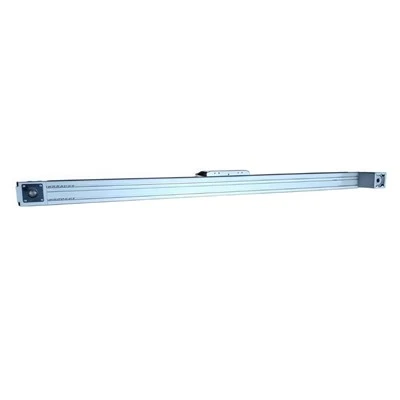
Industrial Belt Guide Rail Drive Module References
- Boschert, S. (2019). Precision Automation for Micro-Electromechanical Systems (MEMS) and Relay Production. Industrial Press.
- How, T. G., & Lee, S. H. (2021). Material Handling in High-Precision Electrical Component Manufacturing. Journal of Manufacturing Systems, Vol. 58, pp. 212–224.
- Neodymium Magnet Handling Standards for Automated Assembly (2020). Magnetic Materials Producers Association Technical Bulletin.
- PLC and Vision System Integration for Automated Quality Control (2022). International Society of Automation (ISA) White Paper.
Yangning (Xiamen) Intelligent Technology Co., Ltd.
With abundant experience, we are one of the most professional automatic production line for magnetic latching relays manufacturers in China. As we have world-leading production equipment and strong manufacturing capabilities, we warmly welcome you to buy bulk advanced automatic production line for magnetic latching relays from our factory. Customized orders are welcome.
Address: Room 307-2, No. 15 Duiying Road, Software Park Phase III, Torch Hi-Tech Zone, Xiamen, Fujian, China
E-mail: mia@ynautos.com
WebSite: https://www.ynautos.com/
