When it comes to the design and functionality of an Industrial Belt Guide Rail Drive Module, selecting the right type of motor is a crucial decision that can significantly impact the performance, efficiency, and longevity of the entire system. As a supplier of Industrial Belt Guide Rail Drive Modules, I have encountered various scenarios and requirements from different industries. In this blog, I will delve into the types of motors that are suitable for this specific application, providing insights based on real – world experiences and technical knowledge. Industrial Belt Guide Rail Drive Module
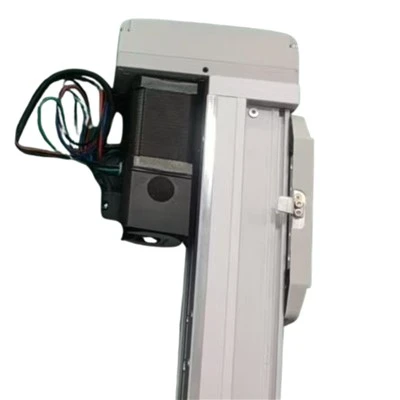
DC Brushed Motors
DC brushed motors are one of the most traditional and widely used types of motors in industrial applications, including the Industrial Belt Guide Rail Drive Module. These motors operate on the principle of electromagnetic induction, where the interaction between the magnetic field and the current – carrying conductors in the armature generates torque.
One of the main advantages of DC brushed motors is their simplicity. They have a straightforward design, consisting of a stator, an armature, and brushes. This simplicity translates into easy control and maintenance. For the Industrial Belt Guide Rail Drive Module, DC brushed motors can provide a high starting torque, which is essential for initiating the movement of the belt along the guide rail. They can also handle a wide range of speeds, making them flexible for different operating requirements.
However, DC brushed motors also have some limitations. The brushes in these motors are subject to wear and tear over time, which can lead to reduced performance and increased maintenance costs. Additionally, the electrical arcing that occurs between the brushes and the commutator can generate electrical noise, which may interfere with other sensitive electronic components in the drive module.
Despite these drawbacks, DC brushed motors are still a popular choice for many industrial applications, especially in lower – cost and less demanding systems. They are well – suited for applications where high starting torque and simple control are required, such as in some light – duty conveyor systems.
DC Brushless Motors
DC brushless motors are a more advanced alternative to DC brushed motors. They eliminate the need for brushes and commutators, which significantly reduces maintenance requirements and increases the motor’s lifespan. Instead of using brushes to transfer electrical current to the armature, DC brushless motors use electronic commutation, which is more efficient and reliable.
In an Industrial Belt Guide Rail Drive Module, DC brushless motors offer several advantages. They have a higher power – to – weight ratio compared to DC brushed motors, which means they can deliver more power in a smaller and lighter package. This is particularly beneficial for applications where space and weight are critical factors.
Another advantage of DC brushless motors is their high efficiency. They convert a larger percentage of the electrical energy into mechanical energy, resulting in less heat generation and lower energy consumption. This can lead to significant cost savings in the long run, especially for systems that operate continuously.
DC brushless motors also provide precise control of speed and torque. They can be easily programmed to operate at different speeds and to deliver a specific amount of torque, which is essential for applications that require accurate positioning and movement control, such as in automated manufacturing processes.
However, DC brushless motors are generally more expensive than DC brushed motors, and they require a more complex control system. This can increase the initial investment cost and the complexity of the system design. Nevertheless, for applications that demand high performance, reliability, and energy efficiency, DC brushless motors are often the preferred choice.
Stepper Motors
Stepper motors are another type of motor commonly used in the Industrial Belt Guide Rail Drive Module. These motors operate by dividing a full rotation into a number of equal steps. Each step is controlled by an electrical pulse, which allows for precise position control.
One of the key advantages of stepper motors is their ability to provide accurate positioning without the need for a feedback device, such as an encoder. This makes them a cost – effective solution for applications that require relatively precise movement control, such as in some pick – and – place machines and small – scale conveyor systems.
Stepper motors also have a high holding torque, which means they can maintain their position even when there is no external rotation. This is useful for applications where the belt needs to be held in a specific position for an extended period of time.
However, stepper motors have some limitations. They are not as efficient as DC brushless motors, especially at high speeds. They also tend to produce more vibration and noise, which can be a concern in some applications. Additionally, stepper motors have a limited speed range compared to other types of motors.
Despite these limitations, stepper motors are still a popular choice for many industrial applications, especially in systems where cost – effectiveness and precise positioning are the primary requirements.
Servo Motors
Servo motors are a type of motor that provides high – performance control of speed, torque, and position. They are widely used in industrial applications where precise and dynamic movement control is required, such as in robotics, CNC machines, and high – end conveyor systems.
Servo motors work in conjunction with a feedback device, such as an encoder, which continuously monitors the motor’s position and speed. The control system uses this feedback to adjust the motor’s output in real – time, ensuring accurate and precise movement.
In an Industrial Belt Guide Rail Drive Module, servo motors offer several advantages. They can provide high – speed operation with excellent acceleration and deceleration capabilities. This makes them suitable for applications that require fast and precise movement, such as in high – speed sorting and packaging systems.
Servo motors also have a high torque – to – inertia ratio, which means they can quickly change their speed and direction. This is beneficial for applications that require rapid and dynamic movement control, such as in robotic arms.
However, servo motors are generally the most expensive type of motor, and they require a sophisticated control system. This can increase the overall cost and complexity of the system. Additionally, servo motors need to be properly tuned to ensure optimal performance, which requires technical expertise.
Selecting the Right Motor for Your Industrial Belt Guide Rail Drive Module
When selecting a motor for an Industrial Belt Guide Rail Drive Module, several factors need to be considered. These include the required torque, speed, accuracy, reliability, cost, and the specific application requirements.
- Torque Requirements: Determine the amount of torque needed to move the belt along the guide rail. This depends on the weight of the load, the friction in the system, and the acceleration and deceleration requirements.
- Speed Requirements: Consider the required operating speed of the belt. Different motors have different speed capabilities, so choose a motor that can meet the speed requirements of your application.
- Accuracy: If your application requires precise positioning and movement control, such as in automated manufacturing processes, you may need a motor with high accuracy, such as a servo motor or a stepper motor.
- Reliability: Consider the reliability of the motor in the long run. Motors with fewer moving parts and less wear and tear, such as DC brushless motors and servo motors, are generally more reliable.
- Cost: The cost of the motor is an important factor, especially for large – scale industrial applications. Consider the initial purchase cost, the maintenance cost, and the energy consumption cost over the lifespan of the motor.
- Specific Application Requirements: Different industries have different application requirements. For example, the food and beverage industry may require motors that are easy to clean and meet certain hygiene standards, while the automotive industry may require motors that can withstand high – temperature and high – vibration environments.
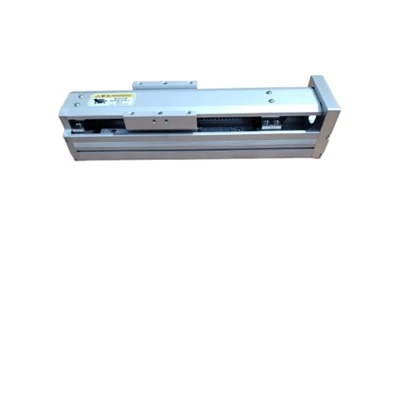
In conclusion, selecting the right motor for an Industrial Belt Guide Rail Drive Module is a critical decision that can significantly impact the performance and efficiency of the entire system. As a supplier, I am committed to helping our customers make the best choice based on their specific requirements. If you are in the market for an Industrial Belt Guide Rail Drive Module and need assistance in selecting the right motor, please feel free to contact us for a detailed consultation. Our team of experts is ready to provide you with professional advice and customized solutions.
Assembly Equipment References
- Electric Machinery Fundamentals, Stephen J. Chapman
- Industrial Motor Control, Timothy H. Moran
Yangning (Xiamen) Intelligent Technology Co., Ltd.
With abundant experience, we are one of the most professional industrial belt guide rail drive module manufacturers in China. As we have world-leading production equipment and strong manufacturing capabilities, we warmly welcome you to buy bulk advanced industrial belt guide rail drive module from our factory. Customized orders are welcome.
Address: Room 307-2, No. 15 Duiying Road, Software Park Phase III, Torch Hi-Tech Zone, Xiamen, Fujian, China
E-mail: mia@ynautos.com
WebSite: https://www.ynautos.com/
