Hey there, gear motor enthusiasts! I’m a supplier in the gear motor game, and today, I wanna chat about something that often gets overlooked but is super important: the noise level of a spur gear motor. Gear Motor
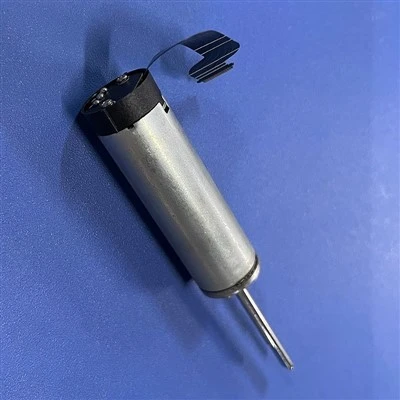
First off, let’s talk about what a spur gear motor is. It’s a type of motor that uses spur gears to transmit power. Spur gears are the simplest type of gear, with teeth that are straight and parallel to the axis of the gear. They’re used in a whole bunch of applications, from small toys to big industrial machinery.
Now, the noise level of a spur gear motor can vary a whole lot. It depends on a bunch of factors, like the quality of the gears, the speed of the motor, and the load it’s carrying.
Let’s start with the quality of the gears. If the gears are made with high – quality materials and precision manufacturing, they’re gonna run a lot quieter. Cheaper gears might have rough surfaces or inaccurate tooth profiles. When these gears mesh together, they can cause a lot of vibration and noise. For example, if the teeth aren’t perfectly aligned, they’ll bang into each other as the motor runs, creating that annoying clattering sound.
The speed of the motor also plays a huge role. Generally, the faster a spur gear motor runs, the louder it gets. That’s because at higher speeds, the gears are moving more quickly, and there’s more impact when the teeth mesh. Think about it like a race car. When it’s going slow, you can hardly hear it, but when it revs up, it’s super loud. The same principle applies to spur gear motors.
Another factor is the load. If the motor is carrying a heavy load, it has to work harder. This means the gears are under more stress, and they’ll make more noise. It’s like when you’re trying to carry a really heavy box. You huff and puff a lot more than when you’re carrying something light.
So, how do we measure the noise level of a spur gear motor? Well, we use a unit called decibels (dB). Decibels are a way to quantify how loud a sound is. A quiet room might be around 30 dB, while a busy city street could be around 70 dB. For spur gear motors, the noise level can range anywhere from 50 dB to over 90 dB, depending on the factors we talked about earlier.
A motor with a noise level of around 50 – 60 dB is considered pretty quiet. It’s about as loud as a normal conversation. Motors in this range are great for applications where noise is a concern, like in home appliances or office equipment. On the other hand, a motor with a noise level of 80 – 90 dB is quite loud. It’s similar to the noise of a vacuum cleaner. These motors are usually used in industrial settings where noise isn’t as big of a deal.
Now, as a gear motor supplier, I know that sometimes, customers are willing to sacrifice a bit of noise for other benefits. For example, a more powerful motor might be noisier, but it can handle heavier loads. So, it’s all about finding the right balance.
If you’re looking for a quieter spur gear motor, there are a few things you can do. First, you can choose motors with high – quality gears. These might cost a bit more upfront, but they’ll save you a lot of headaches in the long run. Second, you can adjust the speed of the motor. If you don’t need it to run at full speed all the time, reducing the speed can significantly cut down on the noise.
You can also use noise – reducing materials. For example, some motors come with rubber mounts that absorb vibrations and reduce noise. Another option is to enclose the motor in a sound – proof housing. This can block a lot of the noise from escaping.
In my experience, working with customers, I’ve found that understanding the noise level requirements is crucial. Some customers are really strict about noise, especially if their product is going to be used in a quiet environment. Others are more concerned about performance and don’t mind a bit of noise.
When I’m talking to customers, I always ask them about their specific needs. I want to know what kind of application the motor will be used for, what the load requirements are, and how much noise they can tolerate. Based on this information, I can recommend the right motor for them.
For example, if a customer is building a small robotic device that needs to be quiet, I’ll suggest a motor with high – quality gears and a lower speed. On the other hand, if a customer is working on an industrial conveyor system where noise isn’t a big issue, I might recommend a more powerful, but noisier, motor.
I also like to educate my customers about the factors that affect noise level. I explain how the quality of the gears, the speed, and the load all play a part. This way, they can make more informed decisions when choosing a motor.
So, if you’re in the market for a spur gear motor, and you’re concerned about the noise level, don’t hesitate to reach out. I’ve got a wide range of motors to choose from, and I can help you find the perfect one for your needs. Whether you need a super – quiet motor for a home application or a powerful one for an industrial project, I’ve got you covered.
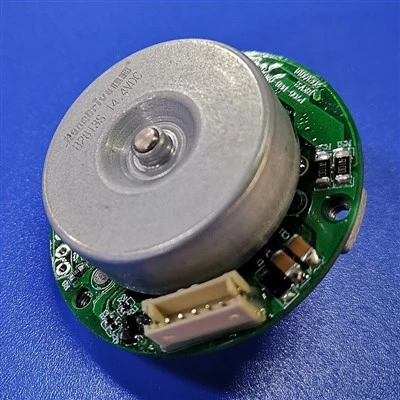
Just drop me a line, and we can have a chat about your requirements. I’m always happy to share my knowledge and help you make the best choice. Let’s work together to find the right spur gear motor for your project!
Inrunner Brushless Motor References:
- "Gear Design and Application" by Dudley, D. W.
- "Mechanical Engineering Design" by Shigley, J. E. and Mischke, C. R.
Shenzhen HengDrive Technologies Co., Ltd.
Shenzhen HengDrive Technologies Co., Ltd. is one of the most professional gear motor manufacturers and suppliers in China, specialized in providing high quality customized service. We warmly welcome you to buy the newest gear motor in stock here from our factory.
Address: Building A & F, FuNing Hi-Tech Park, XinTian Road, FuHai Street, BaoAn District, ShenZhen, GuangDong Province, China.
E-mail: Marketing001@hengdrive.com
WebSite: https://www.hengdrivemotor.com/
