If you’ve ever worked in mining, dredging, mineral processing, or any industry that moves thick, particle-laden liquid, you know abrasive slurry isn’t just another fluid to pump. It’s a corrosive, grinding mixture that chews through standard pumps, destroys seals and impellers in weeks, and leaves operations crippled by downtime and maintenance costs. As a slurry pump supplier who’s spent 12 years on job sites, watching pump after pump fail when handling sand, gravel, iron ore tailings, or coal slurries, I get it: picking the wrong pump isn’t just a bad call—it’s a costly one. Over that time, I’ve fielded hundreds of calls from operators asking, “What’s the best pump for abrasive slurry?” The answer isn’t a one-size-fits-all machine, but a combination of right design, material, and sizing tailored to your specific slurry. Let’s break this down, no jargon that’s impossible to translate to your site team, just real, on-the-ground advice. Slurry Pump

First, let’s stop treating all abrasive slurries the same. I’ve seen a dredger in the Gulf of Mexico move 12-inch sediment that would tear through a cast iron pump in 10 days, and a gold processing plant in Nevada that handles fine, heavy iron ore slurry that wears pumps from the inside out in 6 weeks. The key variables here are particle size, particle hardness, slurry concentration, and flow rate. If your slurry is 50% coarse, sharp silica sand (a Mohs hardness of 7, same as quartz), a standard centrifugal pump with mild steel components will never last. Even a “general purpose” slurry pump will struggle—its impellers are thin, cast from low-chrome iron that can’t handle constant grinding from hard, angular particles. I learned this early on when a customer sent me photos of a pump they’d bought from a big-box industrial supplier for a coal washing application: the impeller had half its thickness worn away in 2 weeks, and the casing’s liner was so thin you could see light through it. That’s not a failure of the “slurry pump” category—it’s a failure of matching pump type to the job.
The first big decision here is pump type, and for nearly all abrasive slurry applications, centrifugal slurry pumps are the best bet. Why? Positive displacement pumps, which squeeze fluid through a cavity with a piston or rotor, work for some slurries but have way more moving parts that get clogged or worn. I’ve had customers tell me their diaphragm pumps failed because large debris would get stuck in the valves, and replacing the valves every 3 days added up to more than upgrading to a centrifugal unit. Centrifugal pumps use an impeller that spins to throw slurry outward, creating the flow, and the design can be engineered to separate heavy abrasive particles from the critical moving components. Wait, but not all centrifugal pumps—there are submersible, vertical sump, and horizontal centrifugal slurry pumps, each for different jobs.
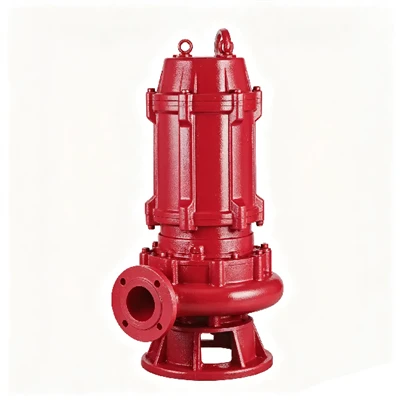
Submersible slurry pumps are great for situations where you don’t have a lot of space, like deep sumps in mines or construction sites where slurry collects at the bottom of a pit. The whole pump sits submerged, so there’s no long suction line that can lose prime, which is a huge win for operators who have to deal with messy, hard-to-reach areas. But here’s the catch: submersible pumps have motors mounted right next to the slurry, so if the seal between the motor and the pump housing wears out, slurry can get into the motor and burn it up. I had a customer in a mining operation try to cut costs on submersible pump seals, and they had to replace 3 motors in 2 months when a fine iron ore slurry seeped in. For submersible pumps, you need ones with double mechanical seals that are cooled by the slurry itself, and regularly scheduled seal checks—no exceptions.
Vertical sump pumps are a step up for applications where you have a fixed sump, like a wastewater treatment plant with grit removal or a plant that recycles process water. They hang down into the sump, so the motor is above the slurry level, which eliminates that motor seal issue. The impeller is vertical, so it can handle large debris if your slurry has clumps, and you can adjust how far it hangs into the sump to change flow. I’ve worked with a dredging company that uses vertical sump pumps to pump fine sediment from their holding ponds, and they get 18 months of use out of a single pump, compared to 3 months with their old submersible units. That said, vertical sump pumps aren’t great for high-flow, long-distance applications—they’re limited to the depth of your sump, so if you need to pump slurry a mile away to a tailings pond, you’ll want a horizontal pump.
Horizontal centrifugal slurry pumps are the workhorse for almost every heavy-duty abrasive slurry job. They’re built with a separate power unit, mounted above the pump end, so you can access impellers and liners without pulling the whole pump out of line. The best horizontal pumps for abrasive slurry have replaceable wear parts—impellers, casing liners, and suction side liners that you can swap out in a few hours, not days. This is critical because wear parts will need replacing eventually, no matter how good the pump is, and downtime is money. I once had a mine operator who was replacing an entire pump every month; after we switched them to a horizontal pump with replaceable liners, they only had to swap liners every 3 months, and impellers every 6 months. That cut their maintenance labor cost by 70% right away.
Now, the most important part of all for abrasive slurry: the material the pump is made of. I can’t stress this enough—even the best pump design is useless if it’s built from the wrong material. There are two main material groups for slurry pump wear parts: high-chrome iron (also called white iron) and rubber. Each has its sweet spot, and picking the wrong one is a fast track to failure.
High-chrome iron is the go-to for hard, angular, large abrasive particles. If your slurry has particles larger than 10mm, like gravel, rock, or iron ore, high-chrome iron is the only way to go. It’s made of iron with 15-30% chromium, which forms hard carbide particles that resist grinding. I’ve seen high-chrome impellers last 2 years pumping 2-inch crushed rock slurry, compared to rubber impellers that wore out in 2 weeks. The downside? High-chrome iron is brittle, so it can crack if the pump hits a large, hard object like a broken drill bit or a rock that falls into the suction line. That’s why if you have a slurry with large debris, you need to install a strainer on the suction side of the pump to catch anything bigger than your pump can handle.
Rubber, on the other hand, is better for fine, rounded, low-hardness abrasive particles. If you’re pumping fine sand, coal slurry, or tailings with particles less than 5mm, rubber liners and impellers are superior. Rubber is more flexible, so it absorbs the impact of small particles, and it’s less prone to corrosion than high-chrome iron, especially if your slurry has acidic components. I had a power plant customer who was pumping fly ash slurry—fine, round particles, slightly acidic. They’d been using high-chrome pumps, and the liners wore out in 4 months. When they switched to natural rubber liners, the liners lasted 12 months, and the energy usage went down 5% because rubber is smoother, so there’s less friction inside the pump. The catch with rubber? It can’t handle temperatures above 80°C (176°F), and it will degrade if it’s exposed to oil or chemicals like strong acids or alkalis. So if your slurry is hot or chemically harsh, stick with high-chrome iron.
There are other materials out there too, like polyurethane and ceramic, but they’re specialty cases. Polyurethane is similar to rubber, but it’s more resistant to tears and chemicals, good for mining slurries with sharp fine particles. Ceramic is the hardest material of all, used for ultra-fine, highly abrasive slurries like lithium processing, where even small particles wear out high-chrome iron quickly. But ceramic is brittle and expensive, so it’s only worth it for specific high-wear applications.
Once you’ve picked the pump type and material, sizing is non-negotiable. A lot of operators try to buy the smallest pump possible to save money upfront, but that backfires fast. If you size a pump too small, it has to work harder to move the same amount of slurry, which increases the speed the impeller spins. Higher impeller speed means more impact between particles and the pump parts, and more wear. I had a customer in a sand and gravel operation who bought a 4-inch pump for a job that needed a 6-inch. The pump ran at 1800 RPM instead of the recommended 1200 RPM, and the impeller wore out in 2 weeks. When they upgraded to the correct 6-inch pump running at 1200 RPM, the impeller lasted 5 months, and they used 15% less electricity. Sizing also means accounting for the solids concentration in your slurry. Most centrifugal slurry pumps are rated for up to 60% solids by weight, but going above that increases wear exponentially. If you need to pump slurry with over 60% solids, you’ll need a heavy-duty pump designed specifically for high-density applications, not a standard model.
Another often-overlooked factor is the pump’s design features that reduce wear. Look for pumps with large, open impellers—they let large particles pass through without clogging, and they reduce turbulence, which cuts down on particle impact. Closed impellers are more efficient, but they trap more debris and wear out faster in abrasive slurry. I always recommend semi-open or open impellers for abrasive applications. Also, look for pumps with adjustable impeller clearance. As the impeller and liner wear over time, you can adjust the gap between them to keep efficiency high, instead of having to replace parts right away. That small adjustment can extend pump life by 20-30% in many cases.
Let’s talk about real-world examples to make this concrete. Last year, I worked with a gold processing plant in Colorado that was having constant issues with their slurry pumps. They were using standard horizontal pumps with high-chrome impellers, and they were replacing impellers every 4 weeks because of fine, sharp silica slurry. Their flow rate was 150 cubic meters per hour, and the slurry concentration was 55% solids. After assessing their needs, we recommended a horizontal centrifugal slurry pump with open impellers, natural rubber liners (since their slurry was slightly acidic and fine), sized for 200 cubic meters per hour to give them a safety margin, and adjusted impeller clearance. Since installation, they’ve gone 10 months without replacing impellers, and their maintenance labor cost for pumps dropped by 80%. That’s the difference between picking a pump tailored to your application and picking whatever was cheapest at the industrial supply store.
Another example: a dredging operation in Louisiana that was pumping sediment from a navigation channel to a containment pond. Their slurry had large, angular sand particles up to 12mm, flow rate of 800 cubic meters per hour, and concentration of 40% solids. They’d been using submersible pumps that failed every 2 months due to seal leaks. We switched them to a heavy-duty horizontal centrifugal pump with high-chrome iron impellers and casing liners, and installed a suction strainer to catch large debris. Now, the pump runs for 18 months between liner replacements, and downtime from pump issues is down 90%.
Wait, but what about when you’re dealing with both large and fine particles? I had a construction customer who was pumping excavation slurry with everything from small gravel to fine silt. In that case, we went with a horizontal pump with a large, semi-open impeller and high-chrome iron parts, because even the fine silt would grind rubber down in a few weeks, and the gravel would crack ceramic. We also added a suction hose with a built-in trash screen to catch any large rocks that slipped past the digger’s bucket, which helped reduce wear even more.
A common myth I hear all the time: “A more expensive pump is always better.” That’s not true. I’ve seen a $20,000 specialty pump fail faster than a $10,000 pump that was tailored to the application. The key is matching the pump to your specific slurry, not just the price tag. If you have fine sand, a rubber-lined pump is cheaper, lasts longer, and uses less electricity than a high-chrome pump, even if the initial cost is a bit higher. If you have large gravel, a high-chrome pump is worth the investment, because a rubber pump would be replaced so often that total cost is higher.
Also, don’t forget about maintenance. Even the best pump will fail if you don’t perform regular checks. Changing the lubricant on the pump’s bearing housing every 3 months, checking seal integrity weekly, and adjusting impeller clearance as needed adds months to the pump’s life. I always tell my customers that a 30-minute maintenance check every week saves 8 hours of downtime when a pump fails unexpectedly.
So, to circle back to the original question: what’s the best pump for abrasive slurry? There’s no single answer, but the framework is: first, identify your slurry’s properties (particle size, hardness, concentration, temperature, corrosiveness). Then, pick a pump type that fits your application (submersible for small, sumpless areas; horizontal for heavy-duty, long-distance pumping; vertical sump for fixed sumps). Then, select the wear material that matches your slurry: high-chrome iron for large, hard, hot or corrosive particles; rubber for fine, rounded, cool, non-acidic particles; polyurethane for medium fine, slightly abrasive slurries; ceramic for ultra-fine, extremely high-wear slurries. Size the pump with a safety margin to reduce impeller speed and wear, and add design features like open impellers and adjustable clearances to extend life. And don’t skip regular maintenance—it’s the easiest way to keep your pump running for years, not months.
At the end of the day, I’ve spent too many years watching operators lose money to bad pump choices. If you’re tired of frequent pump failures, sky-high maintenance costs, and unplanned downtime, you don’t have to guess. Reach out, share details about your slurry (what’s in it, how much you need to pump, how far, any temperature or corrosion factors), and we can work with you to find the right pump for your operation. No one-size-fits-all, no sales fluff, just practical solutions that work for your specific needs.
Stainless Steel Solar Surface Pump References:
- Australasian Pump & Valve Association. (2021). Slurry Pump Selection and Application Guide. APVA Press.
- The Global Mining Guidelines Group. (2022). Abrasive Wear Mitigation in Mineral Processing Equipment. GMG Publishing.
- Rubber Manufacturers Association. (2020). Rubber Lining Performance in Slurry Handling Applications. RMA Technical Report.
- International Dredging Association. (2021). Centrifugal Pump Design for High-Density Sediment Slurry. IDA Research Bulletin.
Longbiao Pump Industry Co., Ltd.
We are one of the most professional slurry pump manufacturers and suppliers in China, featured by quality products and low price. Please rest assured to buy discount slurry pump for sale here from our factory. We also accept customized orders.
Address: Unit 101, Building 11, Pan’ao Entrepreneurship Park, Daxi Town, Wenling City, Taizhou City, Zhejiang Province, P.R. China
E-mail: 1653746797@qq.com
WebSite: https://www.cnlongbiao.com/
