Hey everyone, let’s talk about something that’s probably been in every USB cable you’ve ever owned but you’ve definitely never thought about—common-mode chokes. I’m a common-mode chokes supplier, and honestly, this is the stuff I geek out about because it’s one of those “invisible heroes” in tech that keeps everything from your laptop to your wireless headphones working without weird glitches. Let’s break this down, no boring jargon, promise. Common-Mode Chokes
First off, let’s get one thing straight: USB cables do two huge jobs right now, yeah? They transfer data (like moving pics from your phone to your laptop) and they pump power (charging your AirPods, powering a portable monitor, that kind of thing). But here’s the problem with all that data and electricity zipping through thin wires—they pick up noise. Not the annoying neighbor’s dog barking noise, electromagnetic interference (EMI). And not just any EMI, common-mode noise specifically. Wait, what does that even mean? Let’s keep it simple. When your USB cable runs, most of the signals are “differential mode”—that’s the good stuff. Like, on the data lines, one wire carries a + signal and the other carries a – signal, and those two are exact opposites. When they hit the device at the end, they cancel each other out mathematically so you get clean data. But common-mode noise? That’s garbage that shows up the same on both of those wires at the same time. Like if your phone is sitting next to a Bluetooth speaker, that speaker’s signal bleeds into both data lines equally. That’s the noise we’re talking about—and it’s super bad.
Common-mode noise isn’t just an annoyance, either. It causes real issues. Ever tried to watch a 4K movie on your laptop while it’s charging via USB-C, and the screen has weird static lines? Or had your wireless earbuds crackle when you plug them into a power bank? That’s common-mode EMI messing things up. Even worse, it can mess with signal integrity so bad that data gets corrupted mid-transfer. You might end up with a blurry photo after sending it over USB, or a download that fails halfway because the noise flipped a data bit. On the power side, common-mode noise can make charging less efficient too—your charger wastes a bit of energy trying to fight the noise instead of pushing power to your device.
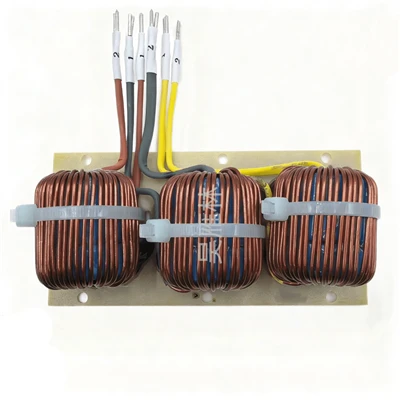
So what does a common-mode choke do about this? Think of it like a filter specifically made for that common-mode junk. Here’s how it works, plain and simple. A common-mode choke has two wires wound around the same core—usually a ferrite core, which is just magnetic stuff that blocks unwanted signals. When differential mode signals (the good data/power stuff) flow through the choke, their magnetic fields cancel each other out. So the choke barely notices them—they just pass right through, no problem. But common-mode noise? That junk flows the same way through both wires, so their magnetic fields add up instead of canceling. The core grabs that magnetic field and blocks it, so the noise never makes it to your devices. It’s like a bouncer at a club that lets all the good people (differential signals) in, and kicks out all the annoying hooligans (common-mode noise).
Wait, but why is this so specific to USB cables? USB is everywhere now—from old USB-A cables to the new USB-C that does everything. USB runs at super high speeds, right? The latest USB 4 can hit 80Gbps, so those data lines are zipping so fast that even tiny bits of common-mode noise can ruin the signal. Back when USB was just 2.0, speeds were slower, so you might not have noticed the noise as much. But now, with everyone using high-res monitors, wireless accessories, fast charging, that noise is a huge problem. That’s why almost every modern USB cable has a common-mode choke built in—even the ones you buy at the dollar store, though cheap ones might use a tiny, low-quality choke that doesn’t do the job well.
Let me be real here, as someone who supplies these chokes: not all common-mode chokes are the same. You get what you pay for, and that’s especially true here. A cheap choke made with thin wire and a flimsy ferrite core might block a little noise, but it’ll add extra resistance to your USB cable, slow down charging, or even interfere with high-speed data. For our common-mode chokes, we use thick, high-twist wire that’s wound tight around a solid ferrite core. That means it blocks common-mode noise way better, while barely affecting the good differential signals. We test every batch to make sure they work with all USB standards—USB 2.0, USB 3.x, USB 4, even Thunderbolt 3 and 4, since those all use USB-C now.
I know a lot of people think, “Why can’t cable manufacturers just build better devices to block noise?” Yeah, devices can have their own filters, but they can’t catch all the noise before it gets into the cable. The cable is the first line of defense, and it’s also the path that carries the noise from one device to another. If you get a USB cable without a good common-mode choke, you’re leaving that door wide open for noise. I’ve had customers reach out to me because their brand-new high-end USB-C cable started giving them static on their monitors, and swapping it for a cable with our choke fixed the issue immediately. It’s such a simple fix, but most people don’t know it exists until they need it.
Another thing people don’t talk about: common-mode chokes also help with compliance. If you’re a brand making USB cables, you have to meet EMI standards to sell them—like the FCC regulations in the US, or CE in Europe. Those standards limit how much electromagnetic noise a cable can emit, both to protect your devices and to not interfere with other electronics around them. A common-mode choke is one of the easiest, most cost-effective ways to hit those compliance marks without messing with the cable’s performance. If you’re a small brand just starting out making USB accessories, cutting corners on a cheap choke might seem like a way to save money, but it could get your products banned from shelves. That’s where having a solid common-mode choke supplier like us comes in—we can provide components that meet all the industry standards, so you don’t have to stress about testing delays or rejections.
Wait, let’s talk about a relatable example to drive this home. Last month, a customer of ours who makes portable gaming controllers hit us up. They were having an issue where when you plug the controller into a phone to charge while gaming, the controller’s buttons would have tiny glitches—like the D-pad would register a wrong input out of nowhere. Turns out, the thin, cheap choke they were using was letting a little common-mode noise bleed into the controller’s data line. Swapping that out for our high-performance common-mode choke fixed the glitch completely, no more weird D-pad moves mid-fight. That’s exactly what these chokes do—fix small, annoying problems that people just write off as “tech being finicky.”
I get it, this stuff is super specific. You don’t need to know the physics of ferrite cores to use a USB cable, right? But if you’re someone who makes USB cables, or needs to source high-quality components for your electronics, understanding what a common-mode choke does can make a huge difference in your product’s quality. And for regular folks, next time you get a USB cable that works way better than the last one, there’s a good chance a common-mode choke is part of that.
As a common-mode chokes supplier, I can’t stress enough how important it is to not overlook these parts. They’re not the flashiest component in an electronic device or cable, but they’re responsible for making sure your data transfers cleanly, your devices charge properly, and you don’t have random static or glitches ruining your day.
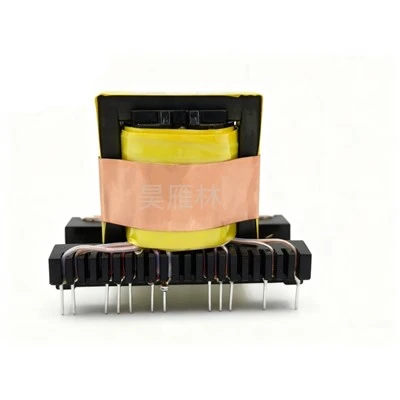
If you’re looking to source high-quality common-mode chokes for USB cables, or have questions about how these parts work for your specific product needs, feel free to reach out to talk through your requirements. We can work with you on different sizes, current ratings, and frequency responses to make sure you get exactly what you need for your project.
Common-Mode Chokes References
- Johnson, H., & Graham, M. (2003). High-Speed Signal Propagation: Advanced Black Magic. Prentice Hall.
- USB Implementers Forum. (2022). USB 4 Specification Revision 2.0.
- Ott, H. W. (2011). Electromagnetic Compatibility Engineering. Wiley.
- Ferrite Core Manufacturers Association. (2020). Design Guidelines for Common-Mode Chokes in High-Speed Data Cables.
Shenzhen Haoyanlin Electronics Co., Ltd.
With abundant experience, we are one of the most professional common-mode chokes manufacturers and suppliers in China. Please feel free to buy advanced common-mode chokes made in China here from our factory. All custom made products are with high quality and competitive price.
Address: Room A306, Building A, Hongwan Business Center, No.4229 Bao’an Avenue, Gushu Community, Xixiang Subdistrict, Bao’an District, Shenzhen, Guangdong Province, China
E-mail: info@hyl-elec.com
WebSite: https://www.hyl-elec.com/
