If you’ve ever stood in an auto parts warehouse, brake shop, or even a home garage staring at a corroded, warped brake disc, you’ve probably asked the same question: Can I resurface different types of brake discs? As someone who’s spent 12 years in the brake industry running a supplier specializing in brake discs by type, I’ve fielded this question hundreds of times—from amateur mechanics who want to save money on replacement parts to professional technicians trying to balance cost, performance, and safety. The short answer isn’t a simple “yes” or “no”; it depends entirely on the disc type, its material, thickness, and the damage it’s sustained. Let’s break this down by the most common disc categories, how resurface works, and when it’s actually a good idea (and when it’s not). Brake Discs By Type
First, let’s clear up what brake disc resurfacing is, for anyone who might not know. Also called “turning” a disc, it’s a process where a machine shaves a thin layer of metal from the disc’s friction surface to remove warping, deep grooves, rust, or heat spots (the blue or purple discoloration that happens from overheating brakes). The goal is to create a smooth, uniform surface so the brake pads can make even contact, which reduces vibration, stops brake squeal, and improves overall stopping power. But here’s the non-negotiable rule: every disc has a minimum thickness specification stamped on its edge. Shaving too much metal pushes it below that threshold, which can lead to structural failure—especially under heavy braking, like on highway stops or towing. That’s why the type of disc is so important; materials and designs directly dictate how much, or even if, it can be resurfaced.
Let’s start with the most common type today: cast iron brake discs. These are the standard for passenger cars, trucks, and SUVs, for good reason—they’re durable, inexpensive, and handle regular wear and tear well. Cast iron discs make up around 70% of the discs we supply, and they’re the easiest to resurface. Most factory-equipped cast iron discs have a minimum thickness between 22mm and 28mm, depending on the vehicle. If your disc is within that range, and the damage is just surface rust, minor grooves (less than 0.5mm deep), or slight warping, resurfacing is a solid option. We recommend this for older vehicles where a full replacement isn’t in the budget, or for someone doing routine maintenance to extend the life of their current setup. That said, even cast iron discs have a limit: if a mechanic tells you they need to shave more than 0.5mm of metal, walk away. I’ve seen too many customers come back with warped discs a month later because the shop cut too much, leading to flexing under heat.
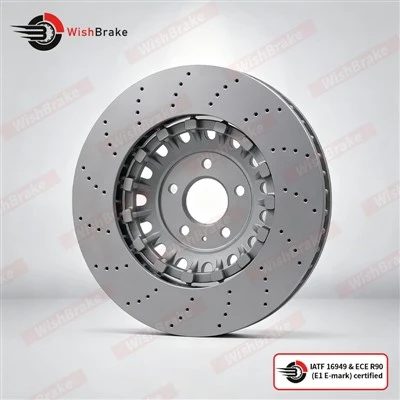
Next up: drilled brake discs. These are the sportier option, common on performance cars, track vehicles, and even some modern SUVs. Drilled discs have small holes drilled through the friction surface to dissipate heat, reduce brake fade, and clear away debris. But here’s the catch with resurfacing drilled discs: those holes create weak points, and resurfacing can expose or disrupt the structural integrity around them. Many people think drilled discs can be turned like cast iron, but that’s a mistake. The depth of the drilled holes is usually around 1.5mm to 2mm, so when you shave the friction surface, you risk cutting into the holes themselves or removing too much of the metal between them. The result is a disc that’s thinner than the manufacturer’s minimum, with gaps around the holes that can cause cracking under heavy braking. For this reason, most brake industry guidelines advise against resurfacing drilled discs. The only exception? Some heavy-duty drilled discs (for work trucks or industrial equipment) that have a thicker base metal, but even then, we always recommend checking the minimum thickness and the location of the holes before attempting to resurface. In fact, we regularly hear from technicians who tried to resurface a drilled disc only to have it crack on the first hard stop on the highway—something no driver wants to deal with.
Then there are slotted brake discs. These are similar to drilled discs, but instead of holes, they have shallow, diagonal slots cut into the friction surface. The slots serve a similar purpose: remove gas and dust between the pads and disc, reduce fade, and prevent glazing. Unlike drilled discs, slotted discs can sometimes be resurfaced—but only if the slots are shallow and properly spaced. The key here is measuring how deep the slots are before you start shaving. If the slots are deeper than 0.5mm, resurfacing will cut into them, which destroys their intended function. If they’re shallow (less than 0.3mm), you might be able to remove a tiny layer to smooth the surface, but even then, you have to stay well above the minimum thickness. We supply a lot of slotted discs for track day enthusiasts, and many of those guys will resurface their discs between track events to keep them performing well—they just never go more than 0.2mm of metal off the surface. A common mistake we see is mechanics resurfacing slotted discs as if they’re regular cast iron, which turns the slots flat and leaves a smooth surface that can cause brake glazing almost immediately.
Another type that’s growing in popularity: composite brake discs, often called “hybrid” discs. These are made with a cast iron friction surface bonded to an aluminum core, which makes them lighter and better at dissipating heat than solid cast iron discs. You’ll find these on luxury vehicles, electric cars, and high-performance models. Resurfacing composite discs is tricky because the two materials expand at different rates when heated. If you shave too much of the cast iron layer, you expose the soft aluminum core, which can warp or wear unevenly. Most manufacturers of composite discs explicitly prohibit resurfacing, because the process can separate the cast iron from the aluminum core. We’ve had a few customers bring in composite discs that were warped, and we always advise them to replace, not resurface, because the risk of separation is too high. Electric cars, in particular, have heavy composite discs to handle the instant torque, and a warped composite disc can lead to dangerous brake vibration at high speeds—so replacement is the only safe option here.
Then there are ceramic brake discs, mostly used on high-end sports cars, race cars, and some heavy-duty trucks. Ceramic discs are made from carbon fiber ceramic (CFC), a much harder, more heat-resistant material than cast iron. The big question here is: can you resurface a ceramic disc? The short answer is no. Ceramic discs are designed to last the life of the vehicle’s braking system, and they’re much harder to machine than cast iron. Resurfacing requires specialized diamond tools, and even then, shaving ceramic disc material can create fine dust that’s toxic, and it also damages the disc’s friction surface. Most manufacturers of ceramic discs label them as “non-resurfaced,” meaning if they’re warped or damaged, you have to replace them. We supply ceramic discs exclusively for performance applications, and we never recommend resurfacing—instead, we advise regular inspection to catch damage early, before it leads to costly brake repairs.
Now, let’s talk about when resurfacing is a good idea, and when it’s not. First, the “yes” cases: solid cast iron discs with minor damage, within minimum thickness, no deep grooves or heat discoloration. This is a great middle-ground for routine maintenance. For example, if your old sedan’s brake disc has a little surface rust from sitting in the driveway and minor vibration when braking, resurfacing will cost you half what a new disc does, and it’s safe as long as the thickness is within spec. The “no” cases are equally important: drilled, slotted discs with deep slots or holes, composite discs, ceramic discs, and any disc that’s below the minimum thickness. I can’t stress enough how important that minimum thickness is—stamped on the disc edge, usually somewhere near the bolt holes. If a mechanic tells you they’re resurfacing your disc and it’s less than 10% above that number, say no. We once had a customer who brought in a truck disc that was already 0.2mm below minimum; the shop tried to resurface it, and two weeks later, the disc cracked on a downhill stop, leading to a crash (fortunately, no one was hurt, but it was a costly mistake).
A lot of people also wonder if resurfacing versus replacing is better for the environment. As a supplier, we’re always thinking about that. Resurfacing uses less raw material than making a new disc, so it’s better for the planet when done correctly. But when it’s done incorrectly—like resurfacing a disc that’s too thin, leading to early replacement—it’s actually worse for the environment. That’s why we always advise customers to do their research, check their disc type, and confirm the minimum thickness before deciding to resurface. For example, a solid cast iron disc that’s within spec, resurfaced once, will extend its life by another 30,000 to 50,000 miles, avoiding the need for a new disc. A drilled disc that’s resurfaced when it shouldn’t be will fail after 10,000 miles, leading to more waste.
We also get a lot of questions about brake pad compatibility with resurfaced discs. If you’re resurfacing a cast iron disc, it’s a good idea to replace your brake pads at the same time. Old pads have a hard, glazed surface that won’t seat properly on the newly shaved disc, leading to uneven wear and brake noise. For slotted discs that you’re resurfacing, make sure the new pads are designed to work with slotted surfaces, too—some low-end pads won’t clear the slots properly, leading to debris buildup.
At Brake Discs By Type, we specialize in supplying all these types of discs, from budget solid cast iron for daily drivers to high-performance ceramic and drilled discs for track and luxury vehicles. We work with independent shops, fleet managers, and individual DIYers who want the right disc for their specific application, not a one-size-fits-all option. If you’re not sure what type of disc you have, or you’re debating whether to resurface or replace, we can help you inspect your discs, check the minimum thickness, and guide you to the right choice for your vehicle and needs.

Don’t take chances with your brake safety—resurfacing isn’t a one-size-fits-all solution, but when done correctly on the right disc type, it’s a smart, cost-effective choice. If you have questions about your brake discs, need a replacement, or want to learn more about the best options for your vehicle, we’re here to help. Reach out to our team today to discuss your brake disc needs and get personalized recommendations.
GEOMET Coated Brake Rotors References:
- Automotive Brake and Chassis Technology, Brake Disc Resurfacing Guidelines, 2022
- Society of Automotive Engineers (SAE), Braking System Components: Material and Design Specifications, SAE International, 2021
- National Highway Traffic Safety Administration (NHTSA), Brake Maintenance Best Practices, 2020
- Performance Brakes Association, Resurfacing Standards for Specialty Brake Discs, 2023
- Cast Iron Society, Design and Durability of Automotive Brake Discs, 2022
Qingdao Wish Auto Parts Co., Ltd.
Qingdao Wish Auto Parts Co., Ltd. is one of the most professional brake discs manufacturers and suppliers in China. We are committed to providing high quality customized automotive brake discs with competitive price. Welcome to wholesale CE approved brake discs in stock here and get quotation from our factory. 1 year warranty is available.
Address: No.45 Pengwan Road, Qingdao, Shandong Province, China
E-mail: SALES@wishbrake.com
WebSite: https://www.wishbrakeparts.com/
