If you’ve ever watched a machine tool operator grind, mill, or turn a part that fits perfectly into a car engine, a medical implant, or a aerospace component, you might not have noticed the unsung hero holding that part in place. Workholding devices are the quiet backbone of every machine tool operation, and as someone who’s spent over a decade supplying these components to shops across North America, I can tell you that picking the right workholding isn’t just a small detail—it’s what separates a high-quality, on-time job from a costly mistake that eats into profits and delivery timelines. Machine Tool Accessories
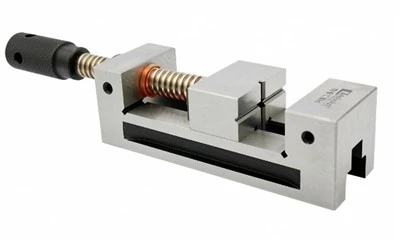
Let’s start with the basics: workholding devices are the tools that secure a workpiece firmly, accurately, and consistently to a machine tool’s table or spindle during a machining process. Their core job is simple, but their impact is massive. If a workpiece shifts even a fraction of a millimeter during a cut, you end up with a defective part—scrap metal, wasted material, and hours of rework that no shop can afford. Beyond just keeping parts still, good workholding ensures repeatability: if you’re producing 1,000 identical brake calipers, every single one has to fit exactly the same, and workholding is what makes that possible.
Over the years, I’ve worked with shops small enough to fit in a two-car garage and large aerospace facilities with 20+ CNC lines, and every single one has a go-to set of workholding tools that they rely on. Let’s break down the most common types, how they’re used, and why choosing the right one makes all the difference.
First up: vises. Vises are the workhorses of most machine shops, and they’re probably the first workholding tool anyone thinks of. They come in a few main styles, but the two most popular are manual milling vises and hydraulic vises. Manual vises are affordable, simple, and perfect for small-batch jobs or hobbyist setups—you crank a handle to tighten the jaw, and that’s that. But for high-volume production, hydraulic vises are the way to go. They clamp parts evenly across the jaw in seconds, no manual cranking, and they eliminate human error that can come with inconsistent tightening. I’ve seen shops swap from manual to hydraulic vises and cut their cycle time per part by 30% almost overnight. We supply both standard and custom vise jaws, too—soft jaws for machining complex profiles, hard jaws for heavy-duty cuts, and even serrated jaws for grip on irregular workpieces.
Next, chucks. Chucks are what you use when you’re working with round parts—like shafts, bolts, or pipe—on a lathe or turning center. Unlike vises, which clamp from two sides, chucks grip the outside (or inside) of a cylindrical part, making them ideal for turning operations. There are three main types of chucks: 3-jaw, 4-jaw, and collet chucks. 3-jaw chucks are for round, symmetric parts—they self-center, so you can load a part and hit “cycle start” right away. 4-jaw chucks are for irregular or off-center parts; each jaw moves independently, so you can grip a square workpiece or a part with a non-round profile accurately, perfect for one-off jobs or custom parts. Collet chucks, meanwhile, are smaller and more precise than jaw chucks, used for small-diameter parts like medical screws or electronic connectors. They provide a tighter grip and better concentricity, which is critical for parts that need to spin at high speeds. I’ve seen shops upgrade from 3-jaw to collet chucks for their small turning jobs and reduce part runout by half, which is a huge win for precision machining.
Then there are fixtures. Fixtures are custom-made workholding devices, built for a specific part and a specific operation. If you’re producing 50,000 parts a year, a generic vise or chuck won’t cut it—you need a fixture that’s designed exactly to fit that part’s unique shape, so you can load it in 10 seconds or less, no adjustment needed. For example, a fixture for a car’s intake manifold might have dozens of pins and clamps that locate the part perfectly, so every manifold is positioned the same way every time. We work closely with design teams to build custom fixtures tailored to a shop’s machine tools and part requirements, and the shops that use custom fixtures often see their production output double because they spend less time loading and unloading parts and more time cutting.
Don’t forget: workholding also includes things like rotary tables, vacuum chucks, and specialty clamps. Rotary tables let you machine round or angular features on a part—like drilling holes around a flange—without repositioning the workpiece. Vacuum chucks are a game-changer for thin, delicate parts that can’t handle the pressure of a mechanical jaw; they use air suction to grip things like aluminum shims or glass panels, so you don’t leave clamp marks or deform the part. Specialty clamps, like step clamps or strap clamps, are used to secure large parts to machine tables, perfect for big jobs like machining a boat propeller or a aircraft wing section.
Now, you might be wondering: why does a workholding supplier matter? I’ve been in this long enough to know that a lot of shops will buy the cheapest workholding they can find to save a few bucks upfront, but that’s a short-sighted move. A low-quality vise jaw might wear out after 100 uses, leading to inconsistent clamping, bad parts, and downtime while you replace it. A poorly built custom fixture might not fit right the first time, delaying a production run by a week. At our company, we don’t just sell parts—we work with you to understand your specific needs. If you’re a small shop doing one-off jobs, we’ll help you pick affordable, reliable vises that fit your current machines. If you’re a high-volume production shop, we’ll design custom fixtures that boost your efficiency and reduce scrap. We test every product we supply to make sure it holds up to the rigors of daily machining, and our team is here to troubleshoot if you have a part that just won’t clamp right.
I’ve seen it all: a shop that saved $500 on cheap vises and ended up scrapping $10,000 worth of parts because the workholding shifted, and another that invested in a custom fixture that paid for itself in two months with faster production. Workholding might be the least flashy part of a machine tool operation, but it’s the one that makes the rest of the process possible. Without the right workholding, even the most advanced CNC machine is just a fancy piece of metal that can’t do its job.
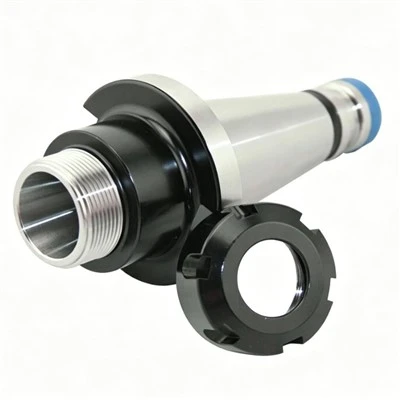
If you’re looking to upgrade your workholding, whether it’s replacing worn vises, investing in hydraulic chucks, or designing a custom fixture for a new production run, reach out to us to discuss your project. We’ll walk you through the options, help you pick what fits your budget and needs, and make sure you get the support you need to keep your operations running smoothly.
Tool Holder References
- Smith, D. A. (2021). Machine Tool Workholding: Principles and Applications. Industrial Press.
- DeVries, W. R. (2018). Analysis of Cutting and Grinding Operations. Springer.
- Machinery’s Handbook. (2022). Workholding Devices for Machining. Industrial Press.
Shun Wei Precision Technology Co., Ltd.
With abundant experience, we are one of the most reliable machine tool accessories manufacturers and suppliers in China. We warmly welcome you to buy durable machine tool accessories at competitive price from our factory. If you have any enquiry about cooperation, please feel free to email us.
Address: Room901, Building2, Yijing Apartment, Northeast side of the intersection of Central Avenue and East Fifth Road, Tianjin Free Trade Zone (Airport Economic Zone)
E-mail: sale@sw-csd.com
WebSite: https://www.tjswprecisiontool.com/
